
About this medicine
Paroxetine is the active ingredient in Seroxat. Paxil and Paxil CR are US aliases; controlled-release US instructions should not be transferred to the UK tablet described here.
Several weeks may be needed before symptoms improve, and treatment commonly continues for months. Review the actual condition being treated and changes in functioning, rather than judging the medicine by a single good or difficult day.
What is this medicine used for?
The checked Seroxat licence covers adult major depression, OCD, panic disorder, social anxiety, generalised anxiety and PTSD. The licence does not support routine treatment below age 18.
Which warning signs need help?
Seek urgent help for new self-harm thoughts, severe bleeding, or agitation with fever and muscle twitching. A swollen tongue or breathing difficulty requires emergency care. Taking too much needs urgent medical advice. These are UK safety warnings, not a UK “FDA boxed warning”.
MHRA’s October 2026 communication announced the rollout of a prominent boxed warning in UK antidepressant patient leaflets about self-harm and suicidal behaviour, alongside a patient safety card. This UK patient-information measure is not the US FDA Boxed Warning designation. Read the leaflet supplied with your medicine, seek prompt professional help for new or worsening mood or behaviour changes, and do not stop treatment suddenly without advice.
How do I take it safely?
Adult product reference: depression, generalised anxiety, social anxiety and PTSD usually start at 20 mg daily, with a 50 mg daily maximum. OCD starts at 20 mg and panic disorder at 10 mg; their usual target is 40 mg and maximum 60 mg daily. Increases are generally 10 mg steps. The prescribed schedule depends on the indication.
Seroxat 20 mg can be divided into equal doses, unlike some scored tablets whose line is only a swallowing aid. Take it in the morning with food and swallow rather than chew. A formulation change or smaller tapering dose needs pharmacy advice rather than an assumed conversion from Paxil CR.
What side effects should I know about?
Nausea, sexual difficulties, sleepiness, insomnia, dizziness, constipation or diarrhoea, and weight changes can occur. Avoid driving while sleepy, dizzy or visually affected.
MHRA is adding the term post-SSRI sexual dysfunction (PSSD) to patient leaflets describing persistent sexual difficulties after stopping certain antidepressants, including this medicine. Their frequency and causes remain under study. Persistent symptoms deserve support; this does not mean everyone taking the medicine will experience them.
Who needs extra care with this medicine?
Epilepsy, prior mania, glaucoma, heart problems and liver or kidney impairment affect prescribing. Older people have a lower 40 mg daily maximum in the checked label.
Significant kidney or liver impairment can increase exposure and favour the lower end of the dose range. A history of low sodium or bleeding, and medicines affecting glucose control, may change follow-up needs. These precautions are distinct from a previous serious allergy.
Can it affect my other medicines?
Do not combine with MAO inhibitors, thioridazine or pimozide. Paroxetine can reduce tamoxifen’s effectiveness. Other serotonergic medicines, St John’s wort, anticoagulants and anti-inflammatory painkillers need review.
Strong CYP2D6 inhibition explains why interactions can involve medicines with very different purposes, including tamoxifen. Some pain medicines and migraine medicines increase serotonergic risk. A pharmacist should check non-prescription remedies and planned switches, including the required gap around an MAOI.
What check-ups will I need?
Review benefits, sexual side effectsAn effect beyond the intended treatment effectAn effect of a treatment in addition to its intended effect. It may be unwanted, harmful or sometimes beneficial.Read the full definition of Side effect, weight and mood changes. Additional monitoring depends on bleeding risk, sodium disturbances, diabetes and co-prescribed medicines.
Plan an early review and further review after dose changes, with a way to seek help sooner for worsening symptoms. Discuss sexual difficulties openly, including persistent symptoms after stopping; support and reassessment are appropriate even when the frequency remains uncertain.
What about pregnancy, breastfeeding and age?
Pregnancy does not automatically mean stopping treatment: discuss benefits and risks promptly. Paroxetine can sometimes be used during breastfeeding. The UK product does not establish a paediatric indication.
UK patient information discusses possible foetal and newborn effects, including a possible small increase in heart-defect risk and newborn adaptation or breathing problems after later exposure. The maternity team needs to know about treatment. The decision includes the risks of untreated illness and withdrawalWithdrawalSymptoms that may occur after reducing or stopping a medicine or substance to which the body has adapted.Read the full definition of Withdrawal, not medicine exposure alone.
NICE advises against using this medicine to treat depression in children and young people. Anyone already taking it should discuss an individual review and any gradual changes with the prescriber, rather than stopping suddenly.
What if I miss a dose or want to stop?
Do not stop abruptly. NICE identifies paroxetine as particularly associated with withdrawal; a slower taper may be needed. Never double a missed dose.
Withdrawal can include dizziness, sleep disturbance, nausea and electric-shock-like sensations; these do not automatically mean the original illness has returned. Reduction may take weeks or months and should be adjusted to symptoms. For a missed dose, take it when remembered unless the next is near; never double it.
How does it work?
Paroxetine changes how nerve cellsNeuronA nerve cell that receives and sends information. Neurons work in connected groups, rather than carrying a whole thought on their own.Read the full definition of Neuron communicate using serotoninSerotoninA chemical messenger involved in several functions, including sleep, mood and digestion. It acts through different receptors, with effects that depend on the cell.Read the full definition of Serotonin, a chemical messenger involved in mood and other functions. It slows the return of released serotonin into the cell that sent it, leaving more available between cells. This action is thought to contribute to symptom improvement, but the steps connecting the chemical change with benefit are not fully understood.
How Brain Cells Communicate
Nerve cells, also called neurons, release chemical messengers called neurotransmitters into tiny gaps between cells, known as synapses. Serotonin can then attach to receptors, proteins that detect the message and change a cell’s activity. The serotonin transporter, or SERT, carries some serotonin back into the sending cell. This return is called reuptake and helps regulate how long serotonin remains available.
What is known: SERT helps recycle released serotonin.
What remains uncertain: Serotonin activity alone does not explain a person’s symptoms.
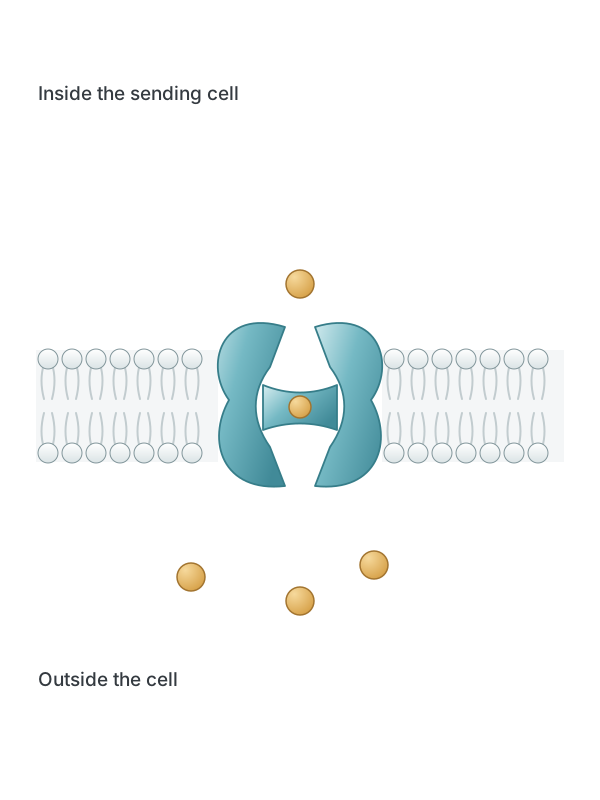
- Serotonin
The messenger is shown outside the sending cell.
- SERT
The serotonin transporter returns serotonin into the cell.
- Return into the cell
The arrow shows transport direction, without a measured rate.
Simplified teaching model. Protein shapes, sizes, particle counts and arrows are illustrative, not measurements or experimental structures.
About this illustration
SERT returns serotonin across the cell membrane. Serotonin activity alone does not explain a person’s symptoms.
How the Medication Changes Signaling
Paroxetine inhibits SERT, meaning it reduces the transporter’s activity. This slows serotonin reuptake and changes the signals available to nearby cells. It is called a selective serotonin reuptake inhibitor, or SSRI, because serotonin reuptake is its main transport target. The direct effect on transport is different from the later changes that accompany improvement, which is usually gradual.
What is known: Paroxetine’s main transport action is to reduce serotonin reuptake.
What remains uncertain: An early change in messenger availability does not mean immediate symptom relief.
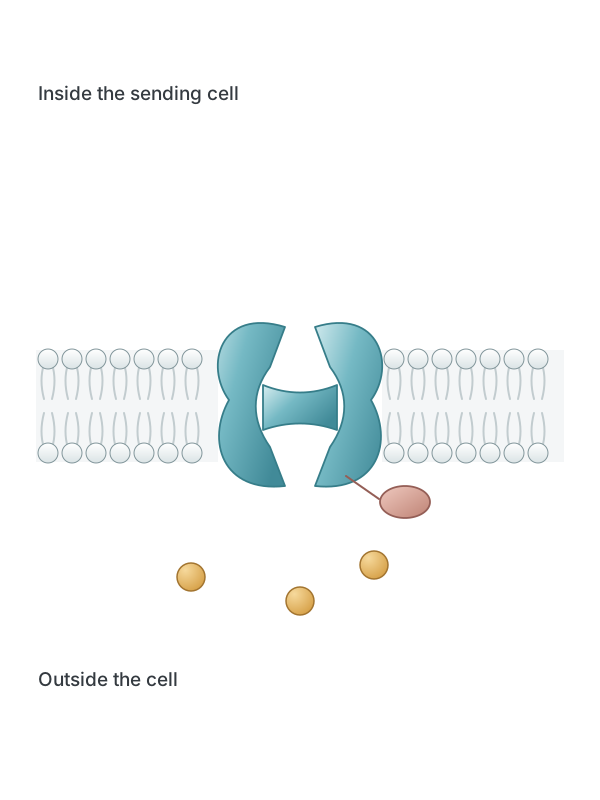
- Serotonin
The messenger is shown outside the sending cell.
- SERT
The serotonin transporter returns serotonin into the cell.
- Paroxetine: uptake inhibited
The interrupted arrow names the action; the symbol is not a molecular shape or binding position.
Simplified teaching model. Protein shapes, sizes, particle counts and arrows are illustrative, not measurements or experimental structures.
About this illustration
Paroxetine inhibits serotonin reuptake; clinical effects are more complex. An early change in messenger availability does not mean immediate symptom relief.
How does it affect my body?
Sexual function, digestion and sleep may change. Distressing restlessness or unusually elevated mood needs prompt discussion with the prescriber.
Early agitation can differ from improvement. An uncomfortable inability to sit still, or a marked shift into unusually energised and risky behaviour, should prompt review. Increasing the dose is not an automatic solution to restlessness.
How does my body process it?
Paroxetine is extensively metabolised. Its half-lifeThe time for a measured drug level to fall by halfThe time it takes for the concentration of a medicine in a body fluid, usually blood, to decrease by half during elimination.Read the full definition of Half-life is around one day, and blood levels may rise disproportionately as doses increase.
How do treatment options differ?
Withdrawal risk is an important distinction when comparing paroxetine with other antidepressants. Suitability also depends on its interaction profile, rather than the familiarity of a brand.
A closer look at the science
Its main target is serotonin uptake. Its interactions with the liver enzyme CYP2D6 are also clinically important, particularly for medicines needing that enzyme for activation or clearance.
Paroxetine hydrochloride hemihydrate is a salt and hydrate of paroxetine. The drawing shows the neutral paroxetine parent with its specified stereochemistry; it omits the hydrochloride and water components. The salt formula and parent drawing describe explicitly different chemical species, not a particular tablet formulation.
Chemical formula: C19H20FNO3 · HCl · ½H2O
This formula describes paroxetine hydrochloride hemihydrate: C, H, F, N, O and Cl represent carbon, hydrogen, fluorine, nitrogen, oxygen and chlorine. The dot terms describe the salt and water components. Chemical formulae must not be used to calculate replacement doses.

The salt formula and neutral-parent drawing are explicitly different species; neither depicts a tablet release system.
How was this medicine developed?
The Seroxat 20 mg authorisation record lists December 1990 as its first authorisation. The separate 30 mg record is now marked discontinued.
Sources and References
- Seroxat 20 mg: UK SmPC
Product information published on the electronic Medicines Compendium (emc); supplied by pharmaceutical companies.
Scope: United Kingdom product information.
- Seroxat 30 mg: discontinued product record
Product information published on the electronic Medicines Compendium (emc); supplied by pharmaceutical companies.
Scope: United Kingdom product information.
- Seroxat: patient leaflet
Product information published on the electronic Medicines Compendium (emc); supplied by pharmaceutical companies.
Scope: United Kingdom product information.
- NHS: Paroxetine
Scope: NHS website for England — general medicine education, not a four-nation service pathway.
- NICE NG222: Depression in adults, recommendations
Scope: England guidance; applicability or adoption in other UK nations requires separate consideration.
- Antidepressants: use and safety
Scope: United Kingdom.
- Paxil prescribing information — mechanism explanation
Scope: Mechanism explanation only. Source sections checked: 11 Description; 12.1 Mechanism of Action; 12.2 Pharmacodynamics..
- What Is a Neurotransmitter? — mechanism explanation
Scope: Mechanism explanation only. Source sections checked: How Neurotransmitters Work; Types of Neurotransmitters..
- Paroxetine drug information — mechanism explanation
Scope: Mechanism explanation only. Source sections checked: How should this medicine be used?—time to benefit..
- Depression in children and young people — recommendations
Scope: United Kingdom; NICE recommendations require attention to national implementation and local pathways.
Shared scientific background. Some references are US product pharmacology or international chemical records; UK product details and prescribing information are verified separately.
Article Information
- Edition
- United Kingdom
- Content updated
- 2026-10-30
- Source check dates
- Listed with each reference above; retained dates for shared scientific content.
- Scope
- exact products checked
Source and coverage limits
- Educational summaries cover the named UK products, not every brand, strength, formulation or prescribing circumstance.
- No claim of pharmacy stock or uniform NHS access is made.
- UK SmPC warnings are used; a US FDA boxed warning is not presented as a UK regulatory designation.
- Other generic strengths, liquids and Seroxat 10 mg have not been product-verified in this batch.
- NICE withdrawal wording was checked in official indexed recommendations; direct page retrieval was blocked.