
About this medicine
Zyban contains bupropion. Wellbutrin and Wellbutrin XL are American aliases; their depression indications and schedules must not be transferred to this UK product.
Nicotine dependence can involve cravings, irritability and difficulty concentrating when cigarettes are stopped. Bupropion is intended to make a supported quit attempt easier; it is not nicotine replacement and does not remove the need to plan for triggers, setbacks and follow-up. A GP or local stop-smoking service can explain the pathway available locally.
What is this medicine used for?
The checked licence is smoking cessation with motivational support. A February 2025 North East and North Cumbria NHS pathway also describes specialist-initiated off-label useOff-labelUse of a licensed medicine outside the terms of its UK marketing authorisation.Read the full definition of Off-label for resistant depression in adults over 18. That is a local pathway, not a UK-wide licence or guarantee of access.
The distinction between a medicine's pharmacology and its product licence matters here. The same molecule can be used for depression in another country or under a documented off-label UK arrangement without turning Zyban's smoking-cessation licence into a depression licence. Local specialist advice is not permission to use an American XL schedule.
Which warning signs need help?
A seizure requires urgent assessment and no further Zyban doses. Serious blistering or peeling rash requires stopping and immediate medical care. Seek urgent help for self-harm thoughts or overdose. Fever, agitation and muscle rigidity may indicate serotoninSerotoninA chemical messenger involved in several functions, including sleep, mood and digestion. It acts through different receptors, with effects that depend on the cell.Read the full definition of Serotonin syndrome, especially with other antidepressants.
The current product information also describes severe immune-related skin reactions. A spreading rash with blistering, mouth sores, fever or marked illness needs urgent assessment, not simply an antihistamine and another dose. A previous serious bupropion skin reaction rules out restarting it.
How do I take it safely?
Adult reference: 150 mg daily for six days, then 150 mg twice daily from day seven, at least eight hours apart; maximum 300 mg daily. Set a quit date during the first two weeks. Courses usually last 7–9 weeks. Some people need 150 mg daily throughout. Do not split or crush the tablet.
The treatment starts before the quit date so that it is established when cigarettes are stopped. The prolonged-release tablet must remain intact: crushing or chewing changes delivery and increases risk. The label advises reassessment and discontinuation if there is no effect at seven weeks; a repeat course is a separate clinical decision.
What side effects should I know about?
Insomnia, dry mouth, nausea, headache and anxiety can occur. A stop-smoking adviser can help distinguish withdrawal symptomsWithdrawalSymptoms that may occur after reducing or stopping a medicine or substance to which the body has adapted.Read the full definition of Withdrawal from adverse effects.
Cravings, irritability and poor concentration can also occur with nicotine withdrawal. Record when symptoms begin in relation to the quit date and dose changes, and discuss them with the team rather than assuming every symptom is either withdrawal or the medicine.
Who needs extra care with this medicine?
ContraindicationsA medical reason a medicine should not be usedA medical reason a medicine should not be used in a particular situation because it may be harmful.Read the full definition of Contraindication include seizures or their history, CNS tumour, current/past anorexia or bulimia, bipolar disorder, severe cirrhosis, abrupt alcohol/sedative withdrawal, MAO inhibitors and another bupropion product. Brugada syndrome or a family history of sudden cardiac death also needs assessment.
Can it affect my other medicines?
Other antidepressants can increase serotonin-syndromeSerotonin syndromeSerotonin syndrome (also called serotonin toxicity) is a potentially life-threatening drug reaction caused by excessive serotonin activity in the nervous system.It can develop soon after starting or increasing a serotonin-affecting medicine, or combining it with another medicine or substance that affects serotonin.Possible signs include agitation or confusion, sweating, fever, diarrhoea, shaking, and stiff or twitching muscles.Seek urgent medical help if you suspect serotonin syndrome. Severe symptoms, such as a high fever, seizures, or loss of consciousness, need emergency care. risk. Tramadol and other seizure-threshold-lowering medicines need review. Stopping smoking itself can alter levels of medicines such as clozapine, independently of Zyban.
Bupropion inhibits CYP2D6, which can raise concentrations of some antidepressants, antipsychotics and heart medicines, while reducing activation of tamoxifen. These interactions may remain relevant after stopping. Tell the prescriber about nicotine patches as well as prescription, non-prescription and herbal products.
What check-ups will I need?
Check blood pressure before and during treatment; nicotine-patch combinations need closer monitoring. Review mood, sleep, adverse effects and progress towards stopping smoking.
Combining Zyban with a nicotine patch requires weekly blood-pressure checks under the product information. Review severe or persistent insomnia, changes in mood and adherence, not just whether cigarettes have stopped. A quit attempt may also require review of other medicines because stopping tobacco smoke changes their metabolism.
What about pregnancy, breastfeeding and age?
Zyban should not be used in pregnancy and is not recommended below 18. Breastfeeding needs assessment because bupropion and metabolites enter milk. Older adults and people with kidney or liver impairment usually need the lower schedule.
What if I miss a dose or want to stop?
Skip a missed dose and take the next at the usual time. Do not double up. Discuss ending treatment with the prescriber; a taper may be considered.
How does it work?
Bupropion changes signalling involving noradrenaline and dopamineDopamineA chemical messenger involved in movement, learning and emotion. Its name does not describe one feeling or one role throughout the brain.Read the full definition of Dopamine, chemical messengers used by nerve cellsNeuronA nerve cell that receives and sends information. Neurons work in connected groups, rather than carrying a whole thought on their own.Read the full definition of Neuron. In smoking-cessation treatment, this can help reduce cravings and nicotine withdrawal symptoms, the discomfort that can follow stopping nicotine. Bupropion itself contains no nicotine. Its effects involve changes in communication rather than replacing nicotine in the body.
How Brain Cells Communicate
Nerve cells communicate partly by releasing chemical messengers, called neurotransmitters, into the small gaps between cells. Noradrenaline, also called norepinephrine, is involved in functions such as alertness, while dopamine contributes to movement, learning and emotional responses. After a message is released, transporters carry some of it back into cells. This return process, called reuptake, helps regulate how long the messenger is available.
What is known: Noradrenaline and dopamine each have their own transport systems.
What remains uncertain: The activity of either messenger alone cannot explain nicotine dependence.
Dopamine · DAT
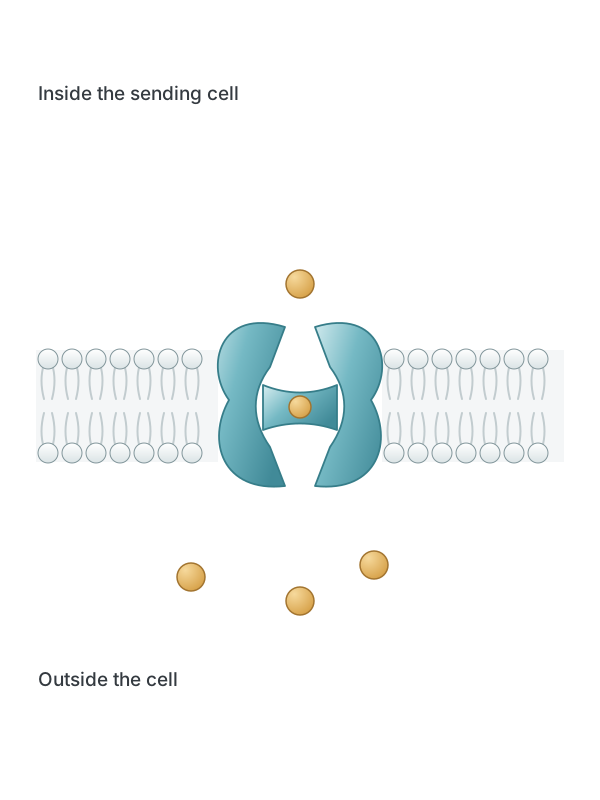
- Dopamine
The messenger is shown outside the sending cell.
- DAT
The DAT transporter returns dopamine into the cell.
- Return into the cell
The arrow shows transport direction, without a measured rate.
Simplified teaching model. Protein shapes, sizes, particle counts and arrows are illustrative, not measurements or experimental structures.
Norepinephrine · NET
- Norepinephrine
The messenger is shown outside the sending cell.
- NET
The NET transporter returns norepinephrine into the cell.
- Return into the cell
The arrow shows transport direction, without a measured rate.
Simplified teaching model. Protein shapes, sizes, particle counts and arrows are illustrative, not measurements or experimental structures.
About this illustration
Before medicine: uptake: Norepinephrine and dopamine transporters return the respective messengers into cells. The activity of either messenger alone cannot explain nicotine dependence.
How the Medication Changes Signaling
Bupropion reduces the uptake of noradrenaline and dopamine into nerve cells, without inhibiting the reuptake of serotonin, another chemical messenger. Its pharmacology describes these uptake effects as relatively weak in the experimental measurements used to study them. That wording describes a laboratory action, rather than how much a treatment might help a particular person. Clinical effects depend on more than the strength of one laboratory result.
What is known: Bupropion inhibits noradrenaline and dopamine uptake.
What remains uncertain: An uptake measurement cannot predict the degree of relief from cravings or withdrawal symptoms.
Dopamine · DAT
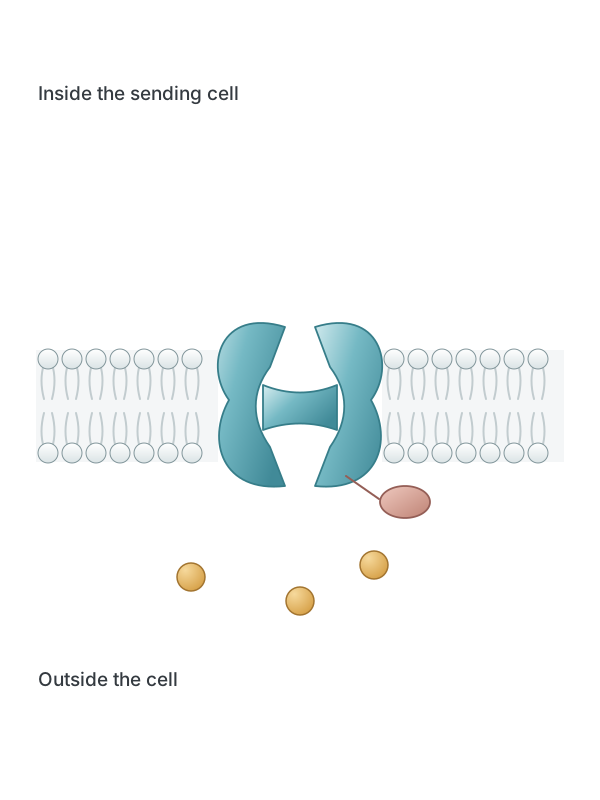
- Dopamine
The messenger is shown outside the sending cell.
- DAT
The DAT transporter returns dopamine into the cell.
- Bupropion: uptake inhibited
The interrupted arrow names the action; the symbol is not a molecular shape or binding position.
Simplified teaching model. Protein shapes, sizes, particle counts and arrows are illustrative, not measurements or experimental structures.
Norepinephrine · NET
- Norepinephrine
The messenger is shown outside the sending cell.
- NET
The NET transporter returns norepinephrine into the cell.
- Bupropion: uptake inhibited
The interrupted arrow names the action; the symbol is not a molecular shape or binding position.
Simplified teaching model. Protein shapes, sizes, particle counts and arrows are illustrative, not measurements or experimental structures.
About this illustration
With bupropion: Bupropion has relatively weak inhibitory effects on norepinephrine and dopamine uptake in the product pharmacology. An uptake measurement cannot predict the degree of relief from cravings or withdrawal symptoms.
How does it affect my body?
Activation can disturb sleep, and blood pressure may rise. It can also lower the seizure threshold, making dose and interacting medicines particularly important.
Reduced craving and stimulation are different outcomes. Feeling more awake does not establish that mood or dependence has improved. Sleep, anxiety, blood pressure and progress towards the agreed quit date all contribute to judging benefit.
How does my body process it?
CYP2B6 produces the active metabolite hydroxybupropion. Active metabolites can accumulate when kidney or liver function is impaired.
A metabolite is a substance produced as the body processes a medicine. Several bupropion metabolites remain active, so the parent tablet is not the only contributor to exposure. Changes in kidney or liver function and interacting medicines can affect tolerability even when the prescribed tablet strength is unchanged.
How do treatment options differ?
Bupropion is one nicotine-free option alongside varenicline and cytisine. They have different actions and suitability; the same treatment will not suit every person.
Varenicline and cytisine act differently from bupropion despite all being nicotine-free options. A general statement supporting combination treatment is not a reason to combine Zyban with a patch without its specific blood-pressure precautions. Suitability depends on contraindications, previous response and the support available.
A closer look at the science
It inhibits noradrenaline and dopamine reuptakeReuptakeThe return of a released chemical messenger into a cell through a transporter. It is one way to limit a signal; chemical breakdown is another.Read the full definition of Reuptake with relatively little direct serotonin-reuptake action. The exact contribution of these actions to smoking cessation remains uncertain.
Bupropion hydrochloride is a salt of bupropion. The drawing shows the neutral parent compound without hydrochloride and without assigning a single mirror-image form. This chemical description does not establish the composition or release design of a UK product.
Chemical formula: C13H18ClNO · HCl
The formula describes bupropion hydrochloride. C, H, Cl, N and O stand for carbon, hydrogen, chlorine, nitrogen and oxygen. A molecular drawing does not show or reproduce a tablet release system.
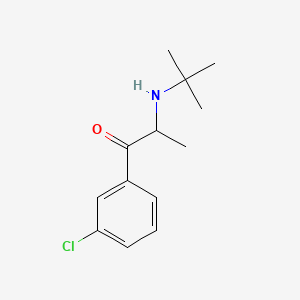
The depicted parent and the salt formula describe different explicitly identified species.
How was this medicine developed?
Bupropion was originally used as an antidepressant before its smoking-cessation role was recognised. The Zyban UK record lists first authorisation in June 2000.
Its antidepressant history helps explain familiar American names, but a discovery history is not a regulatory licence. This article keeps the UK single-ingredient smoking-cessation product separate from weight-management combinations and foreign depression formulations.
Sources and References
- Zyban 150 mg: UK SmPC
Product information published on the electronic Medicines Compendium (emc); supplied by pharmaceutical companies.
Scope: United Kingdom product information.
- Zyban: patient leaflet
Product information published on the electronic Medicines Compendium (emc); supplied by pharmaceutical companies.
Scope: United Kingdom product information.
- Quit smoking with nicotine-free medicines — mechanism explanation
Scope: Mechanism explanation only. Source sections checked: Understanding the effects of nicotine; Nicotine-free medicines; Bupropion..
- MHRA: Bupropion and serotonin syndrome with other serotonergic medicines
Scope: United Kingdom medicines safety.
- Yorkshire Smokefree: Bupropion overview and administration
Scope: England — Yorkshire Smokefree local NHS service information.
- NENC: Bupropion for resistant depression—local primary-care information, February 2025
Scope: England — North East and North Cumbria local depression pathway, not a national recommendation.
- FDA: Wellbutrin XL prescribing information and Medication Guide
- NIH: What Is a Neurotransmitter?
- Serotonin syndrome: MedlinePlus Medical Encyclopedia
- Monitoring a person during and after antidepressant switching – NHS SPS - Specialist Pharmacy Service – The first stop for professional medicines advice
Shared scientific background. Some references are US product pharmacology or international chemical records; UK product details and prescribing information are verified separately.
Article Information
- Edition
- United Kingdom
- Content updated
- 2026-10-24
- Source check dates
- Listed with each reference above; retained dates for shared scientific content.
- Scope
- exact products checked
Source and coverage limits
- Educational summaries cover the named UK products, not every brand, strength, formulation or prescribing circumstance.
- No claim of pharmacy stock or uniform NHS access is made.
- UK SmPC warnings are used; a US FDA boxed warning is not presented as a UK regulatory designation.
- This is a Zyban smoking-cessation record, not a UK depression-treatment protocol.
- Mysimba is a separate combination product and is not represented by this bupropion-only article.
- US Wellbutrin/XL formulation equivalence and current import availability are outside this verification scope.
- The depression pathway is local to North East and North Cumbria; no nationwide adoption or personal treatment recommendation is inferred.