
About this medicine
Nardil requires a detailed medicines review and individual food advice. Familiarity with another antidepressant does not remove these precautions.
An MAOI prescription requires practical preparation: review all medicines, agree the food restrictions and understand which symptoms need urgent help. These precautions remain relevant during a planned change to another antidepressant, not just while tablets are being swallowed.
What is this medicine used for?
The licence includes depression after other treatment fails and uses older descriptors such as atypical and neurotic depression. These historical label terms are not separate modern self-diagnosesDiagnosisA clinical conclusion about the condition that best explains a person’s symptoms and other findings.Read the full definition of Diagnosis.
Which warning signs need help?
A violent headache, pounding heart, stiff neck or chest pain needs emergency assessment. Avoid the leaflet’s restricted foods and drinks during treatment and for 14 days afterwards: examples include cheese, yeast/meat extracts, aged or fermented protein foods, and alcoholic or non-alcoholic beer/wine. Obtain the full food list; examples are not exhaustive.
New self-harm thoughts, severe confusion or any suspected overdose also need immediate assessment.
MHRA’s October 2026 communication announced the rollout of a prominent boxed warning in UK antidepressant patient leaflets about self-harm and suicidal behaviour, alongside a patient safety card. This UK patient-information measure is not the US FDA Boxed Warning designation. Read the leaflet supplied with your medicine, seek prompt professional help for new or worsening mood or behaviour changes, and do not stop treatment suddenly without advice.
How do I take it safely?
Adult label reference: 15 mg three times daily, potentially increased after two weeks to 60 mg daily; up to 90 mg daily is described for hospital use. Changes and maintenance reduction require the prescriber.
Full benefit may take about four weeks. After a satisfactory response the prescriber may lower the dose very gradually to maintenance treatment. Do not raise the dose for an unusually difficult day or use someone else’s schedule. The checked tablets may be taken with or without food.
What side effects should I know about?
Dizziness, sleepiness, insomnia, dry mouth, constipation, ankle swelling and sexual difficulties can occur.
Low blood pressure on standing can lead to falls, particularly in older people. Rise cautiously and discuss recurrent dizziness. A sudden violent headache is qualitatively different from an ordinary minor headache because it can signal a dangerous pressor reaction.
Who needs extra care with this medicine?
Liver disease, abnormal liver tests, heart failure, cerebrovascular disease and phaeochromocytoma are contraindicationsA medical reason a medicine should not be usedA medical reason a medicine should not be used in a particular situation because it may be harmful.Read the full definition of Contraindication. Diabetes, epilepsy and older age require extra care.
The surgical or dental team must know about treatment well in advance: the UK product calls for a supervised two-week interruption before elective procedures. Do not apply a different country’s shorter interval. The plan must also consider the risk of depression returning.
Can it affect my other medicines?
Never self-combine antidepressants, decongestants or cough remedies. The SmPC specifies five weeks after fluoxetine and three weeks after clomipramine/imipramine before phenelzine. These examples are not a personal switching schedule; a specialist must check both products.
Interactions can occur with cough suppressants such as dextromethorphan, strong pain medicines, stimulant or weight-loss preparations and migraine treatments. Medicines bought without a prescription still count. Carry an up-to-date medicines list and tell each prescriber or dentist when phenelzine was last taken.
What check-ups will I need?
Check blood pressure frequently, including postural symptoms; review mood, dietary understanding and all medicines before changes.
Blood-pressure assessment needs to cover both excessive rises and standing-related falls. Follow mood and signs of mania, daytime functioning, glucose control in diabetes and whether the patient can follow the diet safely. New symptoms or a newly prescribed medicine can justify earlier review.
What about pregnancy, breastfeeding and age?
The product discourages pregnancy use except for compelling reasons and advises against breastfeeding during treatment. Its age exclusion is under 16, not an imported US age rule.
What if I miss a dose or want to stop?
Skip a missed dose; never double up. Abrupt stopping can cause severe withdrawalWithdrawalSymptoms that may occur after reducing or stopping a medicine or substance to which the body has adapted.Read the full definition of Withdrawal. Food restrictions continue for 14 days.
Abrupt withdrawal can occasionally produce agitation, nightmares, psychotic symptoms or seizures within days. These require prompt assessment rather than self-starting a different antidepressant. A gradual taper reduces withdrawal exposure but does not remove the subsequent food and interaction precautions.
How does it work?
Phenelzine slows the breakdown of several chemical messengers by inhibiting monoamine oxidase, an enzyme found throughout the body. This changes nerve-cell signalling and is thought to contribute to its antidepressant effect. Because the same enzyme also works outside the brain, this action helps explain important interactions with certain foods and medicines.
How does it affect my body?
Reduced tyramine breakdown can produce severe hypertension after certain foods. Low blood pressure on standing can also occur.
How does my body process it?
It is absorbed orally and metabolised, including by acetylation. The SmPC notes limited pharmacokinetic information; a blood half-lifeThe time for a measured drug level to fall by halfThe time it takes for the concentration of a medicine in a body fluid, usually blood, to decrease by half during elimination.Read the full definition of Half-life cannot determine safe switching intervals.
How do treatment options differ?
SPS treats switching between or from MAOIs as specialist work. Many serotonergic switches require a drug-free interval; overlapping treatment can be dangerous.
NHS specialist-pharmacy advice describes tapering, a drug-free interval and specialist oversight for switches to SSRIs or SNRIs; overlapping them risks serotoninSerotoninA chemical messenger involved in several functions, including sleep, mood and digestion. It acts through different receptors, with effects that depend on the cell.Read the full definition of Serotonin syndrome. Differences between this product’s SmPC and leaflet are recorded in Article Information. They must be resolved professionally, not by choosing the shortest interval.
A closer look at the science
Phenelzine is a hydrazine MAOI that irreversibly inactivates the enzyme. Biological effects outlast the circulating medicine.
Phenelzine is a hydrazine derivative supplied as a sulfate salt.
Chemical formula: C8H12N2 · H2SO4
The image shows neutral phenelzine, C8H12N2. The sulfate component is identified separately and is not part of the parent drawing.
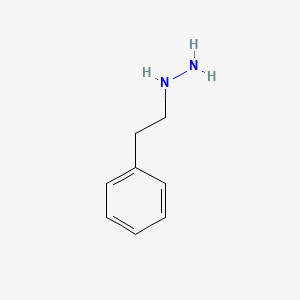
The drawing shows the neutral parent. The product salt formula is separately identified; neither determines release rate or dose.
How was this medicine developed?
The current Nardil record lists July 1999 as its first authorisation date. Its longstanding medicine class predates this product record.
Sources and References
- Nardil 15 mg — UK SmPC
Product information published on the electronic Medicines Compendium (emc); supplied by pharmaceutical companies.
Scope: United Kingdom product information.
- Nardil 15 mg — patient leaflet
Product information published on the electronic Medicines Compendium (emc); supplied by pharmaceutical companies.
Scope: United Kingdom product information.
- NHS SPS: MAOI to other antidepressants, switching in adults
Scope: NHS Specialist Pharmacy Service — professional medicines advice; individual and local implementation.
- Hull and East Riding: Phenelzine prescribing framework (2021)
Scope: England — historical Hull and East Riding local prescribing framework; not current national guidance.
- Antidepressants: use and safety
Scope: United Kingdom.
- Nardil prescribing information — mechanism explanation
Scope: Mechanism explanation only. Source sections checked: Clinical Pharmacology; Contraindications; Warnings, Warning to the Patient; Precautions, Drug Interactions..
- What Is a Neurotransmitter? — mechanism explanation
Scope: Mechanism explanation only. Source sections checked: How Neurotransmitters Work; Types of Neurotransmitters..
Shared scientific background. US product pharmacology and international chemical records support molecular explanations only; UK product details and prescribing information are verified separately.
Article Information
- Edition
- United Kingdom
- Content updated
- 2026-10-24
- Source check dates
- Listed with each reference above; retained dates for shared scientific content.
- Scope
- exact products checked
Source and coverage limits
- Educational summaries cover the named UK products, not every formulation or prescribing circumstance.
- Listings do not guarantee local stock or NHS access.
- UK product warnings are not US FDA boxed-warning designations.
- Nardil SmPC 4.5 describes a 10-day interval before certain serotonergic drugs, while its PIL describes 14 days and NHS SPS recommends 14 days for SSRI/SNRI switches. The shorter figure is not used as patient advice; specialists must resolve the exact switch.
- The SmPC expressly specifies five weeks after fluoxetine; the PIL’s general SSRI interval must not be used to shorten it.
- The full dietary list must be supplied and reviewed; this article provides examples, not a replacement diet sheet.
- The 2021 Hull and East Riding framework is past its stated review date. It is used only to corroborate stable mechanism/safety information also present in the current SmPC, not to assert a current pathway or national recommendation.