
About this medicine
Immediate-release and prolonged-release tablets contain the same active medicine but have different instructions and licensed uses.
A useful response includes changes in the illness being treated and day-to-day functioning, not simply feeling more sedated. Continued treatment after recovery can be intended to prevent another episode. The indication, formulation and earlier response determine that plan.
What is this medicine used for?
Both checked products cover schizophrenia and bipolar illness in adults. The additional major-depression indication belongs to Seroquel XL as add-on treatment, not automatically to every quetiapine formulation.
Which warning signs need help?
A blistering rash, fever with marked stiffness or confusion, severe allergic symptoms or collapse needs urgent medical help. Overdose requires immediate medical advice. Use the emergency service for your actual country. UK warnings are not labelled as FDA boxed warnings.
Seek prompt assessment for constipation with ongoing abdominal pain, infection symptoms such as fever or sore throat, or unexplained chest pain and breathlessness. These may indicate bowel obstruction, low infection-fighting blood cells or a cardiac problem rather than an ordinary tolerable side effectAn effect beyond the intended treatment effectAn effect of a treatment in addition to its intended effect. It may be unwanted, harmful or sometimes beneficial.Read the full definition of Side effect. New thoughts of self-harm also require immediate help.
How do I take it safely?
For adult bipolar depression, the labels use 50, 100, 200 then 300 mg over four days, usually targeting 300 mg at bedtime. Other indications differ. Seroquel XL is taken without food; immediate-release Seroquel permits food. These label examples are not personal instructions.
For schizophrenia, immediate-release Seroquel is usually divided into two daily doses, whereas XL is once daily. XL schizophrenia/mania initiation and XL add-on depression initiation are different schedules; the bipolar-depression example above must not be reused for every indication. XL tablets must remain whole.
Older age and liver impairment can require lower starting doses and slower increases. A clinician may switch stable immediate-release treatment to XL using the total daily dose, but individual adjustment can still be needed.
What side effects should I know about?
Sleepiness, dizziness, constipation, dry mouth, increased appetite and weight gain are common concerns. Movement problems and metabolic changes can also occur.
Who needs extra care with this medicine?
Heart disease, low blood pressure, liver disease, diabetes and seizure history need review. Seroquel XL is not approved for dementia-related psychosisPsychosisPsychosis describes symptoms that affect a person’s ability to tell what is real. These can include hallucinations, delusions and disorganised thinking or speech.Psychosis can occur with different mental or physical health conditions, some medicines or substance use. It does not automatically mean schizophrenia. New symptoms need prompt professional assessment..
Discuss sleep apnoea, swallowing problems, urinary retention, an enlarged prostate or previous bowel obstruction. Sedation and blood-pressure drops can increase falls, particularly early in treatment and in older people. Antipsychotic risks in dementia include stroke and increased mortality; using a low dose does not remove the need to assess those risks.
Can it affect my other medicines?
The checked label contraindicates strong CYP3A4 inhibitors, including certain antifungals, HIV medicines and antibiotics. Avoid grapefruit juice. Alcohol and other sedating medicines can increase impairment.
Carbamazepine and phenytoin can markedly reduce exposure. Medicines that prolong cardiac electrical recovery, lower potassium or magnesium, or worsen constipation need separate consideration. Combining an antidepressant with quetiapine can also produce serotoninSerotoninA chemical messenger involved in several functions, including sleep, mood and digestion. It acts through different receptors, with effects that depend on the cell.Read the full definition of Serotonin toxicity; an add-on depression licence is not permission to combine medicines without review.
What check-ups will I need?
Review benefit, sedation and movement symptoms. Monitor weight, pulse, blood pressure, glucose and lipids; investigate other findings according to individual risk.
Weight, glucose and lipid checks address metabolic changes that may occur even when mental health symptoms improve. Review troublesome restlessness or abnormal movements separately from agitation caused by the illness. Infection symptoms can warrant a blood count; cardiac symptoms and risk factors may warrant an ECG.
What about pregnancy, breastfeeding and age?
Pregnancy needs individual review. The Seroquel XL leaflet advises against breastfeeding; NHS advice describes supervised use with infant checks. Discuss this distinction with the treating team. Use below 18 is not recommended in the checked label.
What if I miss a dose or want to stop?
Do not double a missed dose. Sudden stopping can cause withdrawal symptomsWithdrawalSymptoms that may occur after reducing or stopping a medicine or substance to which the body has adapted.Read the full definition of Withdrawal, so planned stopping is usually gradual with the prescriber.
Abrupt withdrawal can cause insomnia, nausea, vomiting, headache, dizziness or irritability. The product information describes reducing treatment over at least one to two weeks, with the actual plan adjusted to the person. Withdrawal symptoms and return of the original illness need assessment rather than automatic dose escalation.
How does it work?
Quetiapine changes how brain cells respond to chemical messages, particularly messages carried by dopamineDopamineA chemical messenger involved in movement, learning and emotion. Its name does not describe one feeling or one role throughout the brain.Read the full definition of Dopamine and serotonin. It does this by attaching to receptorsReceptorA protein that recognizes a signal and helps a cell respond. Different receptor types can produce different responses to the same messenger.Read the full definition of Receptor, proteins that receive those messages and influence what a cell does next. These actions are part of what researchers study to understand its effects, although the full connection with improvement in symptoms remains unclear.
How Brain Cells Communicate
Brain cells, also called neurons, communicate by releasing chemical messengers called neurotransmitters. Dopamine and serotonin are two of these messengers, and each can act at several types of receptor. A message can have different effects depending on which receptor receives it and where that receptor is located, so neither chemical has just one job.
What is known: The receiving cell responds when a messenger activates one of its receptors.
What remains uncertain: A person’s symptoms cannot be explained by a single receptor or messenger level.
Dopamine · D2 receptor
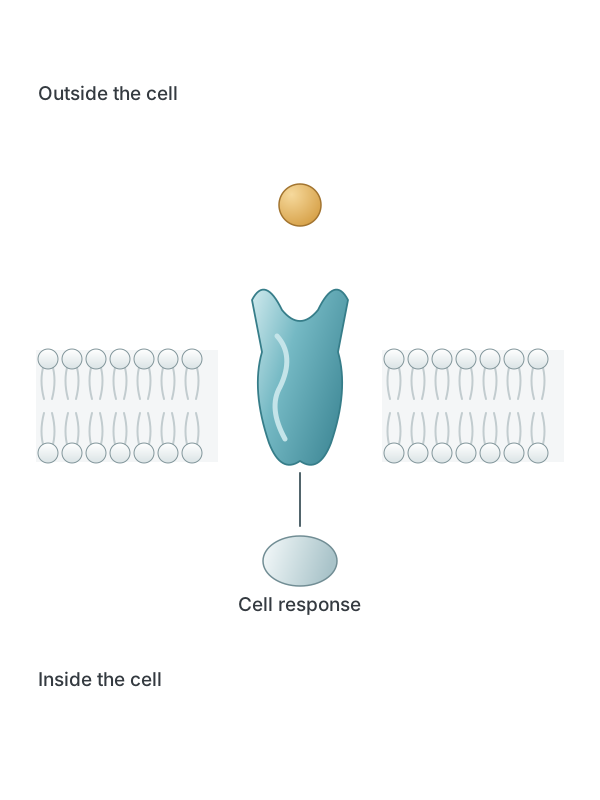
- Dopamine
A messenger can change signaling through its receptor.
- D2 receptor
This receptor symbol identifies a function, not a molecular structure.
- Cell response
The arrow represents a signaling response, not movement through a pore.
Simplified teaching model. Protein shapes, sizes, particle counts and arrows are illustrative, not measurements or experimental structures.
Serotonin · 5-HT2 receptor
- Serotonin
A messenger can change signaling through its receptor.
- 5-HT2 receptor
This receptor symbol identifies a function, not a molecular structure.
- Cell response
The arrow represents a signaling response, not movement through a pore.
Simplified teaching model. Protein shapes, sizes, particle counts and arrows are illustrative, not measurements or experimental structures.
About this illustration
A receptor receives a message: A chemical messenger can activate a receptor and change signaling inside a cell. A person’s symptoms cannot be explained by a single receptor or messenger level.
How the Medication Changes Signaling
Quetiapine blocks certain receptors, including dopamine D2 receptors and serotonin 5-HT2 receptors. The letters and numbers identify particular types of receiving sites; 5-HT is another name for serotonin. This blocking action is called antagonism: the medicine occupies a receptor and reduces its activation by the usual messenger. It changes the cell’s response to a message rather than removing all dopamine or serotonin from the brain.
What is known: Blocking selected dopamine and serotonin receptors changes the messages cells receive.
What remains uncertain: The full connection between these actions and treatment benefit remains unclear.
Dopamine · D2 receptor
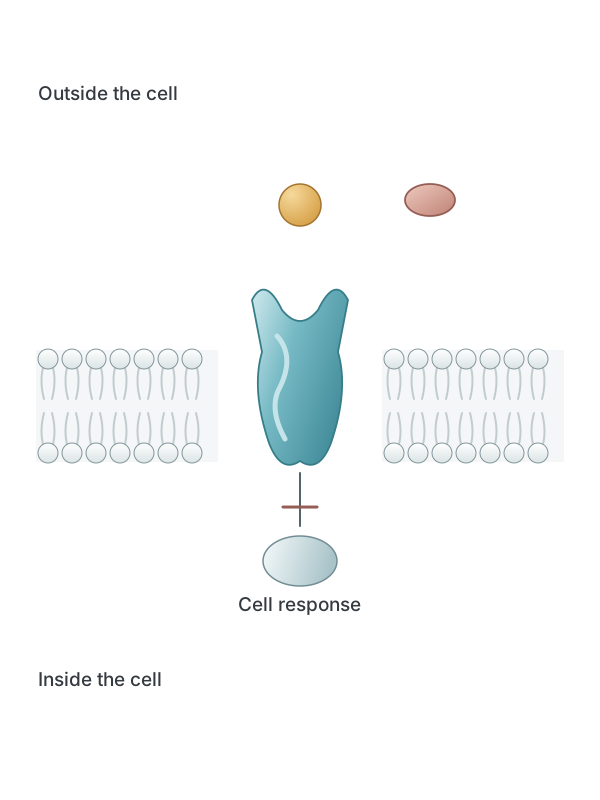
- Dopamine
A messenger can change signaling through its receptor.
- D2 receptor
This receptor symbol identifies a function, not a molecular structure.
- Quetiapine: activation opposed
The crossbar marks opposition to receptor activation, not permanent closure.
Simplified teaching model. Protein shapes, sizes, particle counts and arrows are illustrative, not measurements or experimental structures.
Serotonin · 5-HT2 receptor
- Serotonin
A messenger can change signaling through its receptor.
- 5-HT2 receptor
This receptor symbol identifies a function, not a molecular structure.
- Quetiapine: activation opposed
The crossbar marks opposition to receptor activation, not permanent closure.
Simplified teaching model. Protein shapes, sizes, particle counts and arrows are illustrative, not measurements or experimental structures.
About this illustration
Quetiapine: antagonist action: Quetiapine can oppose activation at D2 and 5-HT2 receptors. The full connection between these actions and treatment benefit remains unclear.
How does it affect my body?
Histamine and alpha-adrenergic receptor effects help explain sedation and postural dizziness. Norquetiapine’s muscarinic activity can contribute to constipation and dry mouth.
How does my body process it?
The liver’s CYP3A4 enzyme processes quetiapine and norquetiapine. Strong enzyme inhibitors can markedly increase exposure.
How do treatment options differ?
Seroquel and Seroquel XL should not be confused: release pattern, meal instructions and depression licensing differ. Sedation alone does not establish a licensed insomnia indication.
A closer look at the science
Receptor antagonism includes serotonin 5-HT2 and dopamine D2. Norquetiapine also inhibits the noradrenaline transporterTransporterA protein that moves a substance across a cell membrane. Some transporters help remove released chemical messengers from the space around nerve cells.Read the full definition of Transporter and partially stimulates 5-HT1A receptors; these actions may contribute to antidepressant effects.
Quetiapine fumarate is a salt with two quetiapine units for each fumarate unit. The drawing shows one neutral quetiapine parent molecule; it omits the fumarate component and the second parent unit.
Chemical formula: C42H50N6O4S2 · C4H4O4
The formula shown describes the salt, not just the pictured parent. C, H, N, O and S stand for carbon, hydrogen, nitrogen, oxygen and sulfur. The chemical formula must not be used to calculate a replacement dose.
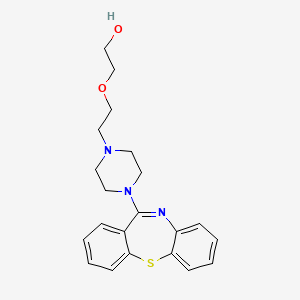
The depicted parent and the salt formula describe different explicitly identified species.
How was this medicine developed?
Seroquel XL’s checked authorisations began in 2008; the 150 mg strength followed in 2010.
Sources and References
- Seroquel film-coated tablets — UK SmPC
Product information published on the electronic Medicines Compendium (emc); supplied by pharmaceutical companies.
Scope: United Kingdom product information.
- Seroquel XL prolonged-release tablets — UK SmPC
Product information published on the electronic Medicines Compendium (emc); supplied by pharmaceutical companies.
Scope: United Kingdom product information.
- Quetiapine
Scope: NHS website for England — general medicine education, not a four-nation service pathway.
- Seroquel XL 50–400 mg tablets — patient leaflet
Product information published on the electronic Medicines Compendium (emc); supplied by pharmaceutical companies.
Scope: United Kingdom product information.
- Bipolar disorder: assessment and management (CG185), recommendations
Scope: England guidance; applicability or adoption in other UK nations requires separate consideration.
- DailyMed: Seroquel current in-use labeling
- NIH: What Is a Neurotransmitter?
- NIMH: Understanding psychosis
Shared scientific background. Some references are US product pharmacology or international chemical records; UK product details and prescribing information are verified separately.
Article Information
- Edition
- United Kingdom
- Content updated
- 2026-10-24
- Source check dates
- Listed with each reference above; retained dates for shared scientific content.
- Scope
- exact products checked
Source and coverage limits
- This educational record covers the checked UK immediate-release and prolonged-release oral products, not every manufacturer, pack or local formulary. Product strengths are not a personal dosing schedule.
- Oral suspension is mentioned by NHS but product-specific concentration, authorisation and administration have not been audited here.
- NICE page content checked through official indexed text; direct page access returned HTTP 403.