
About this medicine
Treatment includes educational, psychological and social support where appropriate. A specialist establishes the diagnosisDiagnosisA clinical conclusion about the condition that best explains a person’s symptoms and other findings.Read the full definition of Diagnosis and starts medication.
What is this medicine used for?
The checked UK licence covers children aged six and over after inadequate methylphenidate response, and adults with childhood ADHD symptoms. It does not license binge-eating treatment. NICE lists lisdexamfetamine or methylphenidate as first-line adult medication options; local pathways differ.
For children, this product’s licensed age range is separate from its place in the NICE treatment sequence. The ADHD article explains when this option may be considered after assessment, environmental changes and review of earlier treatment. Follow the exact formulation’s prescribing information and the agreed specialist monitoring plan.
Which warning signs need help?
Seek urgent help for chest pain, collapse, seizures, severe allergic symptoms, mania or hallucinationsHallucinationsA hallucination is a sensory experience without a corresponding external source—for example, hearing a voice when nobody is speaking. It can involve hearing, sight, touch, smell or taste and may feel very real.A hallucination is an experience; a delusion is a belief. Hallucinations can have different causes, so an assessment is needed to understand them.. Dependence, misuse and diversion are recognised risks: store securely and never share. For a life-threatening emergency use local emergency services. UK product warnings are not FDA boxed-warning designations.
How do I take it safely?
The label starts at 30 mg each morning, or 20 mg when a lower start is appropriate, with 10–20 mg increases about weekly and a maximum of 70 mg/day. Severe kidney impairment has a lower limit. Capsule contents may be mixed with yoghurt, water or orange juice and consumed immediately in full. Do not split doses.
The SmPC limits severe renal impairment to 50 mg/day and calls for further consideration in dialysis. This is separate from the usual 70 mg maximum; the medicine is not removed by dialysis.
What side effects should I know about?
Reduced appetite, insomnia, dry mouth and headache are very common. Anxiety, irritability, weight loss and stomach symptoms also occur.
Who needs extra care with this medicine?
ContraindicationsA medical reason a medicine should not be usedA medical reason a medicine should not be used in a particular situation because it may be harmful.Read the full definition of Contraindication include specified cardiovascular disease, moderate/severe hypertension, hyperthyroidism, glaucoma and MAOI use within the previous 14 days. The complete label must be checked.
Can it affect my other medicines?
MAOIs can cause dangerous interactions. Check antidepressants, cough/cold remedies and medicines that alter urine acidity with a pharmacist.
SSRIs and SNRIs can add serotoninSerotoninA chemical messenger involved in several functions, including sleep, mood and digestion. It acts through different receptors, with effects that depend on the cell.Read the full definition of Serotonin-syndrome risk. Fever, agitation, sweating and muscle twitching require urgent assessment rather than assuming a normal stimulant effect.
What check-ups will I need?
NICE recommends pulse and blood pressure checks after dose changes and every six months. Review weight, children’s growth, sleep, mental state and continuing benefit.
Before treatment, record cardiovascular history, family history of sudden death, medicines and psychiatric symptoms. Review new or worsening psychiatric symptoms at dose changes and visits. Continued treatment beyond a year needs at least yearly benefit review; any trial off medication is planned professionally.
What about pregnancy, breastfeeding and age?
Use during pregnancy requires explicit medical advice. The checked leaflet advises against breastfeeding while taking Elvanse. It is not indicated below age six.
Available observational amfetamine data do not suggest increased overall congenital-malformation risk, but other studies suggest pre-eclampsia and premature birth risks. Newborn withdrawalWithdrawalSymptoms that may occur after reducing or stopping a medicine or substance to which the body has adapted.Read the full definition of Withdrawal is possible. This evidence does not establish zero risk or replace individual specialist advice.
What if I miss a dose or want to stop?
Skip a forgotten dose until the next day; avoid afternoon catch-up doses and never double. Discuss stopping with the prescriber.
How does it work?
Lisdexamfetamine is a prodrug, meaning the body must convert it into another substance before its main medicine effect occurs. That substance is dexamfetamine, which changes the handling of dopamineDopamineA chemical messenger involved in movement, learning and emotion. Its name does not describe one feeling or one role throughout the brain.Read the full definition of Dopamine and noradrenaline, chemical messengers used by nerve cellsNeuronA nerve cell that receives and sends information. Neurons work in connected groups, rather than carrying a whole thought on their own.Read the full definition of Neuron. Researchers understand this conversion and these messenger effects, but not every step connecting them with improvement in symptoms.
How Brain Cells Communicate
Nerve cells release dopamine and norepinephrine, also called noradrenaline, into the small spaces between cells. These chemical messengers, or neurotransmitters, influence receiving cells before being removed or taken back up. Transporters are proteins that return messengers into nerve cells; that return is called reuptake. Release and reuptake together help control when and where a chemical message is available.
What is known: Cells regulate both the release and the return of these messengers.
What remains uncertain: These processes do not establish a simple chemical shortage in a person with attention-deficit/hyperactivity disorder (ADHD).
Dopamine recycling
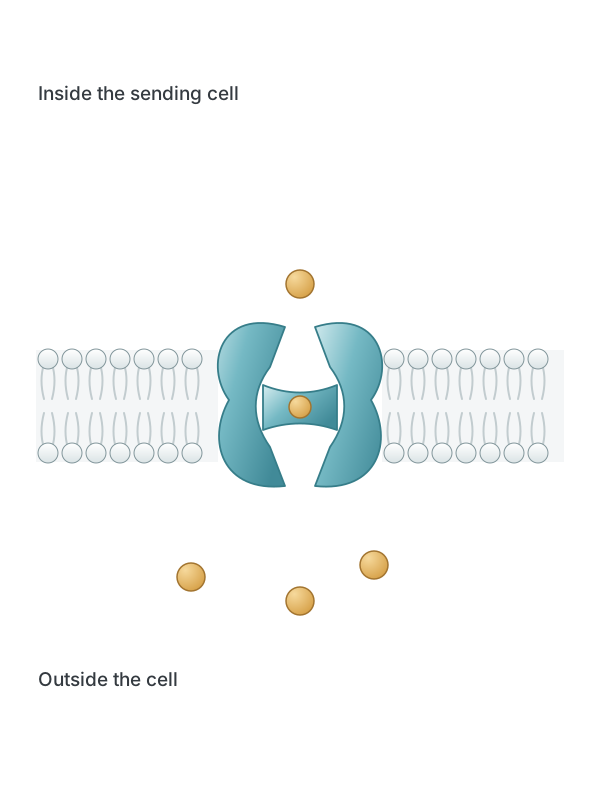
- Dopamine
The messenger is shown outside the sending cell.
- DAT
This transporter returns dopamine from outside into the sending cell.
- Return into the cell
The arrow shows transport direction, without a measured rate.
Simplified teaching model. Protein shapes, sizes, particle counts and arrows are illustrative, not measurements or experimental structures.
DAT participates in returning released dopamine into a nerve cell.
Norepinephrine recycling
- Norepinephrine
The messenger is shown outside the sending cell.
- NET
This transporter returns norepinephrine from outside into the sending cell.
- Return into the cell
The arrow shows transport direction, without a measured rate.
Simplified teaching model. Protein shapes, sizes, particle counts and arrows are illustrative, not measurements or experimental structures.
NET participates in returning norepinephrine through its own transport system.
About this illustration
Nerve cell releases → Dopamine + norepinephrine → Transporters recycle. These processes do not establish a simple chemical shortage in a person with attention-deficit/hyperactivity disorder (ADHD).
Release and reuptake are parts of messenger signaling, not a measured shortage.
Qualitative model · no scale, rate, dose or binding pose
How does it affect my body?
Appetite, sleep, weight, pulse and blood pressure can change. Treatment benefit should be considered alongside these effects.
How does my body process it?
Conversion to dexamfetamine provides prolonged action. Severe kidney impairment reduces clearance and lowers the label’s maximum dose.
How do treatment options differ?
Lisdexamfetamine and methylphenidate are distinct medicines; capsule milligrams are not equivalent doses. A US brand alias does not prove UK product availability.
A closer look at the science
Red blood cells mainly perform conversion. Dexamfetamine increases monoamine release and reduces reuptakeReuptakeThe return of a released chemical messenger into a cell through a transporter. It is one way to limit a signal; chemical breakdown is another.Read the full definition of Reuptake; the precise therapeutic pathway in ADHD remains incompletely established.
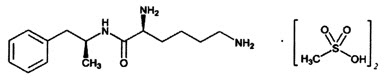
Lisdexamfetamine dimesylate contains lisdexamfetamine with two mesylate components. This is the prodrug, before conversion to dextroamphetamine.
Chemical formula: C15H25N3O · (CH4O3S)2
C, H, N, O and S denote carbon, hydrogen, nitrogen, oxygen and sulfur. The dot and subscript 2 identify the two mesylate components of the salt. They are not two additional stimulant doses.
How was this medicine developed?
The 30 mg UK authorisation dates to February 2013. Takeda’s September 2025 communication describes combined Elvanse labelling for children and adults and withdrawal of the separate Elvanse Adult pack.
Sources and References
- Elvanse 30 mg capsules — UK SmPC
Product information published on the electronic Medicines Compendium (emc); supplied by pharmaceutical companies.
Scope: United Kingdom product information.
- Elvanse 20–70 mg capsules — patient leaflet
Product information published on the electronic Medicines Compendium (emc); supplied by pharmaceutical companies.
Scope: United Kingdom product information.
- Lisdexamfetamine for adult services — local shared-care protocol
Scope: England, Nottinghamshire local shared-care protocol.
- Attention deficit hyperactivity disorder: diagnosis and management (NG87), recommendations
Scope: NICE guidance for England; application in other UK nations determined separately.
- Elvanse: one dose range for children, adolescents and adults
Scope: UK manufacturer product communication, hosted by an English local NHS committee.
- Vyvanse: current product prescribing information
- ADHD: full recommendations PDF
Scope: United Kingdom; NICE recommendations require attention to national implementation and local pathways.
- Schizophrenia
- NIMH: Understanding psychosis
Shared scientific background. Some references are US product pharmacology or international chemical records; UK product details and prescribing information are verified separately.
Article Information
- Edition
- United Kingdom
- Content updated
- 2026-10-30
- Source check dates
- Listed with each reference above; retained dates for shared scientific content.
- Scope
- exact products checked
Source and coverage limits
- This concise educational record does not audit every UK manufacturer, pack or local formulary. Product strengths are not a personal dosing schedule.
- US Vyvanse is an alias only. No UK chewable product or binge-eating indication was established. Nottinghamshire shared-care information is locally scoped; current dosing and licensing follow the October 2026 SmPC.
- NICE recommendations checked through official indexed text; direct page access returned HTTP 403.