
About this medicine
Dexamfetamine and dextroamphetamine name the same active molecule. They are not aliases for all mixed-amfetamine products, and an American formulation's directions must not be transferred to Amfexa.
The UK name is usually dexamfetamine. This profile distinguishes Amfexa's ADHD authorisation from generic narcolepsy products and a licensed oral solution; it does not treat every dexamfetamine product as the same prescription.
What is this medicine used for?
Amfexa is licensed within a comprehensive ADHD programme for ages 6–17 after inadequate methylphenidate response. NICE also discusses dexamfetamine for adults responding to lisdexamfetamine but unable to tolerate its longer effect; that does not extend Amfexa's licence.
Rosemont's 1 mg/mL solution is also licensed for adult narcolepsy; its ADHD indication remains ages 6–17 after inadequate methylphenidate response. Its leaflet explicitly separates these age groups. Brown & Burk's 5 mg tablet lists narcolepsy and childhood 'refractory hyperkinetic states'. That older product wording is not a new diagnostic label or a blanket recommendation for preschool ADHD.
For narcolepsy, the Nottinghamshire pathway describes sleep-specialist initiation and review. It lists oral solution as non-formulary locally, despite the product having a licence. This illustrates the difference between authorisation and local access, not a UK-wide prohibition.
For children, this product’s licensed age range is separate from its place in the NICE treatment sequence. The ADHD article explains when this option may be considered after assessment, environmental changes and review of earlier treatment. Follow the exact formulation’s prescribing information and the agreed specialist monitoring plan.
Which warning signs need help?
Chest pain, fainting, severe agitation, hallucinationsHallucinationsA hallucination is a sensory experience without a corresponding external source—for example, hearing a voice when nobody is speaking. It can involve hearing, sight, touch, smell or taste and may feel very real.A hallucination is an experience; a delusion is a belief. Hallucinations can have different causes, so an assessment is needed to understand them. or seizures need urgent assessment. Overdose can be dangerous even at relatively small excess amounts. Do not share tablets or take another person's prescription.
The Amfexa product lists a history of drug or alcohol misuse as a contraindicationA medical reason a medicine should not be usedA medical reason a medicine should not be used in a particular situation because it may be harmful.Read the full definition of Contraindication, not merely a monitoring issue. This product-specific restriction should be distinguished from broader specialist decisions about ADHD care.
The Rosemont liquid is under additional monitoring, shown by a black triangle; this is not an FDA boxed warning. Because it contains maltitol, people with hereditary fructose intolerance should not take it. Secure storage and correct measurement are important with liquid as well as tablets.
How do I take it safely?
Amfexa comes in 5, 10 and 20 mg tablets. For its ADHD indication, the product reference starts at 5 mg once or twice daily with weekly 5 mg increases where needed; the usual maximum is 20 mg daily. Higher exceptional dosing needs specialist judgement. Its score lines are for swallowing, not accurate quarters.
Brown & Burk's 5 mg tablet can be divided into equal doses. Its adult narcolepsy schedule differs from Amfexa's ADHD schedule: the reference starts at 10 mg daily in divided doses and describes weekly adjustment, with lower starting doses in older people. These are product distinctions, not a home switching plan.
Rosemont solution contains 1 mg in each mL and has its own ADHD and adult narcolepsy directions. Use a pharmacy-supplied medicine measure for the prescribed volume, keep timing consistent relative to meals, and follow the label. The bottle is kept upright and used within 30 days of first opening.
What side effects should I know about?
Reduced appetite, sleep disturbance, stomach symptoms and headache may occur. Report new tics, mood changes or marked weight loss rather than treating every change as part of ADHD.
Who needs extra care with this medicine?
Important exclusions include significant cardiovascular disease, moderate or severe hypertension, glaucoma, hyperthyroidism and specified serious psychiatric disorders. The specialist must assess substance-use and diversion risks as well as clinical benefit.
Can it affect my other medicines?
MAO inhibitors require a 14-day separation. Some antidepressants, decongestants, blood-pressure medicines and products changing urinary acidity affect risk or exposure; include non-prescription products in the medication review.
What check-ups will I need?
Record cardiovascular history, pulse, blood pressure, weight and height before ADHD treatment. Check pulse and blood pressure at dose changes and at least six-monthly; review growth, appetite, sleep and mental state throughout.
For children on long-term ADHD treatment, Amfexa recommends a supervised trial off medication at least yearly to reassess benefit. This is a clinician-planned ADHD review, not an instruction for a person with narcolepsy to interrupt treatment.
Narcolepsy follow-up includes benefit, daytime sleepiness, adverse effects, cardiovascular observations and diversion risk. Nottinghamshire's shared-care information describes specialist review and communication with primary care; arrangements elsewhere depend on the local service.
What about pregnancy, breastfeeding and age?
Amfexa is not licensed for adult ADHD or under-6s and its SmPC says it should not be used in older people. Rosemont liquid's adult narcolepsy indication must not be confused with its paediatric-only ADHD indication; the leaflet includes separate older-adult narcolepsy instructions.
Brown & Burk's tablet has different age wording, including childhood hyperkinetic-state dosing from age 3, and lists pregnancy and lactation as contraindications in section 4.3. Section 4.6 also describes a feeding-versus-treatment decision. These particulars need prescriber interpretation, not replacement by another brand's less restrictive wording.
Amfexa and Rosemont solution discourage pregnancy use and require a clinician-led decision about treatment versus breastfeeding. Dexamfetamine enters breast milk. Discuss pregnancy planning, feeding and any organ impairment with the specialist; the exact supplied product matters.
What if I miss a dose or want to stop?
A planned dose reduction and follow-up are needed when stopping regular use. Abrupt cessation after prolonged use may cause fatigue, increased appetite, low mood or altered sleep.
How does it work?
Dexamfetamine changes the handling of dopamineDopamineA chemical messenger involved in movement, learning and emotion. Its name does not describe one feeling or one role throughout the brain.Read the full definition of Dopamine and noradrenaline, chemical messengers used by nerve cellsNeuronA nerve cell that receives and sends information. Neurons work in connected groups, rather than carrying a whole thought on their own.Read the full definition of Neuron. It increases their release and reduces their return into cells, changing communication in systems involved in attention and alertness. These actions are understood more clearly than the full pathway through which attention-deficit/hyperactivity disorder (ADHD) symptoms improve.
How Brain Cells Communicate
Nerve cells release chemical messengers called neurotransmitters to influence other cells. Dopamine and norepinephrine, also known as noradrenaline, act at receptors, proteins that receive their signals. Proteins called transporters then help return the messengers into cells, a process known as reuptake. Changing release or reuptake affects communication across many connected cells rather than determining one behavior on its own.
What is known: Messenger release and recovery help regulate activity across nerve-cell networks.
What remains uncertain: A response to a stimulant cannot by itself diagnose ADHD.
Dopamine reuptake
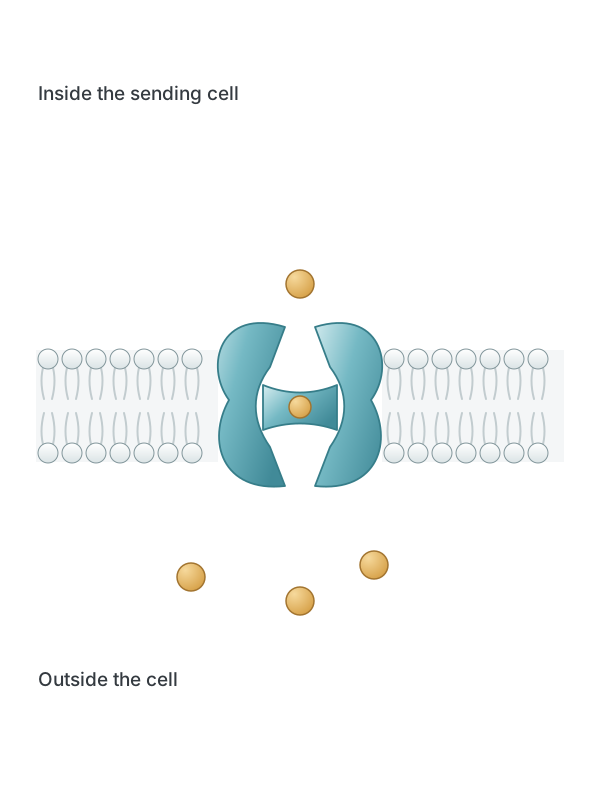
- Dopamine
The messenger is shown outside the sending cell.
- DAT
This transporter returns dopamine from outside into the sending cell.
- Return into the cell
The arrow shows transport direction, without a measured rate.
Simplified teaching model. Protein shapes, sizes, particle counts and arrows are illustrative, not measurements or experimental structures.
DAT returns dopamine into a nerve cell after release.
Norepinephrine reuptake
- Norepinephrine
The messenger is shown outside the sending cell.
- NET
This transporter returns norepinephrine from outside into the sending cell.
- Return into the cell
The arrow shows transport direction, without a measured rate.
Simplified teaching model. Protein shapes, sizes, particle counts and arrows are illustrative, not measurements or experimental structures.
NET returns norepinephrine through a separate transport system.
About this illustration
Nerve-cell signal; Molecular action; Network activity. A response to a stimulant cannot by itself diagnose ADHD.
This is a simplified illustration. It does not show exactly how a medicine fits into a protein or predict a dose or response to treatment.
How the Medication Changes Signaling
Amphetamine exists in two mirror-image molecular forms, called d and l; dextroamphetamine is the d form. It is a stimulant, a medicine that increases activity in certain brain and body signaling systems. Amphetamines increase dopamine and norepinephrine release and inhibit reuptake, meaning they reduce the return of these messengers into nerve cells. This identifies the main known messenger effects without explaining all the changes a person may notice in attention, activity or sleep.
What is known: Dextroamphetamine is a particular molecular form of amphetamine with effects on messenger availability.
What remains uncertain: Its known chemical actions do not predict the balance of benefit and unwanted effects for an individual.
Reuptake inhibition: dopamine example
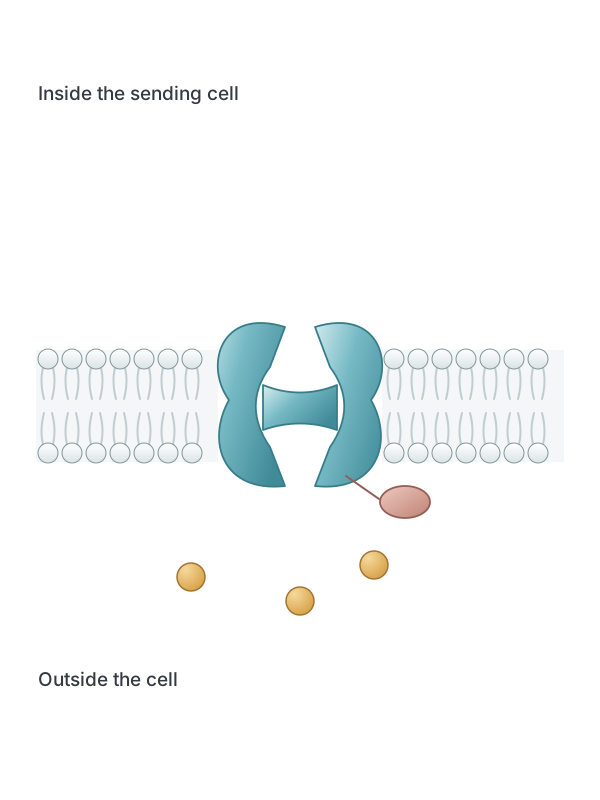
- Dopamine
The messenger is shown outside the sending cell.
- DAT
This transporter returns dopamine from outside into the sending cell.
- Dextroamphetamine: uptake inhibited
The interrupted arrow names the action; the symbol is not a molecular shape or binding position.
Simplified teaching model. Protein shapes, sizes, particle counts and arrows are illustrative, not measurements or experimental structures.
Dextroamphetamine reduces dopamine and norepinephrine reuptake. This panel uses dopamine and DAT as one example.
Increased release: dopamine example
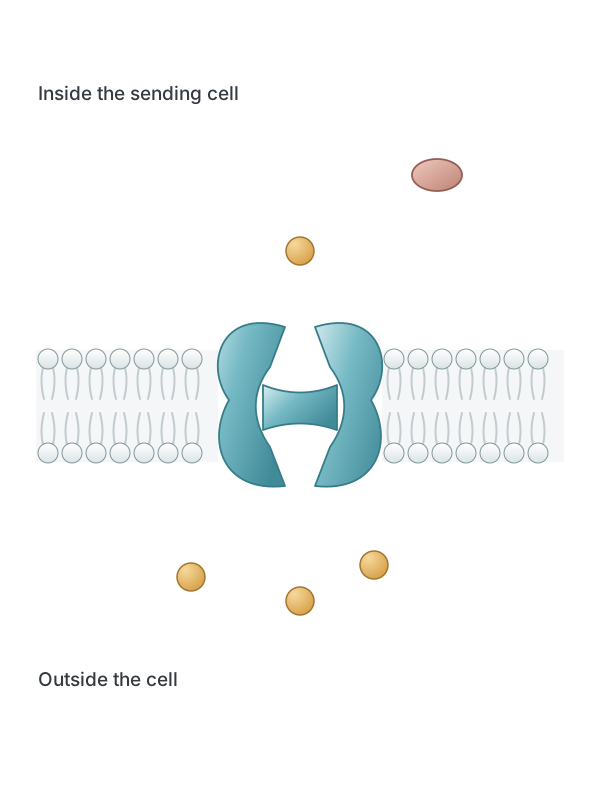
- Dopamine
The messenger is shown outside the sending cell.
- DAT
This transporter returns dopamine from outside into the sending cell.
- Increased release
The outward arrow shows a net effect, not an exclusive molecular route.
Simplified teaching model. Protein shapes, sizes, particle counts and arrows are illustrative, not measurements or experimental structures.
Dextroamphetamine also increases release of dopamine and norepinephrine. The outward arrow shows a net effect, not an exclusive molecular route.
About this illustration
Medicine; Molecular actions; Clinical effects. Its known chemical actions do not predict the balance of benefit and unwanted effects for an individual.
This is a simplified illustration. It does not show exactly how a medicine fits into a protein or predict a dose or response to treatment.
How does it affect my body?
Pulse and blood pressure can increase while appetite and sleep may be affected. Growth, nutrition and daily functioning must be considered alongside reduction in ADHD symptoms.
How does my body process it?
It is absorbed from the gut, enters the brain and undergoes liver metabolism. Elimination can be prolonged in organ impairment, so titrationTitrationAdjusting a medicine dose in planned stages, guided by the intended benefit and unwanted effects.Read the full definition of Titration requires particular caution.
How do treatment options differ?
Dexamfetamine is not mixed amfetamine salts. NICE distinguishes its shorter action from lisdexamfetamine; switching requires a new prescribing plan rather than matching milligrams or brand names.
A closer look at the science
The molecule has central stimulant and appetite-suppressing activity. The SmPC does not claim a fully established mechanism for every behavioural effect in ADHD.
Dextroamphetamine is the d-isomer of amphetamine, supplied as the sulfate salt.
Chemical formula: (C9H13N)2 · H2SO4
The image shows the verified neutral d-amphetamine parent, C9H13N. The sulfate salt contains two parent molecules per sulfuric-acid component; it is not the d/l mixture in Adderall.
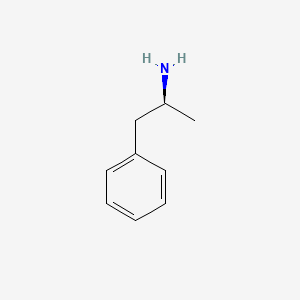
The drawing shows the neutral parent. The product salt formula is separately identified; neither determines release rate or dose.
How was this medicine developed?
The current UK product and guideline records preserve an important history of off-labelOff-labelUse of a licensed medicine outside the terms of its UK marketing authorisation.Read the full definition of Off-label adult use. Regulatory authorisation, guideline inclusion and local prescribing arrangements remain separate decisions.
Sources and References
- Amfexa 10 mg tablets: UK SmPC
Product information published on the electronic Medicines Compendium (emc); supplied by pharmaceutical companies.
Scope: United Kingdom.
- Amfexa 5 mg tablets: UK SmPC
Product information published on the electronic Medicines Compendium (emc); supplied by pharmaceutical companies.
Scope: United Kingdom.
- Amfexa: patient leaflet
Product information published on the electronic Medicines Compendium (emc); supplied by pharmaceutical companies.
Scope: United Kingdom.
- NICE NG87: ADHD recommendations
Scope: England; application elsewhere requires local guidance.
- Amfexa 20 mg tablets: UK SmPC
Product information published on the electronic Medicines Compendium (emc); supplied by pharmaceutical companies.
Scope: United Kingdom.
- Dexamfetamine sulfate 1 mg/mL oral solution: UK SmPC
Product information published on the electronic Medicines Compendium (emc); supplied by pharmaceutical companies.
Scope: United Kingdom.
- Dexamfetamine sulfate 1 mg/mL oral solution: patient leaflet
Product information published on the electronic Medicines Compendium (emc); supplied by pharmaceutical companies.
Scope: United Kingdom.
- Dexamfetamine sulfate 5 mg tablets: UK SmPC
Product information published on the electronic Medicines Compendium (emc); supplied by pharmaceutical companies.
Scope: United Kingdom.
- Dexamfetamine and lisdexamfetamine for narcolepsy: local information sheet v3.0
Scope: England: Nottingham and Nottinghamshire local pathway, not all UK nations.
- Zenzedi (dextroamphetamine) tablets: prescribing information — mechanism explanation
Scope: Mechanism explanation only. Source sections checked: Description; Clinical Pharmacology; Pharmacokinetics..
- Adderall label: amphetamine class pharmacology — mechanism explanation
Scope: Mechanism explanation only. Source sections checked: Clinical Pharmacology: Pharmacodynamics..
- Dexedrine Spansule (dextroamphetamine sulfate) sustained-release capsules: prescribing information — mechanism explanation
Scope: Mechanism explanation only. Source sections checked: Description; Clinical Pharmacology/Pharmacokinetics..
- ADHD: full recommendations PDF
Scope: United Kingdom; NICE recommendations require attention to national implementation and local pathways.
- Schizophrenia
- NIMH: Understanding psychosis
Shared scientific background. US product pharmacology and international chemical references do not establish UK licences, doses, formulations or NHS recommendations.
Article Information
- Edition
- United Kingdom
- Content updated
- 2026-10-30
- Source check dates
- Listed with each reference above; retained dates for shared scientific content.
- Scope
- Representative major UK dexamfetamine tablet strengths and licensed liquid; product-specific ADHD and narcolepsy distinctions.
Source and coverage limits
- Not an exhaustive manufacturer, stock, funding or specialist conversion catalogue.
- NICE adult ADHD recommendation remains distinct from product authorisation; its original official indexed-text check is preserved.
- Nottinghamshire narcolepsy access is local. The dated dexamfetamine review in that current local document is not treated as a fresh national prescribing review.