
About this medicine
Atomoxetine can improve attention, hyperactivity and impulsivity. Benefit may develop over several weeks, and medicine is one part of broader ADHD support.
Regular review asks whether everyday functioning is improving at home, school, study or work, not merely whether the person feels more stimulated. Non-stimulant describes its pharmacological group; it does not mean monitoring or side-effect precautions are unnecessary.
What is this medicine used for?
Treatment is initiated by an ADHD specialist. Adult assessment includes evidence that symptoms were present in childhood. A medicine licence and a service’s treatment pathway are different questions.
ADHD assessment considers persistent symptoms and impairment across situations, rather than a single episode of poor concentration. The medicine's noradrenaline action does not create a depression indication, and it is not an immediate concentration aid to use only for a difficult task.
For children, this product’s licensed age range is separate from its place in the NICE treatment sequence. The ADHD article explains when this option may be considered after assessment, environmental changes and review of earlier treatment. Follow the exact formulation’s prescribing information and the agreed specialist monitoring plan.
Which warning signs need help?
New suicidal thinking, seizures, severe behavioural changes or signs of serotoninSerotoninA chemical messenger involved in several functions, including sleep, mood and digestion. It acts through different receptors, with effects that depend on the cell.Read the full definition of Serotonin syndrome need urgent assessment. Stop atomoxetine and obtain immediate medical advice for jaundice or dark urine suggesting liver injury. Collapse or severe breathing difficulty is an emergency.
New chest pain or unexplained fainting needs prompt assessment. A prolonged painful erection also requires urgent care. The paediatric suicidal-thinking risk is explained through UK safety information, not relabelled as a UK FDA boxed warning.
How do I take it safely?
The checked adult SmPC starts at 40 mg daily for at least seven days before adjustment, with maintenance generally 80–100 mg daily and a 100 mg daily maximum. Children’s regimens depend on weight. These are licence summaries, not individual instructions.
The UK child schedule up to 70 kg starts around 0.5 mg/kg daily for at least seven days before adjustment, with a usual maintenance amount around 1.2 mg/kg daily. Weight and suitable capsule strengths matter. The American three-day initial interval must not be substituted for this UK schedule.
A separately checked Consilient Health liquid contains 4 mg/mL and is licensed for ADHD from six years, including adults. Its pack supplies a 10 mL oral syringe with 1 mL markings; use the prescribed volume and device rather than a kitchen spoon.
Do not mix the solution with food or water. The checked bottle has a 45-day period after first opening. A liquid can help with swallowing difficulties, but its concentration is not a daily dose.
What side effects should I know about?
Reduced appetite, nausea, headache, abdominal discomfort and sleep changes are reported. Adults can also experience sexual or urinary difficulties.
Ask about urinary difficulty and sexual side effectsAn effect beyond the intended treatment effectAn effect of a treatment in addition to its intended effect. It may be unwanted, harmful or sometimes beneficial.Read the full definition of Side effect as well as nausea or appetite loss; people may not volunteer these symptoms. Changes in sleep, behaviour or mood should be assessed in relation to treatment timing and the wider clinical picture.
Who needs extra care with this medicine?
ContraindicationsA medical reason a medicine should not be usedA medical reason a medicine should not be used in a particular situation because it may be harmful.Read the full definition of Contraindication include certain severe cardiovascular or cerebrovascular disorders, narrow-angle glaucoma, phaeochromocytoma and use around MAOI treatment. Liver impairment can require lower doses.
The checked oral solution contains sorbitol and should not be given to someone with hereditary fructose intolerance. Avoid eye contact; if solution enters an eye, rinse immediately with water and obtain medical advice.
Can it affect my other medicines?
Check antidepressants, medicines affecting heart rhythm or blood pressure, and cold remedies. Fluoxetine and paroxetine can increase atomoxetine exposure; serotonergic combinations can cause serotonin syndromeSerotonin syndromeSerotonin syndrome (also called serotonin toxicity) is a potentially life-threatening drug reaction caused by excessive serotonin activity in the nervous system.It can develop soon after starting or increasing a serotonin-affecting medicine, or combining it with another medicine or substance that affects serotonin.Possible signs include agitation or confusion, sweating, fever, diarrhoea, shaking, and stiff or twitching muscles.Seek urgent medical help if you suspect serotonin syndrome. Severe symptoms, such as a high fever, seizures, or loss of consciousness, need emergency care..
The product requires at least two weeks between atomoxetine and an MAOI in either direction. That interval is a safety boundary, not a switching plan. Medicines affecting cardiovascular function require particular attention even if they do not share atomoxetine's main target.
What check-ups will I need?
Check cardiovascular history, pulse and blood pressure before treatment, after dose changes and at least six-monthly. Growth and treatment benefit also need review. New cardiac symptoms require assessment.
MHRA advises careful pretreatment history and examination, with specialist cardiac review when findings suggest disease. Record pulse and pressure after adjustments and at least six-monthly, and assess cardiac symptoms promptly. A normal initial examination does not remove the need for follow-up.
What about pregnancy, breastfeeding and age?
Pregnancy and breastfeeding require specialist discussion because evidence is limited. The checked licence begins at age 6; adult licensing does not establish safety in every older person.
Limited evidence is not the same as proof of harm or proof of safety. Discuss treatment needs before conception where possible, and inform the maternity team if treatment continues. The absence of established use over 65 should remain explicit rather than extrapolating the adult regimen indefinitely.
What if I miss a dose or want to stop?
Do not double doses or exceed the prescribed daily total after a missed dose. Discuss stopping with the prescriber; ADHD symptoms can return even without a distinct withdrawalWithdrawalSymptoms that may occur after reducing or stopping a medicine or substance to which the body has adapted.Read the full definition of Withdrawal syndrome.
Absence of a typical withdrawal syndrome does not mean ongoing care is unnecessary. Treatment need should be reassessed rather than assumed lifelong; symptoms, functioning and tolerability help guide a planned change.
How does it work?
Atomoxetine reduces the return of noradrenaline, a chemical messenger, into nerve cellsNeuronA nerve cell that receives and sends information. Neurons work in connected groups, rather than carrying a whole thought on their own.Read the full definition of Neuron after it has been released. This allows more of the messenger to remain available between cells. Researchers do not yet fully understand how this action leads to improvement in attention-deficit/hyperactivity disorder (ADHD) symptoms.
How Brain Cells Communicate
Norepinephrine, also called noradrenaline, is one of the chemical messengers that nerve cells use to communicate. After release, it acts at receptors, proteins that receive the message and affect the receiving cell’s activity. Another protein, the norepinephrine transporter, returns the messenger into the sending cell. This return is called reuptake and helps regulate how long a message remains available.
What is known: The transporter helps remove norepinephrine from the space outside the cell.
What remains uncertain: A simplified account of this process cannot explain all the causes of someone’s attention difficulties.
Norepinephrine and NET
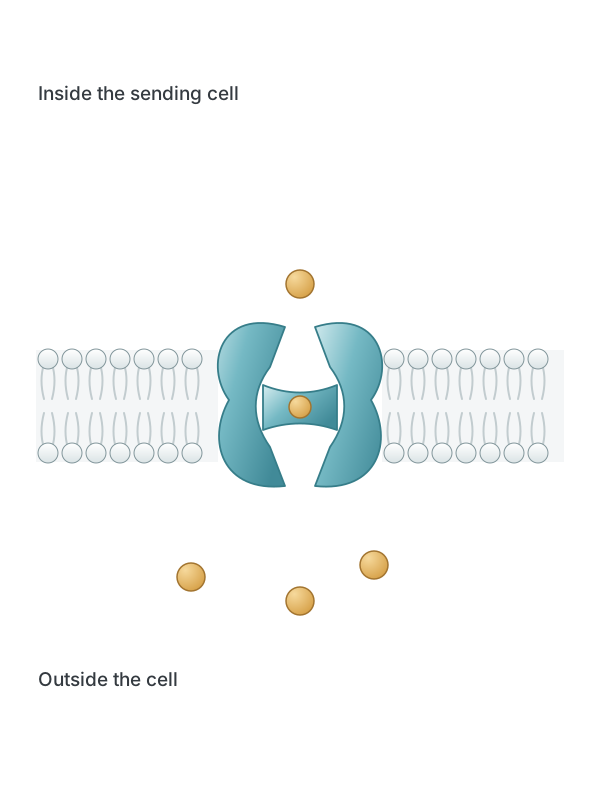
- Norepinephrine
The messenger is shown outside the sending cell.
- NET
This transporter returns norepinephrine from outside into the sending cell.
- Return into the cell
The arrow shows transport direction, without a measured rate.
Simplified teaching model. Protein shapes, sizes, particle counts and arrows are illustrative, not measurements or experimental structures.
The NET transporter returns norepinephrine from outside the nerve cell into the cell. This is a separate transport system.
About this illustration
Norepinephrine released → Signal between cells → Transporter recycles. A simplified account of this process cannot explain all the causes of someone’s attention difficulties.
A simplified view of messenger release and return to a nerve cell.
Qualitative model · no scale, rate, dose or binding pose
How the Medication Changes Signaling
Atomoxetine selectively inhibits the norepinephrine transporter, meaning it reduces this transporter’s activity more strongly than that of some other messenger transporters. As a result, less norepinephrine is taken back into the nerve cell through that route. The medicine changes messenger handling rather than directly supplying norepinephrine. This is the best-established starting point for understanding its effects, while the full connection to treatment benefit remains uncertain.
What is known: Reducing transporter activity changes norepinephrine availability between cells.
What remains uncertain: Knowing this action does not predict the size or timing of a person’s improvement.
Atomoxetine and NET
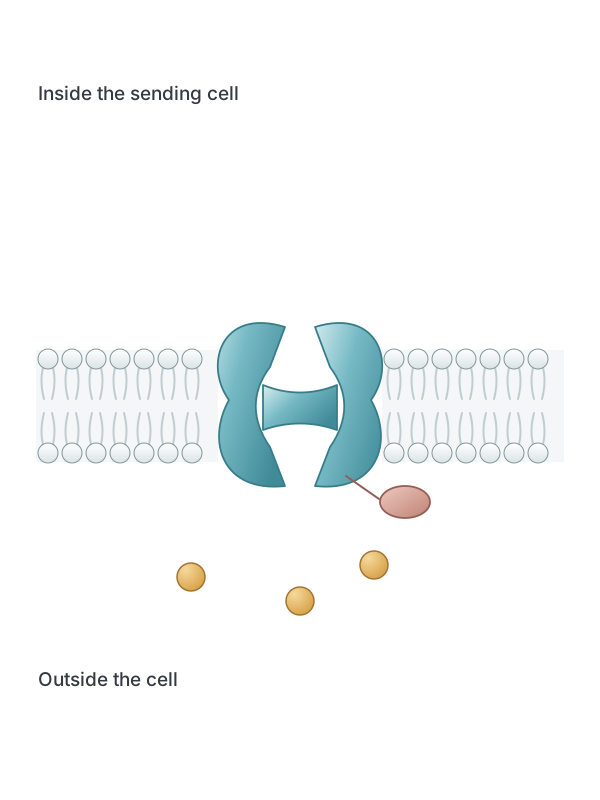
- Norepinephrine
The messenger is shown outside the sending cell.
- NET
This transporter returns norepinephrine from outside into the sending cell.
- Atomoxetine: uptake inhibited
The interrupted arrow names the action; the symbol is not a molecular shape or binding position.
Simplified teaching model. Protein shapes, sizes, particle counts and arrows are illustrative, not measurements or experimental structures.
Atomoxetine selectively inhibits the norepinephrine transporter. The full connection between this action and ADHD benefit remains incompletely understood.
About this illustration
Atomoxetine → Norepinephrine transporter → Reduced reuptake. Knowing this action does not predict the size or timing of a person’s improvement.
Transporter inhibition is shown qualitatively, without a molecular binding pose.
Qualitative model · no scale, rate, dose or binding pose
How does it affect my body?
Atomoxetine can increase pulse and blood pressure. This matters particularly for people whose cardiovascular condition could worsen with these changes.
The same messenger system acts beyond attention networks. Changes in pulse, pressure, appetite or urination can accompany benefit. The aim is a useful improvement with acceptable tolerability, not the largest physiological effect.
How does my body process it?
CYP2D6 is important in its metabolism. Genetic differences or medicines that inhibit this enzyme can increase exposure and change tolerability.
Poor CYP2D6 metabolisers have much higher exposure and may need a lower start or slower increase. The UK label halves initial and target doses in moderate liver impairment and uses a quarter in severe impairment. These are clinician-interpreted label adjustments, not instructions to split capsules.
How do treatment options differ?
NICE NG87 places atomoxetine among options after stimulant intolerance or insufficient response. This guidance should be read with the relevant national and local pathway.
Selective noradrenaline reuptakeReuptakeThe return of a released chemical messenger into a cell through a transporter. It is one way to limit a signal; chemical breakdown is another.Read the full definition of Reuptake inhibition is sometimes abbreviated using the same letters as serotonin–noradrenaline antidepressants. The abbreviation is ambiguous; atomoxetine's ADHD licence, pharmacology and dosing must be checked by medicine name.
A closer look at the science
Its main molecular target is the presynaptic noradrenaline transporterTransporterA protein that moves a substance across a cell membrane. Some transporters help remove released chemical messengers from the space around nerve cells.Read the full definition of Transporter. It does not directly inhibit serotonin or dopamineDopamineA chemical messenger involved in movement, learning and emotion. Its name does not describe one feeling or one role throughout the brain.Read the full definition of Dopamine transporters in the same way.
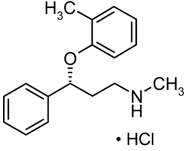
Atomoxetine hydrochloride contains the R isomer of atomoxetine. The official drawing shows this stereochemistry and the hydrochloride component.
Chemical formula: C17H21NO · HCl
C, H, N, O and Cl represent carbon, hydrogen, nitrogen, oxygen and chlorine. The hydrochloride salt is identified separately; formula and handedness do not predict a clinical response.
How was this medicine developed?
A January 2012 MHRA safety update strengthened cardiovascular precautions. Its reference to Strattera explains the historical alias; it is not evidence of current branded stock.
The history of the Strattera name and later generic capsules is separate from evidence that a particular pack is currently supplied. This UK account retains that alias without importing the American brand's commercial status or newer American titrationTitrationAdjusting a medicine dose in planned stages, guided by the intended benefit and unwanted effects.Read the full definition of Titration rules.
The Lincolnshire NHS formulary reports discontinuation of Strattera 4 mg/mL solution while noting a generic alternative. The current Consilient Health UK catalogue and its linked product information independently document a named generic solution. This separates an old brand's supply status from whether atomoxetine liquid has a UK product record; it is not a promise of local stock.
Sources and References
- Atomoxetine capsules: SmPC, sections 1–5
Product information published on the electronic Medicines Compendium (emc); supplied by pharmaceutical companies.
Scope: United Kingdom product information.
- Atomoxetine 10–100 mg capsules: patient leaflet, sections 1–4
Product information published on the electronic Medicines Compendium (emc); supplied by pharmaceutical companies.
Scope: United Kingdom product information.
- Atomoxetine: increases in blood pressure and heart rate (article dated January 2012)
Scope: United Kingdom medicines safety.
- ADHD: diagnosis and management, NG87 recommendations 1.7.10, 1.7.15 and 1.7.17
Scope: NICE guidance (England-based); applicability and implementation in other UK nations require the relevant national pathway.
- Atomoxetine 4 mg/mL oral solution: UK SmPC
Scope: United Kingdom product information.
- Consilient Health UK product catalogue: Atomoxetine oral solution
Scope: United Kingdom product catalogue.
- Lincolnshire Joint Formulary: CNS stimulants and ADHD medicines
Scope: England — Lincolnshire local formulary; not a UK-wide commissioning rule.
- Atomoxetine / Strattera: current reference-product labeling
- ADHD: full recommendations PDF
Scope: United Kingdom; NICE recommendations require attention to national implementation and local pathways.
- Serotonin syndrome: MedlinePlus Medical Encyclopedia
- Monitoring a person during and after antidepressant switching – NHS SPS - Specialist Pharmacy Service – The first stop for professional medicines advice
Shared scientific background. Some references are US product pharmacology or international chemical records; UK product details and prescribing information are verified separately.
Article Information
- Edition
- United Kingdom
- Content updated
- 2026-10-30
- Source check dates
- Listed with each reference above; retained dates for shared scientific content.
- Scope
- exact products checked
Source and coverage limits
- Strattera is a recognised historical/cross-edition alias, not a current UK stock assertion.
- NICE recommendation text was retrieved in indexed official-source results; direct page retrieval returned a 403/internal error. Full direct guidance validation remains outstanding.
- Named capsule and oral-solution records are verified, without claiming an exhaustive manufacturer survey or local pharmacy stock.