
About this medicine
Clonidine reduces some signals in the sympathetic nervous system. Its presence in psychiatric practice does not mean every use has a UK marketing authorisation.
Clonidine's cardiovascular action is clinically important even when a specialist uses it for a psychiatric or behavioural problem. A nonstimulant label does not mean that it is free from sedation, slow pulse or withdrawalWithdrawalSymptoms that may occur after reducing or stopping a medicine or substance to which the body has adapted.Read the full definition of Withdrawal risks. The UK article concerns the checked ordinary tablets, not American extended-release ADHD products.
What is this medicine used for?
The checked 25 microgram product covers migraine prevention and menopausal flushing; the 100 microgram product covers hypertension. NICE restricts off-labelOff-labelUse of a licensed medicine outside the terms of its UK marketing authorisation.Read the full definition of Off-label clonidine for childhood ADHD with sleep disturbance, rages or tics to tertiary-service advice.
Off-label means that the particular use is outside the product's marketing authorisation; it is not the same as an unlicensed medicine or proof of poor care. Nevertheless it needs a reason, an agreed target and monitoring. NICE's tertiary-service restriction is not a general endorsement for childhood insomnia or difficult behaviour.
Which warning signs need help?
Abrupt withdrawal can cause dangerous hypertension. Seek prompt assessment for fainting, a very slow or irregular heartbeat, or severe confusion. Severe allergic symptoms are an emergency: call 999 in the UK or local emergency services elsewhere.
Rebound hypertension after abrupt interruption can include agitation, palpitations, headache or marked illness. Seek urgent assessment for severe symptoms or chest pain rather than taking extra tablets to test whether they improve. Contact the team if illness prevents regular doses.
How do I take it safely?
For its licensed migraine/flushing uses, the 25 microgram SmPC starts at 50 micrograms twice daily, potentially increasing to 75 micrograms twice daily after two weeks. These are not ADHD doses. Psychiatric regimens require the specialist’s separate plan.
Micrograms and milligrams are different units: 1 milligram equals 1,000 micrograms. Confirm the prescription and pack rather than treating numbers on American and UK products as equivalent. The licensed migraine/flushing schedule is not a conversion table for a child's off-label psychiatric treatment.
What side effects should I know about?
Sleepiness, dry mouth, constipation, dizziness, headache and sexual difficulties can occur. Low mood or changes in sleep should be discussed with the prescriber.
Dry mouth and constipation can become persistent practical problems. Dizziness on standing and drowsiness may affect falls risk and attention. Tell the prescriber if the medicine seems to worsen mood, sleep or participation in ordinary activities.
Who needs extra care with this medicine?
Severe bradyarrhythmias are contraindicationsA medical reason a medicine should not be usedA medical reason a medicine should not be used in a particular situation because it may be harmful.Read the full definition of Contraindication. Particular care is needed with cardiovascular disease, kidney impairment or a history of depression.
A slow pulse from a heart-conduction disorder is different from a naturally low resting pulse and requires clinical interpretation. The product also calls for care with cerebrovascular or peripheral vascular disease, constipation and depression. Kidney function affects both selection and follow-up.
Can it affect my other medicines?
Beta-blockers and other blood-pressure medicines can complicate pulse, pressure and withdrawal management. Mirtazapine can oppose clonidine’s alpha-2 effects; sedatives and alcohol can increase impairment. Do not manage these combinations without advice.
The order and pace of withdrawing clonidine and a beta-blocker matters; this must be planned by the treating team. Tricyclic antidepressants can oppose its blood-pressure effect while other medicines increase postural hypotensionOrthostatic hypotensionOrthostatic hypotension, also called postural hypotension, is a drop in blood pressure when you stand up from sitting or lying down. It can cause lightheadedness, dizziness, blurred vision or fainting.Medicines and dehydration are among the possible causes. If you feel faint, sit or lie down to reduce the risk of a fall, and tell your clinician about repeated episodes.. Do not respond to one abnormal reading by stopping both medicines.
What check-ups will I need?
Review blood pressure, pulse, postural symptoms, sedation and whether the intended benefit is occurring. Kidney impairment calls for careful follow-up.
Review postural symptoms, falls, daytime alertness and the agreed target alongside pressure and pulse. A recorded reduction in blood pressure is not evidence of improvement in ADHD, tics or sleep. Coordination is important when several services prescribe medicines affecting the heart or nervous system.
What about pregnancy, breastfeeding and age?
Pregnancy requires a benefits-and-risks assessment. The checked 100 microgram product does not recommend paediatric use; specialist off-label practice is a separate decision. Breastfeeding requires advice.
Clonidine crosses the placenta and can affect fetal heart rate; the checked label recommends maternal and infant monitoring when treatment is necessary. It is not recommended during breastfeeding in that label because infant-effect information is insufficient. Discuss the actual indication and alternatives rather than borrowing American ADHD pregnancy wording.
What if I miss a dose or want to stop?
Never stop abruptly or improvise a replacement dose. A clinician should plan gradual withdrawal, especially when a beta-blocker is also prescribed.
A supervised reduction is needed because the body can respond to sudden loss of the drug's sympathetic suppression. The 25 microgram product describes a short reduction period, but an off-label psychiatric or combined cardiac regimen requires its own plan; this article does not prescribe one.
How does it work?
Clonidine activates alpha-2 receptorsReceptorA protein that recognizes a signal and helps a cell respond. Different receptor types can produce different responses to the same messenger.Read the full definition of Receptor, proteins in the brain that respond to chemical messages. This can reduce nerve signals that make the heart beat faster and blood vessels tighten. As a result, heart rate and blood pressure can fall.
How Brain Cells Communicate
Norepinephrine, also called noradrenaline, is a chemical messenger used by nerve cells. It acts at several kinds of receptor, including alpha-2 receptors, which influence how cells respond and pass messages onward. These receiving sites occur in pathways concerned with attention and with automatic body functions. A shared messenger therefore links several processes without making them the same process.
What is known: Alpha-2 receiving sites are part of communication within the nervous system.
What remains uncertain: A receptor diagram cannot show every reason someone has difficulties with attention or activity.
Norepinephrine: Alpha-2 adrenergic receptor
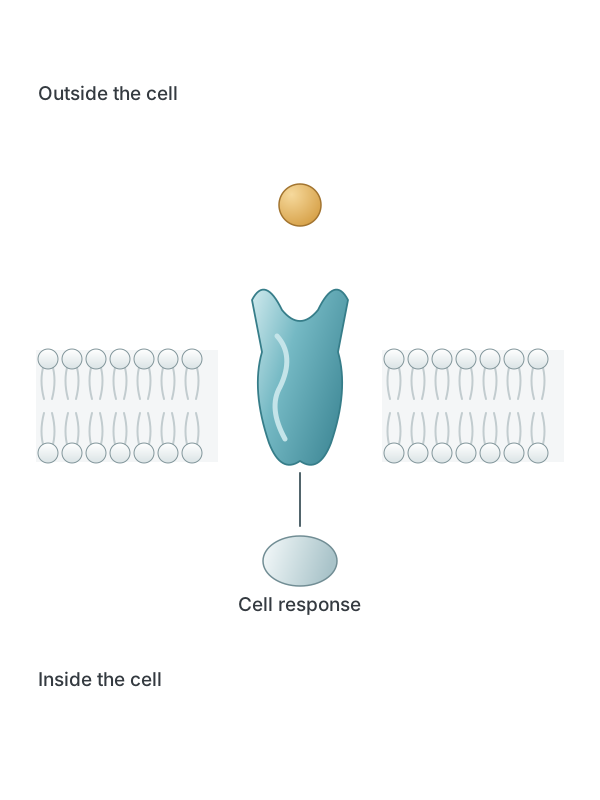
- Norepinephrine
A messenger can change signaling through its receptor.
- Alpha-2 adrenergic receptor
This receptor symbol identifies a function, not a molecular structure.
- Cell response
The arrow represents a signaling response, not movement through a pore.
Simplified teaching model. Protein shapes, sizes, particle counts and arrows are illustrative, not measurements or experimental structures.
Norepinephrine can activate alpha-2 adrenergic receptor and change signaling in the cell.
About this illustration
Chemical signal; Alpha-2 receptor; Cell response. A receptor diagram cannot show every reason someone has difficulties with attention or activity.
This is a simplified illustration. It does not show exactly how a medicine fits into a protein or predict a dose or response to treatment.
How the Medication Changes Signaling
Clonidine is an agonist at alpha-2 receptors, meaning it activates them. In parts of the brain this reduces sympathetic outflow: the nerve signals sent through an automatic control system that can speed the heart and tighten blood vessels. Activating a receptor can therefore reduce later nerve activity, rather than simply making every part of the system more active. This is different from slowing the return of a chemical messenger into a cell.
What is known: Clonidine activates receiving sites that can reduce outgoing nerve signals.
What remains uncertain: Knowing this effect does not fully explain or predict an individual’s treatment response.
Clonidine: Alpha-2 adrenergic receptor
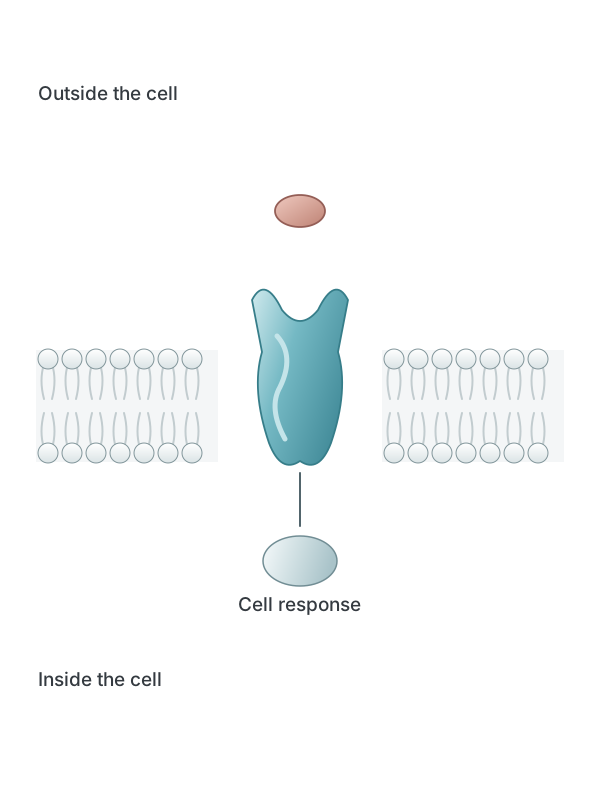
- Clonidine
The oval identifies the medicine acting at the Alpha-2 adrenergic receptor. It is a concept symbol, not a molecular shape or binding pose.
- Alpha-2 adrenergic receptor
This receptor symbol identifies a function, not a molecular structure.
- Clonidine: activation
The arrow represents a signaling response, not movement through a pore.
Simplified teaching model. Protein shapes, sizes, particle counts and arrows are illustrative, not measurements or experimental structures.
Clonidine activates central alpha-2 adrenergic receptors. Its reduction of sympathetic nerve output is distinct from a full explanation of ADHD benefit.
About this illustration
Clonidine; Receptor activation; Less sympathetic output. Knowing this effect does not fully explain or predict an individual’s treatment response.
This is a simplified illustration. It does not show exactly how a medicine fits into a protein or predict a dose or response to treatment.
How does it affect my body?
Blood pressure and pulse may fall. Sleepiness or dizziness can interfere with driving, work or school, especially early in treatment.
A lower sympathetic signal may reduce pulse and blood pressure while also producing sleepiness. Sedation should not be used as the measure of successful ADHD treatment. Benefits should be assessed against the specific agreed symptoms, daily functioning and unwanted effects.
How does my body process it?
Much of a dose leaves through urine, including unchanged clonidine. Kidney impairment can prolong elimination, so dose selection and monitoring require care.
Reduced kidney clearance can prolong exposure. Repeated dosing and other cardiovascular medicines affect the overall response, so symptoms and pressure measurements matter more than a home calculation from the half-lifeThe time for a measured drug level to fall by halfThe time it takes for the concentration of a medicine in a body fluid, usually blood, to decrease by half during elimination.Read the full definition of Half-life. American extended-release absorption data do not establish how these UK tablets should be taken.
How do treatment options differ?
NHS information describes specialist use for ADHD, tics and some sleep problems. This is not a blanket recommendation for ordinary insomnia or a replacement for licensed ADHD options.
Guanfacine also affects alpha-2 receptors but has its own UK ADHD product licence and titrationTitrationAdjusting a medicine dose in planned stages, guided by the intended benefit and unwanted effects.Read the full definition of Titration requirements. Similar receptor activity is not a milligram conversion. US Kapvay/Onyda XR names are useful search aliases, not proof that their formulations or schedules are UK-authorised.
A closer look at the science
Clonidine stimulates central alpha-2 adrenergic receptors, reducing sympathetic tone. That molecular action explains important cardiovascular effects but does not establish effectiveness for every psychiatric symptom.
Clonidine hydrochloride is a hydrochloride salt. The drawing shows the neutral parent, clonidine, and excludes the hydrochloride component.
Chemical formula: C9H9Cl2N3 · HCl
C, H, N, O and Cl denote chemical elements where present; the numbers count atoms. The neutral parent composition is C9H9Cl2N3; the added HCl describes the hydrochloride salt. Composition does not specify the tablet or capsule release rate.
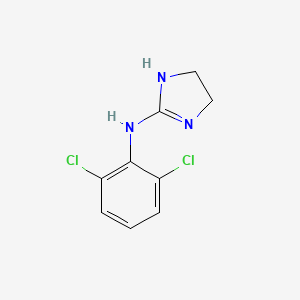
The neutral parent drawing and hydrochloride salt formula identify different, explicitly distinguished chemical species.
How was this medicine developed?
The checked 25 microgram product records first authorisation in September 2002. Catapres remains a name recognised by NHS information; brand recognition does not confirm current stock.
The history of an ingredient, a brand and a release formulation are separate. A later American extended-release approval does not rewrite the indications of these UK ordinary tablets; current UK product information and the specialist pathway remain the relevant sources.
Sources and References
- Clonidine 25 microgram Tablets BP: SmPC, sections 1–5 and 9
Product information published on the electronic Medicines Compendium (emc); supplied by pharmaceutical companies.
Scope: United Kingdom product information.
- Clonidine hydrochloride 100 microgram tablets: SmPC, sections 1–4
Product information published on the electronic Medicines Compendium (emc); supplied by pharmaceutical companies.
Scope: United Kingdom product information.
- Common questions about clonidine: mechanism, withdrawal and specialist uses
Scope: NHS.uk public information (England); not a statement of uniform services or funding across the four UK nations.
- Side effects of clonidine
Scope: NHS.uk public information (England); not a statement of uniform services or funding across the four UK nations.
- ADHD: diagnosis and management, NG87 recommendation 1.7.17
Scope: NICE guidance (England-based); applicability and implementation in other UK nations require the relevant national pathway.
- Clonidine hydrochloride ER tablets: current prescribing information
- Low blood pressure: MedlinePlus Medical Encyclopedia
Shared scientific background. Some references are US product pharmacology or international chemical records; UK product details and prescribing information are verified separately.
Article Information
- Edition
- United Kingdom
- Content updated
- 2026-10-24
- Source check dates
- Listed with each reference above; retained dates for shared scientific content.
- Scope
- exact products checked
Source and coverage limits
- Catapres is recognised in NHS public information; the exact product SmPCs checked here are generic tablets.
- Kapvay is a US search alias, not a verified UK prolonged-release product.
- No psychiatric dose schedule has been inferred from the non-psychiatric licences.
- NICE indexed recommendation text was retrieved; direct guideline retrieval was blocked.