
About this medicine
Some antipsychotics produce stiffness or tremor resembling parkinsonism. Trihexyphenidyl may reduce these symptoms; the original medicine and the type of movement problem still need review.
Benzhexol is an older name for trihexyphenidyl. Stiffness, spasms, restlessness and delayed involuntary movements are different clinical problems; recognising the movement pattern matters before choosing treatment. This medicine does not treat psychosisPsychosisPsychosis describes symptoms that affect a person’s ability to tell what is real. These can include hallucinations, delusions and disorganised thinking or speech.Psychosis can occur with different mental or physical health conditions, some medicines or substance use. It does not automatically mean schizophrenia. New symptoms need prompt professional assessment. itself.
What is this medicine used for?
The syrup is licensed for parkinsonism and drug-induced extrapyramidal syndrome. It is not recommended for tardive dyskinesiaTardive dyskinesiaTardive dyskinesia is a movement disorder that can develop after exposure to certain medicines, particularly antipsychotics. It causes repeated movements that the person does not intend, such as lip-smacking, chewing motions or tongue movements; other body areas can be affected.The movements may persist after the medicine is stopped. Report new involuntary movements to your prescriber; medication changes should be planned with them., which it can provoke or worsen.
The separately checked Ennogen 2 mg and 5 mg tablets are licensed for parkinsonism and for prevention and control of drug-induced extrapyramidal symptoms, excluding tardive dyskinesiaTardive dyskinesiaTardive dyskinesia is a movement disorder that can develop after exposure to certain medicines, particularly antipsychotics. It causes repeated movements that the person does not intend, such as lip-smacking, chewing motions or tongue movements; other body areas can be affected.The movements may persist after the medicine is stopped. Report new involuntary movements to your prescriber; medication changes should be planned with them.. Their SmPC recommends keeping treatment for drug-induced symptoms to the minimum duration needed after symptoms settle, with prescriber review of the causative medicine.
A product licence does not by itself establish a preferred NHS treatment, current pharmacy stock or a specialist childhood regimen. The tablet and syrup sources each state that use in children is not recommended.
Which warning signs need help?
Severe allergy, a painful eye with altered vision, inability to pass urine, marked confusion or suspected overdose needs urgent assessment. Overdose can cause high temperature and serious neurological or cardiac effects; do not wait for symptoms after a suspected overdose.
Severe constipation, abdominal swelling or vomiting needs prompt assessment, especially with clozapine or other antimuscarinic medicines. Review newly emerging involuntary movements: trihexyphenidyl can worsen tardive dyskinesiaTardive dyskinesiaTardive dyskinesia is a movement disorder that can develop after exposure to certain medicines, particularly antipsychotics. It causes repeated movements that the person does not intend, such as lip-smacking, chewing motions or tongue movements; other body areas can be affected.The movements may persist after the medicine is stopped. Report new involuntary movements to your prescriber; medication changes should be planned with them..
The tablet information warns of misuse because euphoria and hallucinationsHallucinationsA hallucination is a sensory experience without a corresponding external source—for example, hearing a voice when nobody is speaking. It can involve hearing, sight, touch, smell or taste and may feel very real.A hallucination is an experience; a delusion is a belief. Hallucinations can have different causes, so an assessment is needed to understand them. can occur. New agitation, delusionsDelusionsA delusion is a strongly held belief that remains fixed despite clear evidence that it is untrue. It differs from a hallucination, which is a sensory experience.Clinicians consider the person’s cultural and religious context. An unusual opinion, a disagreement or a culturally shared belief alone does not establish a delusion., pronounced memory problems or unusual behaviour needs prompt clinical review. Severe reactions or suspected overdose require urgent local medical help; the correct emergency service depends on the person's actual country.
How do I take it safely?
The Rosemont syrup contains 1 mg/mL. Its patient leaflet describes an initial 2 mg daily and gradual clinician-led adjustment up to 20 mg daily. This is the adult syrup's reference schedule, not a dosing instruction for childhood dystonia or a tablet.
The independently checked Ennogen tablet SmPCs start adult treatment at 1 mg on day 1 and 2 mg on day 2, with further small increases at intervals of three to five days. They describe usual totals of 6–10 mg daily for parkinsonism and 5–15 mg daily for drug-induced symptoms, although some people need less and older people may be especially sensitive.
Doses are divided during the day. These are product reference ranges, not instructions to start or adjust treatment without a prescriber.
The tablet SmPC allows timing around meals to be adjusted for dry mouth or nausea. Although the tablets have a break line, the checked documents do not state that it produces equal-dose halves. Do not assume that splitting, crushing or substituting syrup is suitable without checking the dispensed product with a pharmacist.
Measure the prescribed syrup with an appropriate medicine measure. Keep the syrup below 25°C and do not refrigerate or freeze it. Keep tablets in their original blister or the tightly closed container specified by the leaflet. Different preparations have different excipients and storage instructions.
What side effects should I know about?
Dry mouth, constipation, nausea, blurred vision and dizziness are recognised in the current product information. Confusion, memory difficulty and hallucinationsHallucinationsA hallucination is a sensory experience without a corresponding external source—for example, hearing a voice when nobody is speaking. It can involve hearing, sight, touch, smell or taste and may feel very real.A hallucination is an experience; a delusion is a belief. Hallucinations can have different causes, so an assessment is needed to understand them. also matter, especially in older people. Avoid driving when vision or alertness is impaired.
The tablet leaflet also lists nervousness and disturbances of vision or heart rate. Persistent dry mouth, constipation or troublesome symptoms merit review, rather than simply accepting them as unavoidable. New confusion, delusionsDelusionsA delusion is a strongly held belief that remains fixed despite clear evidence that it is untrue. It differs from a hallucination, which is a sensory experience.Clinicians consider the person’s cultural and religious context. An unusual opinion, a disagreement or a culturally shared belief alone does not establish a delusion. or hallucinationsHallucinationsA hallucination is a sensory experience without a corresponding external source—for example, hearing a voice when nobody is speaking. It can involve hearing, sight, touch, smell or taste and may feel very real.A hallucination is an experience; a delusion is a belief. Hallucinations can have different causes, so an assessment is needed to understand them. can be medicine effects, particularly in older adults.
Who needs extra care with this medicine?
Glaucoma, urinary or bowel obstruction, prostate problems and myasthenia gravis need particular care. Older adults are more susceptible to confusion and hallucinationsHallucinationsA hallucination is a sensory experience without a corresponding external source—for example, hearing a voice when nobody is speaking. It can involve hearing, sight, touch, smell or taste and may feel very real.A hallucination is an experience; a delusion is a belief. Hallucinations can have different causes, so an assessment is needed to understand them..
Allergy to trihexyphenidyl or a product ingredient is a contraindicationA medical reason a medicine should not be usedA medical reason a medicine should not be used in a particular situation because it may be harmful.Read the full definition of Contraindication. The tablet SmPC treats hypertension and heart, liver or kidney disease as conditions needing caution, rather than declaring them all absolute contraindications. Myasthenia gravis requires avoidance or great caution.
The tablets contain lactose and have specific restrictions for rare galactose intolerance, total lactase deficiency or glucose-galactose malabsorption. This is separate from the syrup's sucrose and propylene glycol precautions; changing formulation does not erase excipient risks.
Can it affect my other medicines?
Clozapine, sedating antihistamines, tricyclic antidepressants and other antimuscarinics add adverse effects. Levodopa and medicines affecting gut movement may also interact.
The tablet SmPC identifies additive antimuscarinic effects with medicines including clozapine, phenothiazines, antihistamines, amantadine, disopyramide and nefopam. Tricyclic antidepressants and monoamine oxidase inhibitors can also intensify unwanted effects.
Trihexyphenidyl can oppose the gut-movement effects of metoclopramide or domperidone and may reduce levodopa absorption. A clinician or pharmacist should review the whole medicine list, including non-prescription products; this article is not an interaction checker or an instruction to stop another medicine.
What check-ups will I need?
Review the movement problem and continuing benefit alongside cognition, bowel and bladder function, vision and heart-related symptoms. People with cardiac, liver or kidney disease need closer observation; older people are particularly vulnerable to confusion and hallucinationsHallucinationsA hallucination is a sensory experience without a corresponding external source—for example, hearing a voice when nobody is speaking. It can involve hearing, sight, touch, smell or taste and may feel very real.A hallucination is an experience; a delusion is a belief. Hallucinations can have different causes, so an assessment is needed to understand them..
Distinguish relief of parkinsonian stiffness from new involuntary movements, and reassess adverse effects as the original medicine changes. The current tablet and syrup product information supports this review. The older local titrationTitrationAdjusting a medicine dose in planned stages, guided by the intended benefit and unwanted effects.Read the full definition of Titration leaflet is not used as current dosing or monitoring authority.
The practical question is whether improved movement and everyday functioning outweigh unwanted effects and whether the medicine remains necessary. The checked SmPCs do not provide a universal scheduled blood-test programme; condition-specific monitoring should follow the treating team's assessment.
What about pregnancy, breastfeeding and age?
The Rosemont syrup does not recommend children. Its SmPC reserves pregnancy use for clear necessity and states that it should not be used during breastfeeding. Off-labelOff-labelUse of a licensed medicine outside the terms of its UK marketing authorisation.Read the full definition of Off-label specialist treatment is a separate decision, not a change to these product instructions.
The syrup contains sucrose and propylene glycol. Sucrose matters in diabetes and certain inherited sugar-intolerance disorders; the product warns against use with hereditary fructose intolerance, glucose-galactose malabsorption or sucrase-isomaltase insufficiency. Kidney or liver impairment can also require extra attention to propylene glycol.
The tablet SmPCs independently restrict pregnancy use to clear necessity, say not to use during breastfeeding, and do not recommend use in children. Adults over 65 are particularly susceptible to confusion and hallucinationsHallucinationsA hallucination is a sensory experience without a corresponding external source—for example, hearing a voice when nobody is speaking. It can involve hearing, sight, touch, smell or taste and may feel very real.A hallucination is an experience; a delusion is a belief. Hallucinations can have different causes, so an assessment is needed to understand them. and may need smaller amounts. Specialist off-label decisions require their own evidence and monitoring plan.
What if I miss a dose or want to stop?
Do not double a forgotten dose or abruptly stop regular treatment. The prescriber plans gradual reduction because movement symptoms may worsen after sudden cessation.
The tablet leaflet advises taking a forgotten dose when remembered unless the next is nearly due, without doubling. Planned withdrawalWithdrawalSymptoms that may occur after reducing or stopping a medicine or substance to which the body has adapted.Read the full definition of Withdrawal is gradual under the prescriber's instructions. Urgent adverse effects or overdose still require immediate advice rather than waiting for a routine taper discussion.
How does it work?
Trihexyphenidyl changes some of the messages involved in controlling movement. It reduces the effects of acetylcholine, a chemical messenger, and can ease certain symptoms such as stiffness and shaking. It does not restore lost nerve cellsNeuronA nerve cell that receives and sends information. Neurons work in connected groups, rather than carrying a whole thought on their own.Read the full definition of Neuron or work for every type of movement problem.
How Brain Cells Communicate
Movement depends on groups of brain cells passing messages to one another. Two of the chemical messengers involved are acetylcholine and dopamine.
Cells respond to these messengers through receptors, proteins that receive particular signals. Muscarinic receptors are one group of receptors for acetylcholine. Changes in dopamine signaling can also affect how these connected movement systems work.
What is known: Several chemical messengers work together to control movement.
What remains uncertain: A movement problem cannot be understood simply as too much or too little of one chemical.
Acetylcholine: Muscarinic receptor
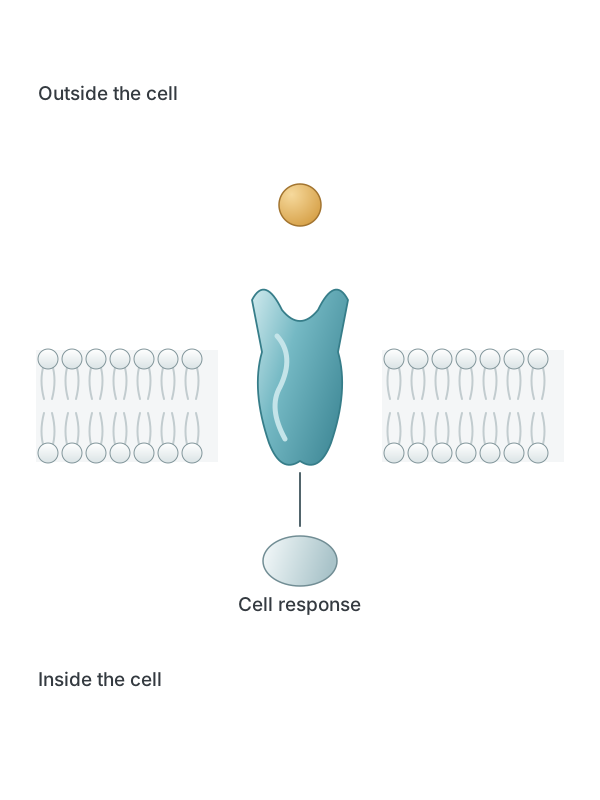
- Acetylcholine
A messenger can change signaling through its receptor.
- Muscarinic receptor
This receptor symbol identifies a function, not a molecular structure.
- Cell response
The arrow represents a signaling response, not movement through a pore.
Simplified teaching model. Protein shapes, sizes, particle counts and arrows are illustrative, not measurements or experimental structures.
Acetylcholine can activate muscarinic receptor and change signaling in the cell.
About this illustration
Acetylcholine; Muscarinic sites; Cell responses. A movement problem cannot be understood simply as too much or too little of one chemical.
This is a simplified illustration. It does not show exactly how a medicine fits into a protein or predict a dose or response to treatment.
How the Medication Changes Signaling
Trihexyphenidyl blocks muscarinic receptors and reduces some of acetylcholine’s effects. This is called an antimuscarinic action. It can help some symptoms of parkinsonism, a pattern of slowed movement, stiffness or shaking. Parkinsonism can occur in Parkinson’s disease or develop as a side effect of medicines that block dopamine signals.
What is known: The medicine changes the response to acetylcholine without replacing dopamine.
What remains uncertain: It does not help tardive dyskinesiaTardive dyskinesiaTardive dyskinesia is a movement disorder that can develop after exposure to certain medicines, particularly antipsychotics. It causes repeated movements that the person does not intend, such as lip-smacking, chewing motions or tongue movements; other body areas can be affected.The movements may persist after the medicine is stopped. Report new involuntary movements to your prescriber; medication changes should be planned with them., repeated movements a person cannot control that may follow longer-term use of dopamine-blocking medicines, and can make it worse.
Trihexyphenidyl: Muscarinic receptor
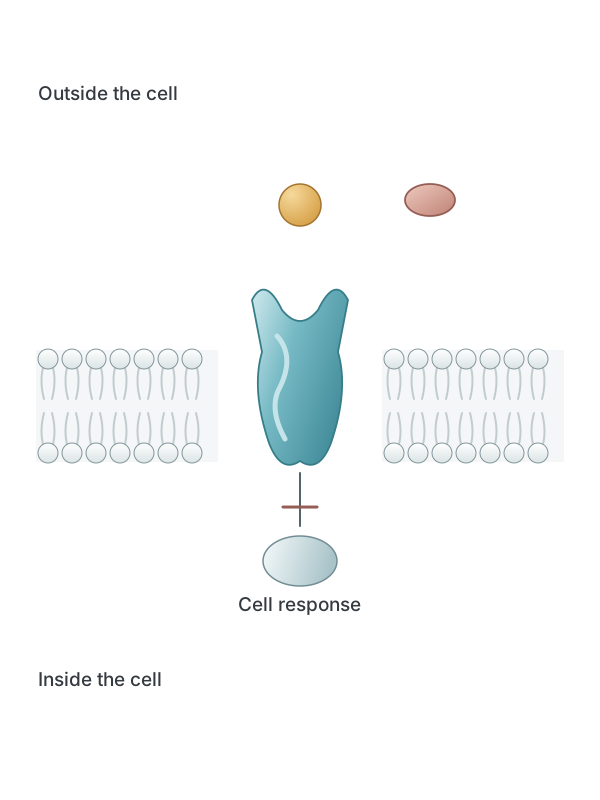
- Acetylcholine
A messenger can change signaling through its receptor.
- Muscarinic receptor
This receptor symbol identifies a function, not a molecular structure.
- Trihexyphenidyl: activation opposed
The crossbar marks opposition to receptor activation, not permanent closure.
Simplified teaching model. Protein shapes, sizes, particle counts and arrows are illustrative, not measurements or experimental structures.
Trihexyphenidyl blocks muscarinic acetylcholine receptors. This is not dopamine replacement or restoration of lost dopamine-producing cells.
About this illustration
Medication; Muscarinic blockade; Changed signaling. It does not help tardive dyskinesiaTardive dyskinesiaTardive dyskinesia is a movement disorder that can develop after exposure to certain medicines, particularly antipsychotics. It causes repeated movements that the person does not intend, such as lip-smacking, chewing motions or tongue movements; other body areas can be affected.The movements may persist after the medicine is stopped. Report new involuntary movements to your prescriber; medication changes should be planned with them., repeated movements a person cannot control that may follow longer-term use of dopamine-blocking medicines, and can make it worse.
This is a simplified illustration. It does not show exactly how a medicine fits into a protein or predict a dose or response to treatment.
How does it affect my body?
Drying and bowel-slowing effects can accumulate when other anticholinergic medicines are taken. New forgetfulness, confusion or hallucinationsHallucinationsA hallucination is a sensory experience without a corresponding external source—for example, hearing a voice when nobody is speaking. It can involve hearing, sight, touch, smell or taste and may feel very real.A hallucination is an experience; a delusion is a belief. Hallucinations can have different causes, so an assessment is needed to understand them. may be adverse effects rather than worsening psychiatric illness.
Reduced sweating can make overheating more likely. Blurred vision, dizziness and mental clouding can affect driving or operating machinery. These effects may be more troublesome with higher exposure or other antimuscarinic medicines; they should be reviewed alongside any improvement in stiffness or tremor.
How does my body process it?
The checked SmPC reports good gastrointestinal absorption but provides little detailed pharmacokinetic information. This profile therefore does not invent a precise half-lifeThe time for a measured drug level to fall by halfThe time it takes for the concentration of a medicine in a body fluid, usually blood, to decrease by half during elimination.Read the full definition of Half-life or enzyme pathway.
The tablet SmPC similarly describes good absorption from the gut and rapid disappearance from plasma and tissues, without accumulation at conventional doses. It does not provide enough quantitative information to construct a reliable personalised elimination timetable. Changes in preparation therefore still need a clear prescribed dose and administration plan.
How do treatment options differ?
Tardive dyskinesiaTardive dyskinesiaTardive dyskinesia is a movement disorder that can develop after exposure to certain medicines, particularly antipsychotics. It causes repeated movements that the person does not intend, such as lip-smacking, chewing motions or tongue movements; other body areas can be affected.The movements may persist after the medicine is stopped. Report new involuntary movements to your prescriber; medication changes should be planned with them. and drug-induced parkinsonism require different approaches. A medicine helping one can worsen the other, so identifying the movement pattern comes before choosing an adjunct.
Different antimuscarinic medicines and formulations are not interchangeable milligram for milligram. A prescriber may instead review the medicine causing the symptoms. That decision depends on the movement disorder and the original treatment's benefits; it cannot be made from a class label alone.
A closer look at the science
The molecule is a tertiary-amine antimuscarinic with smooth-muscle antispasmodic effects. It is not a dopamineDopamineA chemical messenger involved in movement, learning and emotion. Its name does not describe one feeling or one role throughout the brain.Read the full definition of Dopamine replacement and does not treat psychosisPsychosisPsychosis describes symptoms that affect a person’s ability to tell what is real. These can include hallucinations, delusions and disorganised thinking or speech.Psychosis can occur with different mental or physical health conditions, some medicines or substance use. It does not automatically mean schizophrenia. New symptoms need prompt professional assessment. itself.
The checked tablets contain trihexyphenidyl hydrochloride. The UK SmPC describes a selective anticholinergic action and direct antispasmodic effects on smooth muscle, rather than a molecular mechanism that predicts an individual's response. The shared chemical illustration describes the ingredient; it does not certify a particular product, dose or indication.
Trihexyphenidyl hydrochloride is a salt. The neutral parent is C20H31NO; HCl identifies the additional salt component. The drawing describes atom connections, not a receptor-bound pose.
Chemical formula: C20H31NO · HCl
The neutral-parent drawing omits hydrochloride. Neither the chemical formula nor an illustration identifies a finished tablet or syrup, establishes dose equivalence, or determines which movement disorder should be treated.
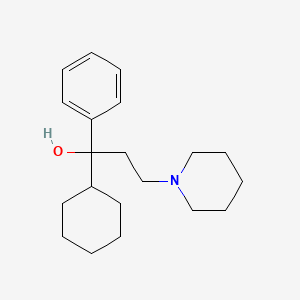
Neutral parent only; hydrochloride salt partner specified separately. No receptor-bound conformation is implied.
How was this medicine developed?
This is an established antimuscarinic, but long use does not remove safety concerns. The checked syrup's authorisation dates to 2011; its SmPC was revised in March 2023.
A King's College Hospital local leaflet, issued in December 2022 with review due December 2025, provides historical service context only. It is not treated here as a current national titration protocol or as verification of today's tablet products.
The current checked Ennogen tablet texts are dated 24 July 2026 for 2 mg (PL 55612/0143) and 13 July 2026 for 5 mg (PL 55612/0144). The 2 mg document repeats its authorisation number in the authorisation-date field, so no date has been inferred from that field. A hosted product document confirms its particulars, not live pharmacy stock.
Sources and References
- Trihexyphenidyl hydrochloride 5 mg/5 mL syrup: UK SmPC
Product information published on the electronic Medicines Compendium (emc); supplied by pharmaceutical companies.
Scope: United Kingdom.
- Trihexyphenidyl syrup: patient leaflet
Product information published on the electronic Medicines Compendium (emc); supplied by pharmaceutical companies.
Scope: United Kingdom.
- Trihexyphenidyl titration: patient information
Scope: England, local spasticity service.
- Trihexyphenidyl hydrochloride: abbreviated prescribing information
Scope: United Kingdom.
- Crescent Pharma product portfolio: trihexyphenidyl 2 mg and 5 mg tablets
Scope: United Kingdom.
- Trihexyphenidyl 2 mg Tablets: UK Summary of Product Characteristics
Scope: United Kingdom.
- Trihexyphenidyl 5 mg Tablets: UK Summary of Product Characteristics
Scope: United Kingdom.
- Trihexyphenidyl 2 mg and 5 mg Tablets: patient information leaflet
Scope: United Kingdom.
- Trihexyphenidyl hydrochloride tablets: prescribing information — mechanism explanation
Scope: Mechanism explanation only. Source sections checked: Clinical Pharmacology; Indications; Precautions; Adverse Reactions..
- Trihexyphenidyl: patient information — mechanism explanation
Scope: Mechanism explanation only. Source sections checked: Why is this medication prescribed?; Side effects..
- Tardive dyskinesia: MedlinePlus Medical Encyclopedia
- NIMH: Mental Health Medications
- NIMH: Understanding psychosis
- Schizophrenia
- Cultural Formulation in Diagnosis and Cultural Concepts of Distress - Improving Cultural Competence - NCBI Bookshelf
Shared scientific background. US product pharmacology and international chemical references do not establish UK licences, doses, formulations or NHS recommendations.
Article Information
- Edition
- United Kingdom
- Content updated
- 2026-10-24
- Source check dates
- Listed with each reference above; retained dates for shared scientific content.
- Scope
- Substantive educational UK profile of independently checked Rosemont syrup and Ennogen 2 mg/5 mg tablets; all 16 article areas retained and expanded.
Source and coverage limits
- This is not an exhaustive manufacturer, live-stock, funding or specialist childhood dosing catalogue.
- The older King's College leaflet remains dated history only.
- The product SmPCs supply limited quantitative pharmacokinetics; no precise half-life or enzyme pathway is invented.