
About this medicine
Sleepiness may accompany treatment, but the checked licence does not list insomnia as a separate indication. Desyrel and Oleptro are historical US search aliases.
Sleepiness can appear before antidepressant benefit. Mood, anxiety and daily functioning should therefore be followed separately from sleep. Feeling more sedated is not itself evidence that the underlying illness is adequately treated.
What is this medicine used for?
The checked capsules include anxiety alone. The 150 mg tablet’s indication section instead lists depression, including depression with anxiety. Licensing should be checked for the actual product.
Which warning signs need help?
A persistent painful erection needs urgent treatment because permanent damage is possible. Seek immediate help for collapse, severe allergy, seizures or new self-harm thoughts. Fever with agitation and twitching can indicate serotoninSerotoninA chemical messenger involved in several functions, including sleep, mood and digestion. It acts through different receptors, with effects that depend on the cell.Read the full definition of Serotonin syndrome. Excess doses need urgent advice.
MHRA’s October 2026 communication announced the rollout of a prominent boxed warning in UK antidepressant patient leaflets about self-harm and suicidal behaviour, alongside a patient safety card. This UK patient-information measure is not the US FDA Boxed Warning designation. Read the leaflet supplied with your medicine, seek prompt professional help for new or worsening mood or behaviour changes, and do not stop treatment suddenly without advice.
Jaundice, unexpectedly frequent infections, unusual bruising, or severe abdominal pain with vomiting and constipation need prompt assessment. These can indicate liver injury, abnormal blood cells or bowel obstruction. Heart-rhythm disturbances can occur, so a new irregular heartbeat or fainting should not be dismissed as ordinary sleepiness.
How do I take it safely?
Adult depression product reference: initially 150 mg daily, increasing when appropriate to 300 mg; up to 600 mg daily is reserved for hospitalised patients. Anxiety starts at 75 mg daily. Frail older adults need lower doses. Appropriate formulations are needed for prescribed amounts; these figures are not self-dosing instructions.
The checked capsules are swallowed whole with or after food; when prescribed once daily, the leaflet places the dose at bedtime. The label permits divided dosing or a single night-time dose, depending on the prescribed regimen. Frail or older adults usually start at 100 mg daily, and large single doses are generally avoided. A capsule should not be opened to improvise a smaller dose.
What side effects should I know about?
Sleepiness, dizziness, headache, nausea, constipation and dry mouth can occur. Avoid driving when sleepy or dizzy.
Who needs extra care with this medicine?
Acute heart attack and intoxication with alcohol or sleeping medicines are contraindicationsA medical reason a medicine should not be usedA medical reason a medicine should not be used in a particular situation because it may be harmful.Read the full definition of Contraindication. Discuss liver disease, seizures, heart-rhythm problems and low blood pressure.
Narrow-angle glaucoma, difficulty passing urine, an overactive thyroid and schizophrenia also require discussion. Older people may be particularly sensitive to postural blood-pressure falls and sedation. Liver disease matters because trazodone is extensively metabolised and has been associated with liver injury; severe kidney disease also warrants caution.
Can it affect my other medicines?
MAO inhibitors, other serotonergic medicines, opioids, sedatives and medicines affecting heart rhythm need checking. Strong CYP3A4 inhibitors can substantially increase exposure.
The capsule label warns against use with an MAOI or within two weeks after one, and against starting an MAOI within one week after trazodone. The other medicine may require a longer wait. Carbamazepine can reduce trazodone exposure; warfarin, digoxin and phenytoin may need additional checks. Tell the anaesthetist before a procedure.
What check-ups will I need?
Review mood, sedation, dizziness and falls. Liver-function monitoring may be considered where hepatic impairment increases risk.
Assess whether morning sedation or dizziness interferes with work, driving or mobility. Monitoring may include blood pressure and symptom-directed blood tests or ECG assessment rather than one identical test schedule for every person.
What about pregnancy, breastfeeding and age?
The checked products are not recommended below 18. Pregnancy treatment may continue when needed after discussion; breastfed babies may require observation.
Late-pregnancy treatment may be followed by newborn withdrawalWithdrawalSymptoms that may occur after reducing or stopping a medicine or substance to which the body has adapted.Read the full definition of Withdrawal or adaptation symptoms. Breastfeeding decisions should include the infant’s feeding and alertness as well as the parent’s need for treatment. Do not replace a planned discussion with abrupt withdrawal.
What if I miss a dose or want to stop?
Take a forgotten dose when remembered unless the next is nearly due; never double up. Stopping should be gradual under the prescriber’s direction.
Gradual stopping is particularly important after prolonged treatment; nausea, headache and feeling unwell can occur during withdrawal. A change in symptoms after dose reduction needs review, because withdrawal and return of depression are not automatically the same explanation.
How does it work?
Trazodone changes how nerve cellsNeuronA nerve cell that receives and sends information. Neurons work in connected groups, rather than carrying a whole thought on their own.Read the full definition of Neuron communicate using serotonin, a chemical messenger. It slows serotonin’s return into cells and blocks some of the receptorsReceptorA protein that recognizes a signal and helps a cell respond. Different receptor types can produce different responses to the same messenger.Read the full definition of Receptor that respond to it, while partly activating another receptor type. These actions are thought to contribute to its antidepressant effect, but their combined role in improving mood is not fully understood.
How Brain Cells Communicate
Nerve cells release chemical messengers called neurotransmitters into small gaps between cells. Receptors detect these messages and change a cell’s activity, while transporters carry some messengers back into cells. That return is called reuptake. Serotonin has several receptor types, so changing its reuptake and changing an individual receptor can have different effects.
What is known: Serotonin transporters and receptor types have different roles.
What remains uncertain: Increasing messenger availability does not mean every serotonin pathway responds in the same way.
Serotonin transport
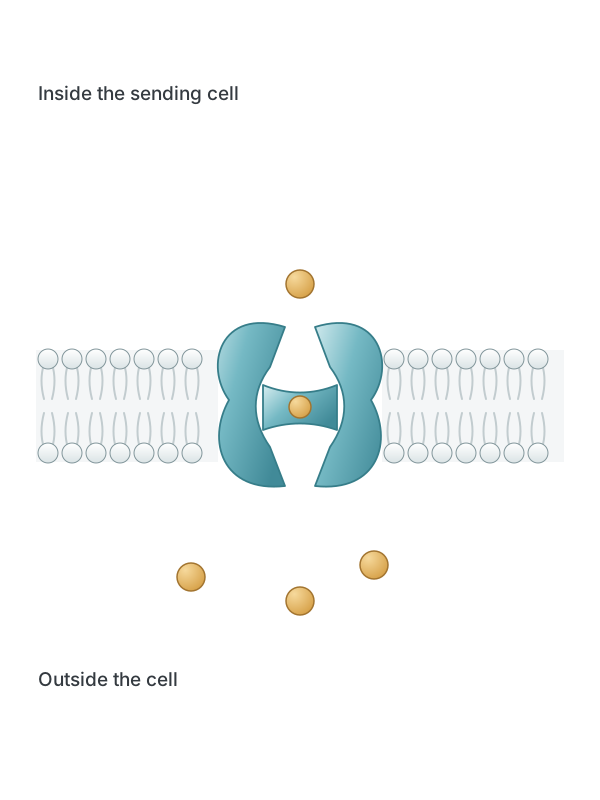
- Serotonin
The messenger is shown outside the sending cell.
- SERT
This transporter returns serotonin from outside into the sending cell.
- Return into the cell
The arrow shows transport direction, without a measured rate.
Simplified teaching model. Protein shapes, sizes, particle counts and arrows are illustrative, not measurements or experimental structures.
SERT returns serotonin into a nerve cell; a transporter has a different function from a receptor.
Serotonin receptor signaling
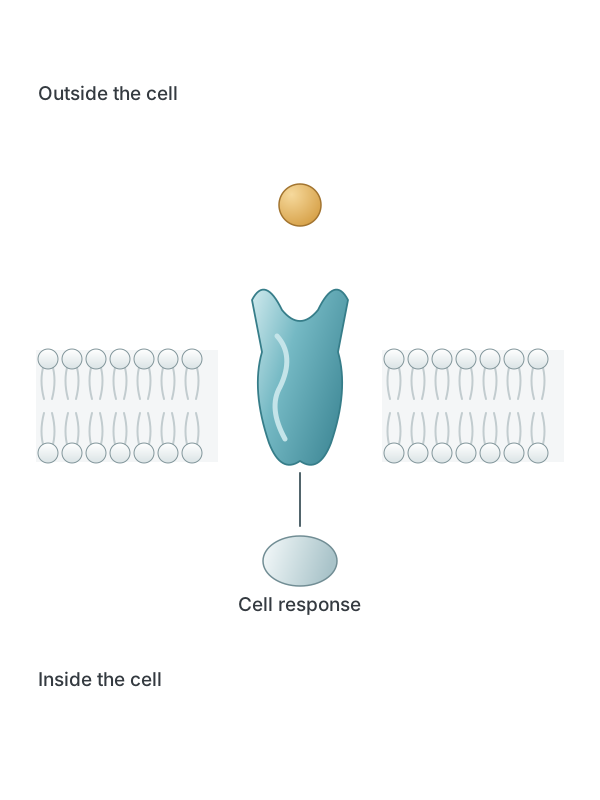
- Serotonin
A messenger can change signaling through its receptor.
- 5-HT2 receptor
This receptor symbol identifies a function, not a molecular structure.
- Cell response
The arrow represents a signaling response, not movement through a pore.
Simplified teaching model. Protein shapes, sizes, particle counts and arrows are illustrative, not measurements or experimental structures.
Serotonin can activate 5-HT2 receptors and change signaling inside the cell. This is separate from transport across the membrane.
About this illustration
Nerve-cell signal; Receptor or transporter; Network activity. Increasing messenger availability does not mean every serotonin pathway responds in the same way.
This is a simplified illustration. It does not show exactly how a medicine fits into a protein or predict a dose or response to treatment.
How the Medication Changes Signalling
Trazodone inhibits serotonin reuptake and blocks serotonin receptors called 5-HT2 receptors; 5-HT is another name for serotonin. Receptor blocking is called antagonism; trazodone also partly activates 5-HT1A receptors, producing a smaller response than a full activator under comparable conditions, an action called partial agonism. Trazodone also blocks alpha-1 adrenergic receptors, proteins that respond to norepinephrine, another chemical messenger, and help regulate blood vessels. This may contribute to a fall in blood pressure on standing, sometimes causing dizziness.
What is known: Trazodone combines serotonin uptake inhibition with several receptor actions.
What remains uncertain: These actions do not reveal how much each contributes to antidepressant benefit.
Trazodone and reuptake
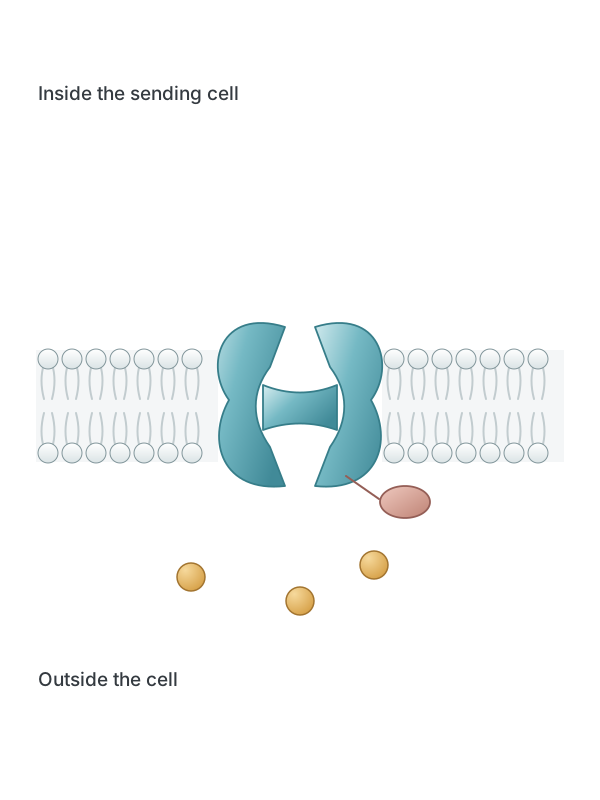
- Serotonin
The messenger is shown outside the sending cell.
- SERT
This transporter returns serotonin from outside into the sending cell.
- Trazodone: uptake inhibited
The interrupted arrow names the action; the symbol is not a molecular shape or binding position.
Simplified teaching model. Protein shapes, sizes, particle counts and arrows are illustrative, not measurements or experimental structures.
Trazodone inhibits serotonin reuptake. This is one of several actions described in the article.
Trazodone and 5-HT2
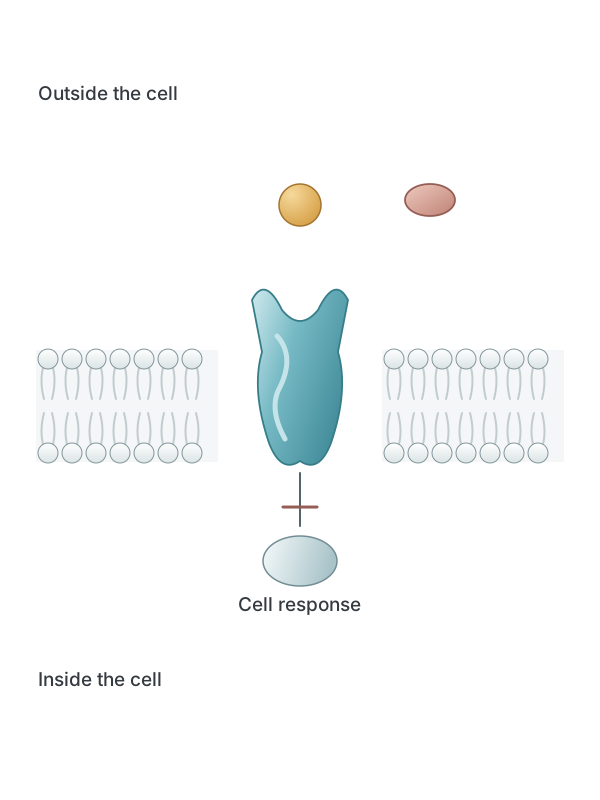
- Serotonin
A messenger can change signaling through its receptor.
- 5-HT2 receptor
This receptor symbol identifies a function, not a molecular structure.
- Trazodone: activation opposed
The crossbar marks opposition to receptor activation, not permanent closure.
Simplified teaching model. Protein shapes, sizes, particle counts and arrows are illustrative, not measurements or experimental structures.
Trazodone antagonizes 5-HT2 receptors. These target actions do not fully explain antidepressant benefit.
About this illustration
Trazodone; Molecular actions; Clinical effects. These actions do not reveal how much each contributes to antidepressant benefit.
This is a simplified illustration. It does not show exactly how a medicine fits into a protein or predict a dose or response to treatment.
How does it affect my body?
Sedation and postural dizziness can affect driving and increase falls. Alcohol can worsen sleepiness.
How does my body process it?
The liver extensively metabolises trazodone, including to active m-chlorophenylpiperazine. CYP3A4 contributes; the terminal half-lifeThe time for a measured drug level to fall by halfThe time it takes for the concentration of a medicine in a body fluid, usually blood, to decrease by half during elimination.Read the full definition of Half-life is approximately 5–13 hours.
How do treatment options differ?
Its tendency to cause sleepiness is relevant when comparing antidepressants. Benefit for an individual cannot be inferred from sedation alone.
A closer look at the science
It is a triazolopyridine derivative, structurally distinct from tricyclic antidepressants. The checked SmPC describes little noradrenaline reuptakeReuptakeThe return of a released chemical messenger into a cell through a transporter. It is one way to limit a signal; chemical breakdown is another.Read the full definition of Reuptake inhibition.
Trazodone is a triazolopyridine-related compound supplied as hydrochloride.
Chemical formula: C19H22ClN5O · HCl
The drawing shows neutral trazodone, C19H22ClN5O, including its ring-bound chlorine. The additional HCl salt component is omitted.
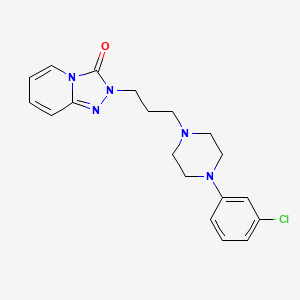
The drawing shows the neutral parent. The product salt formula is separately identified; neither determines release rate or dose.
How was this medicine developed?
The checked 50 mg authorisation record dates from February 2025; trazodone itself predates this generic product.
Sources and References
- Trazodone 50 mg — UK SmPC
Product information published on the electronic Medicines Compendium (emc); supplied by pharmaceutical companies.
Scope: United Kingdom product information.
- Trazodone 100 mg — UK SmPC
Product information published on the electronic Medicines Compendium (emc); supplied by pharmaceutical companies.
Scope: United Kingdom product information.
- Trazodone capsules — patient leaflet
Product information published on the electronic Medicines Compendium (emc); supplied by pharmaceutical companies.
Scope: United Kingdom product information.
- NHS: Trazodone
Scope: NHS website for England — general medicine education, not a four-nation service pathway.
- Trazodone 150 mg tablets — UK SmPC
Product information published on the electronic Medicines Compendium (emc); supplied by pharmaceutical companies.
Scope: United Kingdom product information.
- Antidepressants: use and safety
Scope: United Kingdom.
- Trazodone: current prescribing information
Scope: United States scientific pharmacology only; not UK prescribing evidence.
- What Is a Neurotransmitter? — mechanism explanation
Scope: Mechanism explanation only. Source sections checked: How Neurotransmitters Work; Types of Neurotransmitters..
Shared scientific background. US product pharmacology and international chemical records support molecular explanations only; UK product details and prescribing information are verified separately.
Article Information
- Edition
- United Kingdom
- Content updated
- 2026-10-24
- Source check dates
- Listed with each reference above; retained dates for shared scientific content.
- Scope
- exact products checked
Source and coverage limits
- Educational summaries cover the named UK products, not every formulation or prescribing circumstance.
- Listings do not guarantee local stock or NHS access.
- UK product warnings are not US FDA boxed-warning designations.
- Oral liquids, additional tablet strengths and current UK branded products were not independently product-verified.
- The 150 mg tablet SmPC section 4.1 lists depression including depression with anxiety; its separate anxiety dose in section 4.2 is not treated as proof of a standalone anxiety indication.