
About this medicine
Doxepin may improve depression and associated sleep disturbance. Its sedative effect can be apparent before its antidepressant effect, so sleepiness alone does not show that depression has responded.
What is this medicine used for?
The checked UK licence concerns depressive illness in adults. It does not authorise every use described in the US edition or establish a low-dose UK insomnia product.
Which warning signs need help?
An overdose can cause fatal heart-rhythm or breathing problems: obtain emergency help even before severe symptoms appear. New self-harm thoughts, severe allergy or seizures require urgent assessment.
Agitation or confusion with fever, sweating, diarrhoea, tremor or muscle overactivity can signal serotoninSerotoninA chemical messenger involved in several functions, including sleep, mood and digestion. It acts through different receptors, with effects that depend on the cell.Read the full definition of Serotonin toxicity, particularly with opioids or other serotonergic medicines. This requires prompt medical assessment, not an assumption that anxiety has worsened.
MHRA’s October 2026 communication announced the rollout of a prominent boxed warning in UK antidepressant patient leaflets about self-harm and suicidal behaviour, alongside a patient safety card. This UK patient-information measure is not the US FDA Boxed Warning designation. Read the leaflet supplied with your medicine, seek prompt professional help for new or worsening mood or behaviour changes, and do not stop treatment suddenly without advice.
How do I take it safely?
The checked UK oral capsule range includes 10 mg, 25 mg and 50 mg strengths. Sinepin is a named UK doxepin capsule product in the checked SmPC. Product information confirms identity and licensed use, not pharmacy stock or NHS funding.
UK product reference: treatment commonly starts at 75 mg daily, with individual adjustment over 25–300 mg daily. No single dose should exceed 100 mg; totals above 100 mg require divided doses. These are product limits, not self-adjustment instructions.
The 10 mg capsule remains licensed for adult depressive illness; its smaller strength is not evidence of a UK sleep-only indication. Do not apply US Silenor instructions or attempt to recreate a different product by dividing capsule contents.
What side effects should I know about?
Drowsiness, dry mouth and constipation are prominent. Weight, sexual function and sweating may also change. Persistent troublesome effects should lead to review, not unplanned discontinuation.
Who needs extra care with this medicine?
Mania, glaucoma, urinary retention, severe liver disease and breastfeeding are exclusions in the checked product. Heart disease, recent heart attack and epilepsy require particular caution.
Can it affect my other medicines?
Do not combine with an MAOI or use within the stated two-week interval. Alcohol, other sedatives and anticholinergic medicines add risk; cimetidine, thyroid medicines and sympathomimetics also need checking.
Tell the anaesthetist before surgery. CYP2D6-inhibiting medicines can increase tricyclic exposure; adding a medicine without changing the doxepin dose can still change the effect.
What check-ups will I need?
Review mood and suicidal thinking early and after changes, especially in younger adults. Monitor tolerability, falls risk and cardiovascular concerns, with investigations guided by the person's risks.
Older adults are particularly vulnerable to confusion and postural hypotensionOrthostatic hypotensionOrthostatic hypotension, also called postural hypotension, is a drop in blood pressure when you stand up from sitting or lying down. It can cause lightheadedness, dizziness, blurred vision or fainting.Medicines and dehydration are among the possible causes. If you feel faint, sit or lie down to reduce the risk of a fall, and tell your clinician about repeated episodes.. Antidepressant benefit, sleep, daytime alertness and functioning should be evaluated separately; sedation alone is not the treatment target.
What about pregnancy, breastfeeding and age?
The capsules are for adults; safety and efficacy below 18 are not established. Pregnancy requires an individual discussion. Breastfeeding is contraindicated in these product records because infant sedation and apnoea have been reported.
What if I miss a dose or want to stop?
If a dose is forgotten, take the next scheduled dose normally rather than doubling. Planned gradual reduction can reduce insomnia, irritability and sweating when treatment is stopped.
How does it work?
The way doxepin improves depression is not fully understood. One proposed contribution is slowing the return of noradrenaline, a chemical messenger, into the nerve cellsNeuronA nerve cell that receives and sends information. Neurons work in connected groups, rather than carrying a whole thought on their own.Read the full definition of Neuron that released it. This return is called reuptakeReuptakeThe return of a released chemical messenger into a cell through a transporter. It is one way to limit a signal; chemical breakdown is another.Read the full definition of Reuptake; reducing it can leave more messenger available at some connections between cells. That is a change in communication rather than the simple replacement of a missing chemical.
How does it affect my body?
Dry mouth, bowel slowing and sedation reflect effects outside mood regulation. Dizziness on standing, blurred vision and urinary difficulty can be particularly troublesome in older people.
How does my body process it?
The liver forms an active metabolite, desmethyldoxepin, which persists longer than the parent medicine. Liver or kidney impairment may therefore require a more cautious regimen.
How do treatment options differ?
A sedating antidepressant is not automatically a general sleep treatment. Products containing the same ingredient can have different licensed purposes and dose ranges.
A closer look at the science
Doxepin belongs to the tricyclic family and also has antihistaminic and anticholinergic actions. Its several actions mean benefit and adverse effects cannot be predicted from one receptorReceptorA protein that recognizes a signal and helps a cell respond. Different receptor types can produce different responses to the same messenger.Read the full definition of Receptor alone.
Doxepin is a dibenzoxepin compound supplied as a hydrochloride mixture of E and Z geometric isomers.
Chemical formula: C19H21NO · HCl
PubChem CID3158 depicts neutral doxepin connectivity, C19H21NO. The product contains E and Z isomers; the drawing does not specify their ratio or represent a single-isomer product.
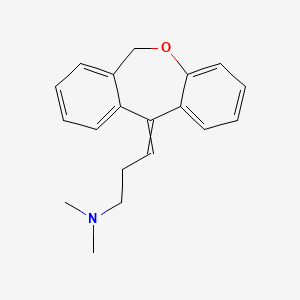
The drawing shows the neutral parent. The product salt formula is separately identified; neither determines release rate or dose.
How was this medicine developed?
The checked Zentiva authorisation record dates from 2020, with later renewal and revision. These are dates for that product, not the date doxepin was discovered.
Sources and References
- Doxepin 25 mg capsules: UK SmPC
Product information published on the electronic Medicines Compendium (emc); supplied by pharmaceutical companies.
Scope: United Kingdom.
- Doxepin 25 mg hard capsules: UK SmPC
Product information published on the electronic Medicines Compendium (emc); supplied by pharmaceutical companies.
Scope: United Kingdom.
- Doxepin 25 mg and 50 mg capsules: patient leaflet
Product information published on the electronic Medicines Compendium (emc); supplied by pharmaceutical companies.
Scope: United Kingdom.
- Antidepressants: use and safety
Scope: United Kingdom.
- Doxepin 10 mg capsules: UK SmPC
Product information published on the electronic Medicines Compendium (emc); supplied by pharmaceutical companies.
Scope: United Kingdom.
- Doxepin 50 mg capsules: UK SmPC
Product information published on the electronic Medicines Compendium (emc); supplied by pharmaceutical companies.
Scope: United Kingdom.
- Sinepin 25 mg capsules: UK SmPC
Product information published on the electronic Medicines Compendium (emc); supplied by pharmaceutical companies.
Scope: United Kingdom.
- Doxepin — UK product-information inventory
Product information published on the electronic Medicines Compendium (emc); supplied by pharmaceutical companies.
Scope: United Kingdom.
- Doxepin: current prescribing information
Scope: Shared science only; original source jurisdiction retained in title/publisher.
- What Is a Neurotransmitter? — mechanism explanation
Scope: Mechanism explanation only. Source sections checked: How Neurotransmitters Work; Types of Neurotransmitters..
- Silenor: current prescribing information
Scope: Shared science only; original source jurisdiction retained in title/publisher.
- Low blood pressure: MedlinePlus Medical Encyclopedia
Shared scientific background. US product pharmacology and international chemical references do not establish UK licences, doses, formulations or NHS recommendations.
Article Information
- Edition
- United Kingdom
- Content updated
- 2026-10-24
- Source check dates
- Listed with each reference above; retained dates for shared scientific content.
- Scope
- Representative UK oral doxepin capsules in 10 mg, 25 mg and 50 mg strengths for adult depressive illness, including verified Sinepin product identity; retained shared pharmacology is separate from US-only product licensing
Source and coverage limits
- The preserved October 2026 MHRA patient-information warning is distinguished from the US FDA Boxed Warning designation.
- Representative UK capsule strengths are covered; this is not a live stock feed or an exhaustive every-manufacturer inventory.
- Sinepin is verified as a named UK SmPC product, not guaranteed local stock. Silenor and Sinequan remain foreign/historical search context rather than current UK marketing claims.
- Topical doxepin, concentrated oral solutions, unlicensed specials and detailed US Silenor regimens are outside this psychiatric oral-capsule overview; no unsupported UK availability or non-availability claim is made for them.