
About this medicine
The same ingredient has been used in different products for different conditions. Cymbalta and Yentreve are retained as contextual aliases, not promises of current stock or interchangeable indications.
Product identity matters even when the active ingredient is identical. The psychiatric and diabetic-pain capsule family described first has different licensed uses and strengths from the separately checked stress-incontinence products. An antidepressant mechanism does not mean every symptom treated with duloxetine is caused by depression.
What is this medicine used for?
The verified generic product is licensed for adults with major depression, generalised anxiety or diabetic peripheral neuropathic pain. This does not establish every pain indication found in American labeling.
NHS information also describes use for fibromyalgia, but that is not a licensed indication of the checked Zentiva product. Its use in that context is off-labelOff-labelUse of a licensed medicine outside the terms of its UK marketing authorisation.Read the full definition of Off-label and requires a clinical rationale. Separately, Amarox 20 mg and 40 mg capsules are licensed for moderate to severe stress urinary incontinence in adult women; that indication is not transferred to the Zentiva 30/60 mg product.
Which warning signs need help?
Urgent assessment is needed for self-harm thoughts, fever with confusion and twitching, or yellow skin/eyes suggesting liver injury. Severe allergic reactions require emergency care. Overdose needs urgent advice even before symptoms appear.
MHRA’s October 2026 communication announced the rollout of a prominent boxed warning in UK antidepressant patient leaflets about self-harm and suicidal behaviour, alongside a patient safety card. This UK patient-information measure is not the US FDA Boxed Warning designation. Read the leaflet supplied with your medicine, seek prompt professional help for new or worsening mood or behaviour changes, and do not stop treatment suddenly without advice.
Confusion or seizures can have causes including low sodium; unusual bleeding, a severe skin reaction or inability to pass urine also needs urgent assessment. A medicine used for pain or incontinence still carries mood-related precautions. New suicidal thoughts require prompt help irrespective of the reason it was prescribed.
How do I take it safely?
Adult reference: depression and diabetic nerve pain usually use 60 mg daily. Generalised anxiety may start at 30 mg daily, increasing to 60 mg; selected cases use up to 120 mg. Higher doses are not automatically more effective for depression. Gastro-resistant capsules must be swallowed whole.
The separately checked Amarox incontinence label describes 40 mg twice daily, sometimes preceded by 20 mg twice daily for two weeks, with benefit and tolerability reviewed after two to four weeks. This is not the depression or anxiety schedule. Pelvic-floor muscle training may be used alongside treatment. Do not combine duloxetine products or switch between strengths and regimens independently.
What side effects should I know about?
Nausea, dry mouth, headache, constipation or diarrhoea, dizziness, insomnia, sexual difficulties and weight loss can occur. Avoid driving while dizzy or drowsy.
MHRA is adding the term post-SSRI sexual dysfunction (PSSD) to patient leaflets describing persistent sexual difficulties after stopping certain antidepressants, including this medicine. Their frequency and causes remain under study. Persistent symptoms deserve support; this does not mean everyone taking the medicine will experience them.
Some early effects settle, but persistent sexual difficulties, sleep problems or digestive symptoms deserve a conversation about benefit and burden. New marked restlessness can be an adverse effect rather than simply anxiety. Report troublesome symptoms instead of assuming a higher dose will necessarily help.
Who needs extra care with this medicine?
Do not use with liver disease causing impaired function or severe kidney impairment. Treatment must not start with uncontrolled hypertension. Discuss mania, epilepsy, glaucoma, bleeding or low-sodium risk.
The severe-renal-impairment cutoff in the checked UK label is creatinine clearance below 30 mL/min. Liver impairment and uncontrolled hypertension are not issues to manage by independently halving a capsule. A history of bipolar disorder or seizures, risk of narrow-angle glaucoma and medicines affecting bleeding should be discussed before treatment.
Can it affect my other medicines?
MAO inhibitors, fluvoxamine, ciprofloxacin and enoxacin are incompatible. Other serotonergic medicines, anticoagulants, St John’s wort and sedatives require review. Do not combine different duloxetine-containing products.
For irreversible MAO inhibitors the UK label requires at least fourteen days before starting duloxetine and at least five days after stopping duloxetine before an MAOI; the prescriber manages these intervals. Linezolid is also important because it has MAOI activity. Duloxetine inhibits CYP2D6, so some antidepressants and cardiac medicines can be affected as well as medicines that raise duloxetine itself.
What check-ups will I need?
In people with hypertension or cardiac disease, monitor blood pressure particularly during the first month. Review pain response, mood and symptoms suggesting liver injury.
For diabetic nerve pain, the product label advises assessment after two months and subsequent benefit review at least every three months. Review mood, functioning, adverse effects and whether ongoing treatment still helps, not only dose. A higher dose for an inadequate response has different evidence across depression, anxiety and pain indications.
What about pregnancy, breastfeeding and age?
Discuss pregnancy or breastfeeding promptly; benefits may justify continued treatment. Late exposure may require observation of the newborn and attention to bleeding around birth. The checked licence is adult-only.
The product SmPC does not recommend breastfeeding because infant safety is uncertain; NHS guidance describes circumstances where individually assessed benefits can justify use. This requires a shared clinical decision, not an assurance that all exposure is harmless. UK paediatric anxiety or fibromyalgia licensing must not be inferred from American approvals.
What if I miss a dose or want to stop?
Abrupt stopping can cause withdrawalWithdrawalSymptoms that may occur after reducing or stopping a medicine or substance to which the body has adapted.Read the full definition of Withdrawal. Agree gradual reductions over weeks or months according to symptoms. Never double a dose to make up for one missed.
Withdrawal can involve dizziness, nausea, disturbed sleep, anxiety and unusual sensations. A product-label minimum reduction period is not a guarantee that every person can stop comfortably within that time; NHS advice recognises that gradual reduction may take weeks or months. If the next dose is nearly due, skip the forgotten one rather than doubling.
How does it work?
Duloxetine changes communication between nerve cellsNeuronA nerve cell that receives and sends information. Neurons work in connected groups, rather than carrying a whole thought on their own.Read the full definition of Neuron by slowing the return of two chemical messengers, serotoninSerotoninA chemical messenger involved in several functions, including sleep, mood and digestion. It acts through different receptors, with effects that depend on the cell.Read the full definition of Serotonin and noradrenaline, into the cells that released them. This affects signalling involved in mood, anxiety and the processing of pain. Its main actions are well described, although the complete route from those actions to symptom relief is not known.
How Brain Cells Communicate
Nerve cells release chemical messengers called neurotransmitters into tiny gaps between cells, known as synapses. A messenger can attach to a receptor, a protein that detects it and changes the receiving cell’s activity. Transporters are different proteins: they carry messengers back into cells. This return, called reuptake, helps regulate the supply of serotonin and norepinephrine available between cells.
What is known: Receptors respond to messengers; transporters move them.
What remains uncertain: A change in one signaling process does not explain every aspect of mood or pain.
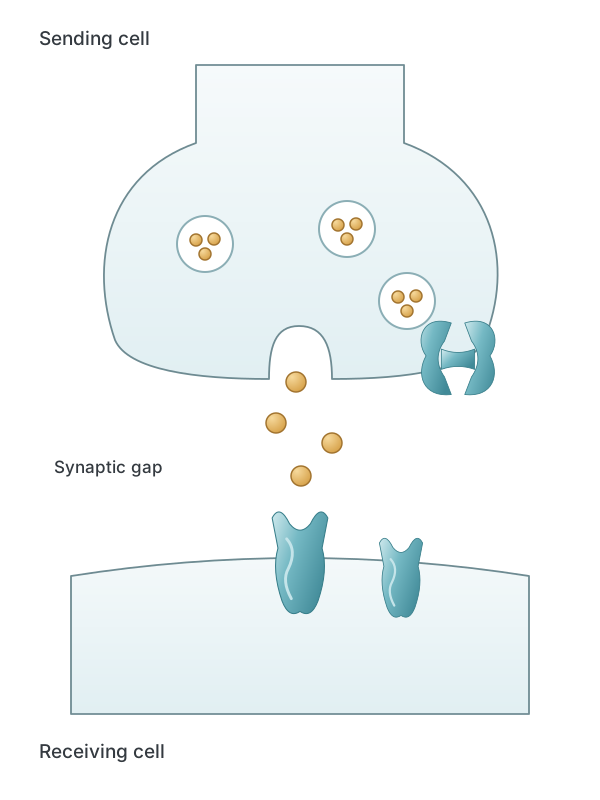
- Sending cell
Vesicles hold chemical messengers before release.
- Chemical messengers
A few illustrated particles identify the messengers; their number and spacing are illustrative.
- Return into the sending cell
A transporter returns some messenger from the gap; it is distinct from the receiving receptor.
- Receiving receptor
A receptor responds to an appropriate messenger.
Simplified teaching model. Protein shapes, sizes, particle counts and arrows are illustrative, not measurements or experimental structures.
About this illustration
Released messengers act across a synapse; transporters return some messenger into the sending cell. A change in one signaling process does not explain every aspect of mood or pain.
How the Medication Changes Signaling
Duloxetine inhibits the transporters for serotonin and norepinephrine, meaning it reduces their activity. Less of each released messenger is taken back up, changing the signals that nearby cells receive. This is why duloxetine is called a serotonin and norepinephrine reuptake inhibitor, or SNRI. The proposed link to benefit is a change in communication within the brain and spinal cord, rather than the direct replacement of a missing substance.
What is known: Duloxetine reduces serotonin and norepinephrine reuptake.
What remains uncertain: The specific pathways responsible for an individual’s improvement cannot be identified from this action alone.
Serotonin · SERT
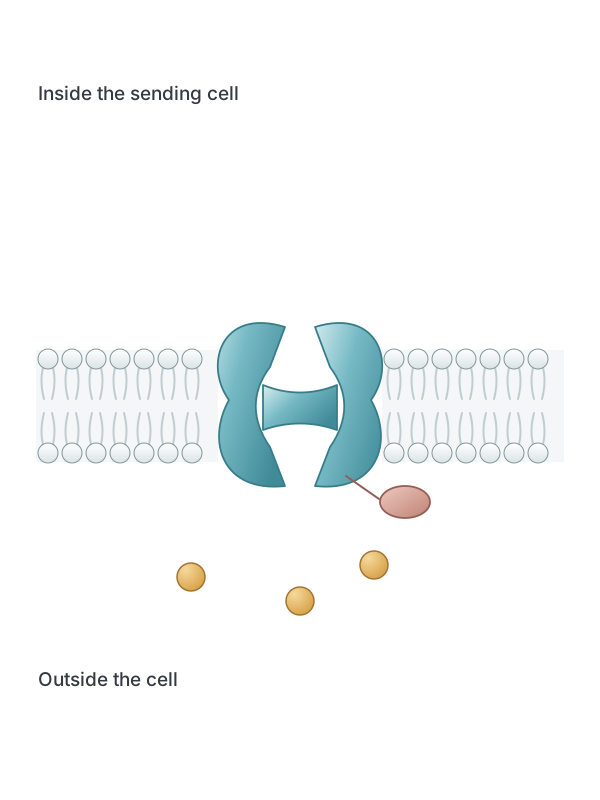
- Serotonin
The messenger is shown outside the sending cell.
- SERT
The SERT transporter returns serotonin into the cell.
- Duloxetine: uptake inhibited
The interrupted arrow names the action; the symbol is not a molecular shape or binding position.
Simplified teaching model. Protein shapes, sizes, particle counts and arrows are illustrative, not measurements or experimental structures.
Norepinephrine · NET
- Norepinephrine
The messenger is shown outside the sending cell.
- NET
The NET transporter returns norepinephrine into the cell.
- Duloxetine: uptake inhibited
The interrupted arrow names the action; the symbol is not a molecular shape or binding position.
Simplified teaching model. Protein shapes, sizes, particle counts and arrows are illustrative, not measurements or experimental structures.
About this illustration
Duloxetine inhibits serotonin and norepinephrine reuptake. The specific pathways responsible for an individual’s improvement cannot be identified from this action alone.
How does it affect my body?
Blood pressure and heart rate can rise. Sleep, bowel function and sexual function can also change; a pain indication does not mean the pain is imagined.
Effects on mood and functioning develop over time rather than mirroring each day’s blood level. Dizziness, restlessness or an unusually elevated mood need review rather than automatic dose escalation. Pain relief is a clinical outcome, not evidence of a particular chemical imbalance.
How does my body process it?
CYP1A2 and CYP2D6 metabolise duloxetine. Its average half-lifeThe time for a measured drug level to fall by halfThe time it takes for the concentration of a medicine in a body fluid, usually blood, to decrease by half during elimination.Read the full definition of Half-life is about twelve hours; liver disease can markedly increase exposure.
Peak blood concentration is typically reached about six hours after a dose and later with food. Most breakdown products leave in urine and are not considered pharmacologically active. The gastro-resistant formulation delays release through the acidic stomach environment; swallowing instructions are therefore a product feature, not a cosmetic preference.
How do treatment options differ?
Yentreve’s historical stress-incontinence indication should not be assigned to every duloxetine product. A shared ingredient does not establish identical strengths, dosing or treatment purpose.
SSRIs such as sertraline have different licensed uses and interaction profiles. Two medicines affecting serotonin are not interchangeable milligram for milligram. The checked Yentreve record is marked discontinued on emc, while a separate generic incontinence product record remains available; that distinction is not proof of stock at an individual pharmacy.
A closer look at the science
Its pain effect is thought to involve pathways descending from the brain that inhibit pain signals. DopamineDopamineA chemical messenger involved in movement, learning and emotion. Its name does not describe one feeling or one role throughout the brain.Read the full definition of Dopamine reuptakeReuptakeThe return of a released chemical messenger into a cell through a transporter. It is one way to limit a signal; chemical breakdown is another.Read the full definition of Reuptake inhibition is much weaker.
Duloxetine hydrochloride is a salt of the specific S-form called duloxetine. The parent drawing includes its stereochemical marking and omits hydrochloride. Chemical identity is separate from the design of a medicine formulation.
Chemical formula: C18H19NOS · HCl
This formula describes the duloxetine hydrochloride salt. Element symbols identify atoms; the dot separates the parent compound from the acid component. The drawing below shows the neutral parent, a different explicitly identified species. Chemical identity alone does not predict clinical benefit.
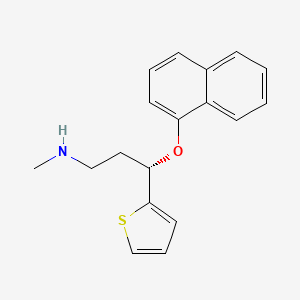
The parent drawing omits the salt counterion. Formulation ingredients and release coatings are not depicted.
How was this medicine developed?
A 2007 MHRA safety article distinguished Cymbalta’s depression/diabetic-pain use from Yentreve’s stress-incontinence use. That historical record does not establish which branded packs remain marketed today.
A current search can find both archived branded information and active generic product records. Yentreve’s checked 20/40 mg record illustrates a separate development for stress incontinence. Its discontinued listing does not mean all duloxetine is discontinued, and an American originator’s status does not determine UK generic availability.
Sources and References
- Duloxetine Zentiva 30 mg: UK SmPC
Product information published on the electronic Medicines Compendium (emc); supplied by pharmaceutical companies.
Scope: United Kingdom.
- Duloxetine Zentiva 30/60 mg: patient leaflet
Product information published on the electronic Medicines Compendium (emc); supplied by pharmaceutical companies.
Scope: United Kingdom product information.
- NHS: Duloxetine
Scope: England (NHS patient information; not proof of product-specific authorisation).
- MHRA: Duloxetine products for different disorders (historical safety article)
Scope: United Kingdom medicines safety.
- Antidepressants: use and safety
Scope: United Kingdom.
- Duloxetine 20 mg gastro-resistant capsules — Amarox SmPC
Product information published on the electronic Medicines Compendium (emc); supplied by pharmaceutical companies.
Scope: United Kingdom.
- Duloxetine 40 mg gastro-resistant capsules — Amarox SmPC
Product information published on the electronic Medicines Compendium (emc); supplied by pharmaceutical companies.
Scope: United Kingdom.
- Yentreve 20/40 mg — discontinued emc product record and historical SmPC
Product information published on the electronic Medicines Compendium (emc); supplied by pharmaceutical companies.
Scope: United Kingdom.
- FDA: Cymbalta prescribing information and Medication Guide
- NIH: What Is a Neurotransmitter?
- Serotonin syndrome: MedlinePlus Medical Encyclopedia
- Monitoring a person during and after antidepressant switching – NHS SPS - Specialist Pharmacy Service – The first stop for professional medicines advice
Shared scientific background. Some references are US product pharmacology or international chemical records; UK product details and prescribing information are verified separately.
Article Information
- Edition
- United Kingdom
- Content updated
- 2026-10-24
- Source check dates
- Listed with each reference above; retained dates for shared scientific content.
- Scope
- exact products checked
Source and coverage limits
- Educational summaries cover the named UK products, not every brand, strength, formulation or prescribing circumstance.
- No claim of pharmacy stock or uniform NHS access is made.
- UK SmPC warnings are used; a US FDA boxed warning is not presented as a UK regulatory designation.
- The originator Cymbalta product URL returned 404. Current generic product evidence was used instead.
- Other pain indications and NHS funding decisions require condition-specific guideline research.
- Yentreve’s retained SmPC and discontinued status were checked; the current generic Amarox incontinence products are separately documented.