
About this medicine
Brintellix is the checked UK brand; Trintellix is a US alias. Country-specific labels and strengths must be checked separately.
This is regular antidepressant treatment rather than an as-needed sedative. Changes in concentration may accompany improvement in depression, but the adult depression licence does not establish a separate treatment for dementia or a general-purpose cognitive enhancer. ReceptorReceptorA protein that recognizes a signal and helps a cell respond. Different receptor types can produce different responses to the same messenger.Read the full definition of Receptor activity alone cannot predict who will benefit.
What is this medicine used for?
NICE recommends vortioxetine as an option after inadequate response to two antidepressants in the current episode. That recommendation is narrower than the adult depression licence and does not establish identical pathways across the four UK nations.
Which warning signs need help?
Seek urgent help for new self-harm thoughts, seizures, serious bleeding or fever with agitation and twitching. Overdose needs immediate advice even without symptoms.
MHRA’s October 2026 communication announced the rollout of a prominent boxed warning in UK antidepressant patient leaflets about self-harm and suicidal behaviour, alongside a patient safety card. This UK patient-information measure is not the US FDA Boxed Warning designation. Read the leaflet supplied with your medicine, seek prompt professional help for new or worsening mood or behaviour changes, and do not stop treatment suddenly without advice.
How do I take it safely?
Adult product reference: usually 10 mg once daily below age 65, adjusted within 5–20 mg. At 65 or over, the starting dose is 5 mg; evidence above 10 mg is limited. The prescriber determines changes.
The UK label describes continuing treatment for at least six months after depressive symptoms have resolved, with an individual longer-term decision. The long half-lifeThe time for a measured drug level to fall by halfThe time it takes for the concentration of a medicine in a body fluid, usually blood, to decrease by half during elimination.Read the full definition of Half-life does not turn the tablet into an extended-release product or justify skipping regular doses. The combined SmPC names 15 mg, but the current UK patient-information page explicitly identifies that strength as not marketed.
What side effects should I know about?
Nausea, constipation, vomiting, itching, unusual dreams and dizziness can occur. Sexual difficulties are also possible.
Nausea often appears early and may settle, but persistent symptoms merit review. Sexual dysfunction can occur at lower doses as well as at 20 mg; the receptor profile does not guarantee freedom from it. New agitation or an uncontrollable need to move should be reported rather than assumed to be ordinary anxiety.
Who needs extra care with this medicine?
Discuss previous mania, seizures, glaucoma, bleeding disorders and risk of low sodium, particularly in older people or those taking diuretics.
Allergy to vortioxetine or an ingredient is a contraindicationA medical reason a medicine should not be usedA medical reason a medicine should not be used in a particular situation because it may be harmful.Read the full definition of Contraindication. Severe kidney or liver disease still requires caution even though the product does not prescribe an automatic dose reduction solely on that basis. A history of mania is important because unusually elevated mood and reduced need for sleep can require a change in treatment.
Can it affect my other medicines?
Irreversible non-selective MAO inhibitors require at least 14 days’ separation in either direction under the UK product label. Other serotonergic drugs, St John’s wort, anticoagulants and strong CYP2D6 inhibitors also require checking. This is not a switching plan.
Strong CYP2D6 inhibitors such as bupropion, fluoxetine and paroxetine can increase exposure; enzyme inducers such as rifampicin, carbamazepine and phenytoin can reduce it. Any adjustment is prescriber-led. Some urine screening methods can give an apparent methadone-positive result during treatment; a more specific test can clarify this.
What check-ups will I need?
Monitor mood, activation, tolerability and bleeding. New confusion, weakness or seizures may warrant checking sodium.
Discuss mood, sleep, daily functioning, nausea, sexual effects and any new agitation. Symptoms suggesting bleeding, low sodium or glaucoma require targeted assessment. Claims of superior memory or universally better tolerability should not replace measurement of an individual response.
What about pregnancy, breastfeeding and age?
It is not recommended below 18 because efficacy has not been demonstrated. Pregnancy and breastfeeding require specialist risk–benefit discussion; newborn observation may be needed after late exposure.
The current UK leaflet reports small amounts in breast milk and advises a clinician-led decision between breastfeeding and treatment. It also flags newborn adaptation problems and bleeding after delivery with late-pregnancy treatment. Limited evidence is not the same as proof of either safety or harm.
What if I miss a dose or want to stop?
Skip a forgotten dose and take the next at its usual time. Withdrawal symptomsWithdrawalSymptoms that may occur after reducing or stopping a medicine or substance to which the body has adapted.Read the full definition of Withdrawal are recognised; agree any gradual reduction with the prescriber.
Recognised withdrawal symptoms include dizziness, headache, tingling or electric-shock sensations, disturbed sleep and agitation. The UK SmPC does not provide enough evidence for one universal tapering schedule. Do not copy a fixed one-week American reduction rule into UK care.
How does it work?
Vortioxetine affects serotoninSerotoninA chemical messenger involved in several functions, including sleep, mood and digestion. It acts through different receptors, with effects that depend on the cell.Read the full definition of Serotonin, a chemical messenger used by nerve cellsNeuronA nerve cell that receives and sends information. Neurons work in connected groups, rather than carrying a whole thought on their own.Read the full definition of Neuron. It slows serotonin’s return into the cell that released it and also acts directly at several serotonin receptors, the proteins that respond to the message. These actions are well described, but the contribution of each receptor effect to improvement in depression has not been established.
How Brain Cells Communicate
Serotonin is a neurotransmitter, meaning a chemical messenger that helps nerve cells communicate. After release into the gap between cells, it can attach to receptors and change a cell’s activity. The serotonin transporter, or SERT, has a different job: it carries some of the serotonin back into cells. That return process is called reuptake and helps regulate how much messenger is available.
What is known: Serotonin receptors respond to messages, while SERT carries serotonin.
What remains uncertain: Neither the transporter nor one receptor explains all the causes of depression.
Serotonin and SERT
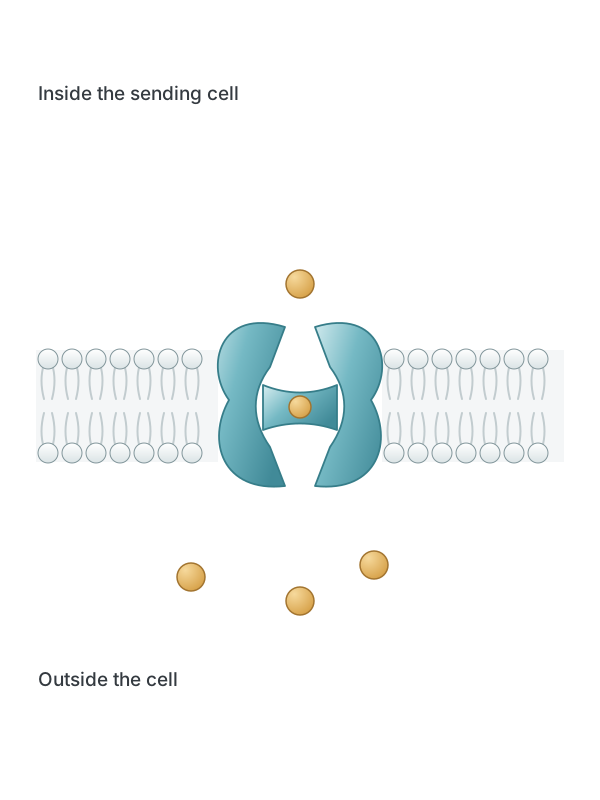
- Serotonin
The messenger is shown outside the sending cell.
- SERT
This transporter returns serotonin from outside into the sending cell.
- Return into the cell
The arrow shows transport direction, without a measured rate.
Simplified teaching model. Protein shapes, sizes, particle counts and arrows are illustrative, not measurements or experimental structures.
The SERT transporter returns serotonin from outside the nerve cell into the cell. This is a separate transport system.
About this illustration
Released serotonin; Transporter / receptor; Different functions. Neither the transporter nor one receptor explains all the causes of depression.
This is a simplified illustration. It does not show exactly how a medicine fits into a protein or predict a dose or response to treatment.
How the Medication Changes Signalling
Vortioxetine inhibits SERT, reducing its activity and slowing serotonin reuptake. This leaves more released serotonin available to interact with receptors. Brain-imaging studies can estimate transporter occupancy, meaning how much of the transporter is occupied by the medicine. That measurement describes contact with a target; it is not the percentage by which someone’s depression has improved.
What is known: Vortioxetine reduces serotonin reuptake.
What remains uncertain: Transporter occupancy cannot be translated directly into symptom relief.
Vortioxetine and SERT
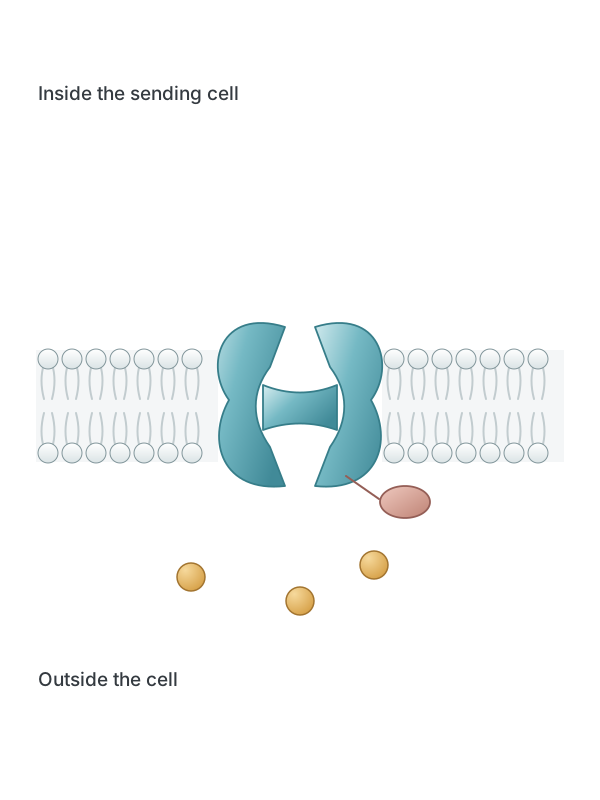
- Serotonin
The messenger is shown outside the sending cell.
- SERT
This transporter returns serotonin from outside into the sending cell.
- Vortioxetine: uptake inhibited
The interrupted arrow names the action; the symbol is not a molecular shape or binding position.
Simplified teaching model. Protein shapes, sizes, particle counts and arrows are illustrative, not measurements or experimental structures.
Vortioxetine inhibits the serotonin transporter. Transporter occupancy is not a measure of improvement in mood.
About this illustration
Vortioxetine; Transporter inhibited; Signaling changes. Transporter occupancy cannot be translated directly into symptom relief.
This is a simplified illustration. It does not show exactly how a medicine fits into a protein or predict a dose or response to treatment.
A Closer Look at the Molecular Level
Vortioxetine also acts at several receptor types with names beginning 5-HT, another name for serotonin. It activates 5-HT1A receptors and partly activates 5-HT1B receptors; these actions are called agonism and partial agonism.
Partial agonism means producing a smaller response than a full activator under comparable conditions. Vortioxetine blocks 5-HT3, 5-HT1D and 5-HT7 receptors, an action called antagonism. These different responses describe how the medicine interacts with particular proteins, rather than a proven ranking of which action matters most for mood.
What is known: Both transporter inhibition and several receptor actions have been measured.
What remains uncertain: Having more molecular targets does not by itself establish greater benefit or fewer side effects.
5-HT1A activation
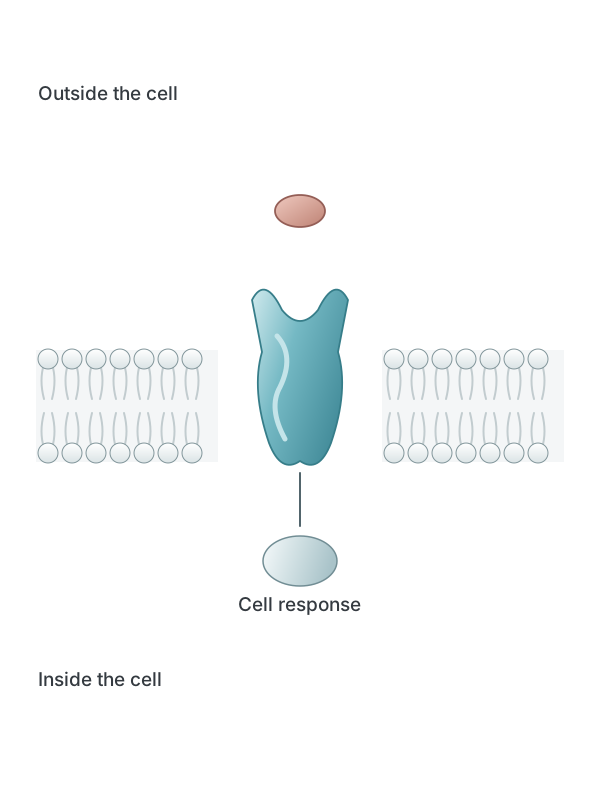
- Vortioxetine
The oval identifies the medicine acting at the 5-HT1A receptor. It is a concept symbol, not a molecular shape or binding pose.
- 5-HT1A receptor
This receptor symbol identifies a function, not a molecular structure.
- Vortioxetine: activation
The arrow represents a signaling response, not movement through a pore.
Simplified teaching model. Protein shapes, sizes, particle counts and arrows are illustrative, not measurements or experimental structures.
Vortioxetine has agonist activity at 5-HT1A receptors. This is one example from its broader serotonin receptor profile.
5-HT1B partial activation
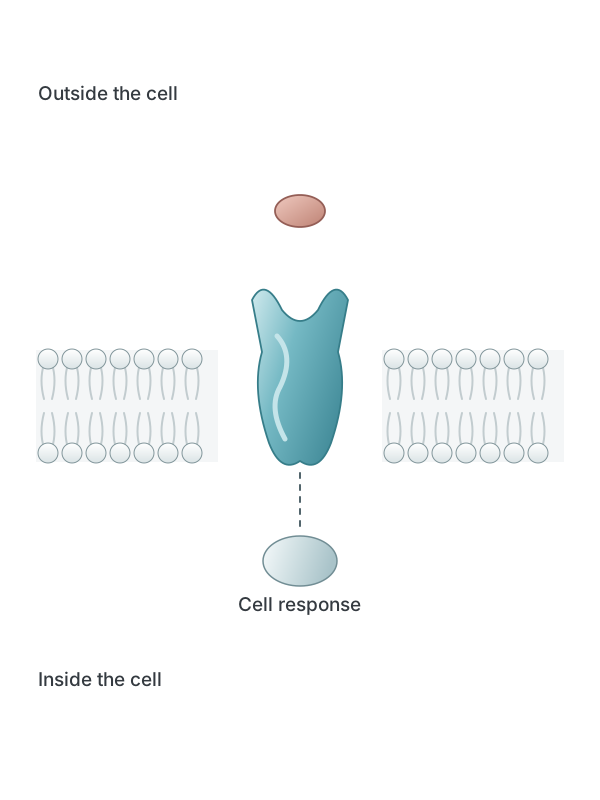
- Vortioxetine
The oval identifies the medicine acting at the 5-HT1B receptor. It is a concept symbol, not a molecular shape or binding pose.
- 5-HT1B receptor
This receptor symbol identifies a function, not a molecular structure.
- Vortioxetine: partial activation
A dashed arrow marks context-dependent partial activation; it is not a numerical effect scale.
Simplified teaching model. Protein shapes, sizes, particle counts and arrows are illustrative, not measurements or experimental structures.
Vortioxetine has partial agonist activity at 5-HT1B receptors. The contribution of individual receptor actions to clinical benefit remains uncertain.
About this illustration
Multiple receptors; Different actions; Benefit not predictable. Having more molecular targets does not by itself establish greater benefit or fewer side effects.
This is a simplified illustration. It does not show exactly how a medicine fits into a protein or predict a dose or response to treatment.
How does it affect my body?
Serotonergic effects also involve the gut and bleeding tendency. Nausea is particularly common early in treatment.
How does my body process it?
Liver metabolism relies especially on CYP2D6. The mean elimination half-life is about 66 hours, so changes in exposure are gradual.
How do treatment options differ?
NICE did not establish that vortioxetine is generally more effective than other antidepressants. Individual response and tolerability matter.
A closer look at the science
Laboratory findings include 5-HT1A agonism, 5-HT1B partial agonism, and antagonism at 5-HT3, 5-HT7 and 5-HT1D receptors. More targets do not automatically mean better treatment.
Vortioxetine can be supplied as a hydrobromide salt. The chemical drawing shows the neutral parent, without the hydrobromide component.
Chemical formula: C18H22N2S · HBr
C, H, N and S identify carbon, hydrogen, nitrogen and sulphur in the neutral parent. HBr identifies the hydrobromide salt component. This formula is composition, not a receptor-binding model or a dosing instruction.
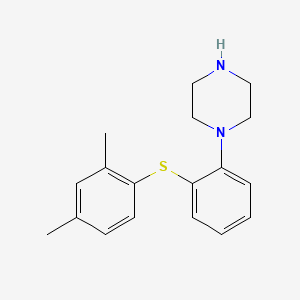
The drawing shows the neutral parent. The product salt formula is separately identified; neither determines release rate or dose.
How was this medicine developed?
NICE published TA367 in November 2015. The current UK authorisation record separately lists January 2021. Neither date is a claim about initial discovery.
Sources and References
- Brintellix — UK SmPC
Product information published on the electronic Medicines Compendium (emc); supplied by pharmaceutical companies.
Scope: United Kingdom product information.
- Brintellix — patient leaflet
Product information published on the electronic Medicines Compendium (emc); supplied by pharmaceutical companies.
Scope: United Kingdom product information.
- NICE TA367: Vortioxetine recommendation
Scope: England guidance; applicability or adoption in other UK nations requires separate consideration.
- NICE TA367: Consideration of evidence
Scope: England guidance; applicability or adoption in other UK nations requires separate consideration.
- Antidepressants: use and safety
Scope: United Kingdom.
- Trintellix: current prescribing information
Scope: United States scientific pharmacology only; not UK prescribing evidence.
- What Is a Neurotransmitter? — mechanism explanation
Scope: Mechanism explanation only. Source sections checked: How Neurotransmitters Work; Types of Neurotransmitters..
Shared scientific background. US product pharmacology and international chemical records support molecular explanations only; UK product details and prescribing information are verified separately.
Article Information
- Edition
- United Kingdom
- Content updated
- 2026-10-24
- Source check dates
- Listed with each reference above; retained dates for shared scientific content.
- Scope
- exact products checked
Source and coverage limits
- Educational summaries cover the named UK products, not every formulation or prescribing circumstance.
- Listings do not guarantee local stock or NHS access.
- UK product warnings are not US FDA boxed-warning designations.
- 15 mg is authorised in the combined document but explicitly not marketed; it is not promoted as an available tablet.
- NICE recommendation and evidence text were checked through official indexed pages; direct recommendation-page retrieval returned an access error.