
About this medicine
Methadone can support stable treatment of opioid dependence. Treatment includes continuing review and psychosocial care, not simply replacement of one drug with an unsupervised supply of another.
Maintenance can be long-term; it is not a treatment failure when continuing prescribed medicine helps someone remain stable. Detoxification is a different agreed goal. A GP or local drug-treatment service can explain access, with arrangements differing across the four UK nations.
What is this medicine used for?
The selected 1 mg/mL solution is authorised for opioid-dependence treatment. Other pain formulations or concentrated liquids need their own prescribing information; identical ingredient names do not make directions interchangeable.
Methadose oral concentrate is another verified dependence-treatment product. Methadone is also used in specialist pain care in other presentations, but analgesic and dependence regimens are not interchangeable. A person on maintenance treatment still needs assessment and a separate plan for acute pain.
Which warning signs need help?
Slow or shallow breathing, inability to wake or suspected overdose requires emergency help immediately, even if the person initially seems well. Secure storage protects children and other people who may have little or no opioid tolerance.
Have an overdose plan and ask about take-home naloxone. If someone is unconscious or struggling to breathe, call emergency services and use available naloxone according to the product instructions or call handler. Methadone may outlast naloxone, so stay with the person and obtain emergency care even after improvement. An extra dose also needs prompt medical advice before symptoms develop.
How do I take it safely?
The liquid concentration is 1 mg/mL, not a recommended dose. The addiction service sets an individual induction and maintenance regimen. Use the supplied measuring device and pharmacy label; do not use another product's volume instructions.
The selected product describes a usual adult daily range of 60–120 mg, reached through individual supervised titrationTitrationAdjusting a medicine dose in planned stages, guided by the intended benefit and unwanted effects.Read the full definition of Titration rather than as a starting dose. Tolerance, sedatives and delayed accumulation can make an apparently familiar dose unsafe.
Induction sources must be read in context. The current Martindale SmPC describes 10–20 mg initially and larger daily increments than the Orange Book's cautious usual titration. The Orange Book describes an initial range of 10–30 mg with reassessment, generally smaller increments and limits on weekly escalation. These are not competing home schedules: the treating service must reconcile the exact product with specialist guidance and observed toxicity.
Methadose 10 mg/mL is an oral concentrate intended for dilution by the pharmacy or prescriber. Its leaflet's regimen is not the same as the Martindale solution's reference range. Always check the final dispensed concentration; confusing milligrams with millilitres or using the volume from a previous bottle can cause a serious overdose.
What side effects should I know about?
Dizziness, dry mouth and urinary difficulty can occur as well as bowel symptoms. Drowsiness may be a warning of excess opioid effect, particularly after a change or with another sedative.
Who needs extra care with this medicine?
The checked product excludes respiratory depressionRespiratory depressionRespiratory depression means breathing becomes too slow, shallow or ineffective. It is a breathing problem, not depression of mood. Opioids and some sedating medicines can cause it, with greater risk when combined with other sedatives or alcohol.Very slow or difficult breathing, unusual severe sleepiness, or being unable to wake someone requires emergency medical help immediately., acute alcohol intoxication, severe liver impairment and certain acute illnesses. Heart-rhythm risk and electrolyte problems need assessment; repeated doses require particular caution in frailty.
Can it affect my other medicines?
Alcohol, benzodiazepines, gabapentin and pregabalin can compound breathing risk. QT-prolonging and serotonergic drugs, enzyme-altering medicines and MAO inhibitors need a prescriber or pharmacist's review.
What check-ups will I need?
Review sedation, withdrawalWithdrawalSymptoms that may occur after reducing or stopping a medicine or substance to which the body has adapted.Read the full definition of Withdrawal control, substance use and interactions; assess ECG and electrolyte needs from individual risk. England's updated guidance individualises supervision instead of automatically imposing the old fixed duration.
The SmPC recommends an ECG before treatment and at stabilisation when QT risk factors exist. Without recognised factors, it recommends an ECG before titration above 100 mg/day and again seven days later. These checks supplement, not replace, clinical observation.
What about pregnancy, breastfeeding and age?
The Orange Book supports stable substitution treatment during pregnancy and coordinated maternity/addiction care. Increased clearance later in pregnancy can require specialist dose review. The Martindale SmPC requires benefit–risk assessment and lists use during labour as a contraindicationA medical reason a medicine should not be usedA medical reason a medicine should not be used in a particular situation because it may be harmful.Read the full definition of Contraindication. These differences need an agreed specialist birth plan; do not independently stop maintenance treatment or interpret it as labour analgesia.
The current Martindale SmPC permits a specialist breastfeeding decision with infant monitoring, while its patient leaflet has more restrictive wording. NHS SPS supports methadone with caution for healthy full-term infants. Watch for marked sleepiness, breathing difficulty and inadequate weight gain; premature or unwell infants need specialist advice. Neither abrupt cessation of treatment nor abrupt weaning should be inferred from a short medicine summary.
The named oral products restrict paediatric use; adult reference doses are not a children's treatment protocol. Frailty, illness and impaired organ function can make repeated dosing less predictable.
What if I miss a dose or want to stop?
Do not double a missed dose. Contact the treatment service if doses have been missed, because reduced tolerance can make restarting the previous amount unsafe. Planned stopping usually involves gradual reduction.
Tell the pharmacy and prescriber about a missed supervised dose; the pharmacy may need fresh instructions before supplying it. Hospital and community teams should verify the last dose and arrange continuity, not assume that collecting a prescription proves the full amount was taken.
How does it work?
Methadone activates opioid receptorsReceptorA protein that recognizes a signal and helps a cell respond. Different receptor types can produce different responses to the same messenger.Read the full definition of Receptor, receiving sites used by medicines and drugs such as morphine and heroin. This can suppress craving and withdrawal, the physical and emotional symptoms that follow a reduction in opioid effects after the body has adapted to them. Methadone can also slow breathing, so beneficial and harmful effects can occur together.
How Brain Cells Communicate
Opioid receptors help regulate communication between nerve cells in systems involved in pain, reward and breathing. The mu receptor is one important type. An agonist is a substance that attaches to a receptor and activates it, changing the signal passed through the cell. With repeated opioid exposure, the body adapts, which can lead to tolerance and physical dependence.
What is known: Tolerance means reduced sensitivity to some effects; dependence means withdrawal can follow a substantial reduction.
What remains uncertain: Adaptation to one opioid effect does not ensure equal protection against every harmful effect.
Opioid agonist: Mu-opioid receptor
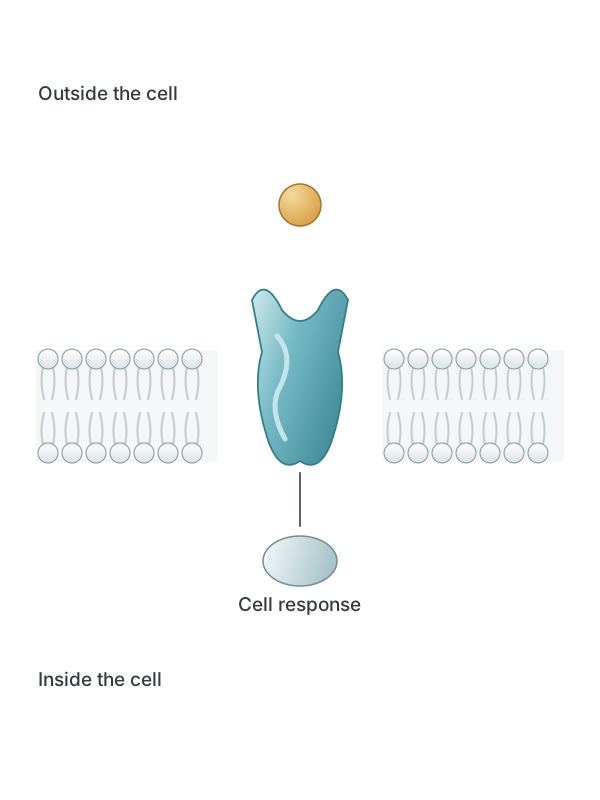
- Opioid agonist
A messenger can change signaling through its receptor.
- Mu-opioid receptor
This receptor symbol identifies a function, not a molecular structure.
- Cell response
The arrow represents a signaling response, not movement through a pore.
Simplified teaching model. Protein shapes, sizes, particle counts and arrows are illustrative, not measurements or experimental structures.
Opioid agonist can activate mu-opioid receptor and change signaling in the cell.
About this illustration
Biological process; Molecular action; Clinical effect. Adaptation to one opioid effect does not ensure equal protection against every harmful effect.
This is a simplified illustration. It does not show exactly how a medicine fits into a protein or predict a dose or response to treatment.
How the Medication Changes Signaling
Methadone is a full agonist at mu receptors, meaning it can produce the full activating response of this type of opioid drug. Continued activation can prevent the abrupt loss of opioid signaling that contributes to withdrawal. Laboratory findings also suggest an effect at NMDA receptors, receiving sites involved in signaling by glutamate, an activating brain messenger. How much this additional action contributes to methadone’s clinical effects remains uncertain.
What is known: Mu-receptor activation is the main established explanation for methadone’s opioid effects.
What remains uncertain: The possible NMDA action does not account for a known proportion of its benefit.
Methadone: Mu-opioid receptor
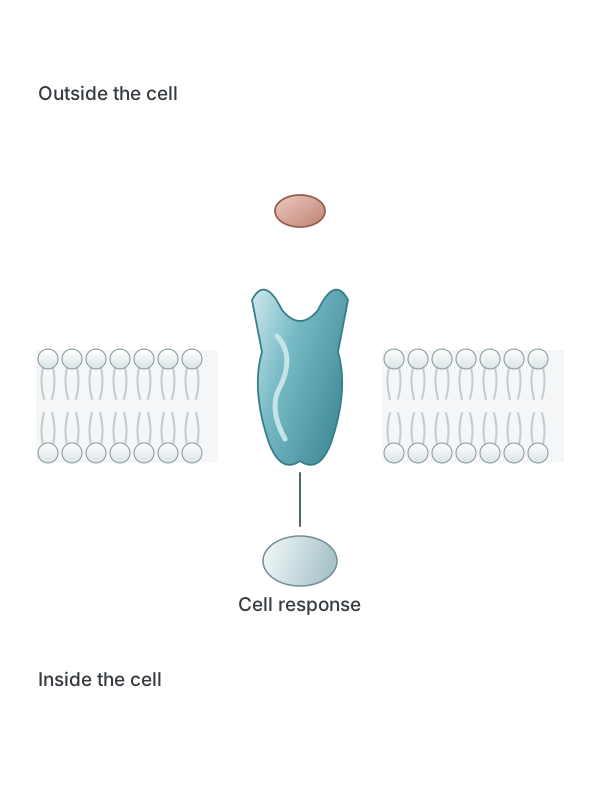
- Methadone
The oval identifies the medicine acting at the Mu-opioid receptor. It is a concept symbol, not a molecular shape or binding pose.
- Mu-opioid receptor
This receptor symbol identifies a function, not a molecular structure.
- Methadone: activation
The arrow represents a signaling response, not movement through a pore.
Simplified teaching model. Protein shapes, sizes, particle counts and arrows are illustrative, not measurements or experimental structures.
Methadone is a full mu-opioid receptor agonist. This target action can contribute to both therapeutic and harmful opioid effects.
About this illustration
Medicine; Target or pathway; Intended effects. The possible NMDA action does not account for a known proportion of its benefit.
This is a simplified illustration. It does not show exactly how a medicine fits into a protein or predict a dose or response to treatment.
How does it affect my body?
Constipation, nausea and sweating can occur. Treatment should support everyday functioning rather than intoxication. Persistent symptoms deserve review instead of adding medicines without checking interactions.
Longer-term opioid effects can include altered sex-hormone function. Persistent loss of libido, menstrual changes or unusual fatigue deserve assessment rather than being attributed automatically to mental illness or recovery.
How does my body process it?
Methadone accumulates in tissues and its half-lifeThe time for a measured drug level to fall by halfThe time it takes for the concentration of a medicine in a body fluid, usually blood, to decrease by half during elimination.Read the full definition of Half-life varies markedly. An apparently tolerated early dose can become dangerous after repeated dosing; initiation and escalation require close clinical assessment.
How do treatment options differ?
Methadone and buprenorphine differ in receptor action and initiation risks. Neither is universally preferable. England guidance supports offering an informed choice when appropriate, within a treatment and support programme.
Buprenorphine's partial-agonist profile changes overdose and induction risks; methadone may suit people who do not stabilise with it. Treatment choice should consider previous response, cardiac or respiratory disease, other sedatives, and practical access to dispensing, not a blanket ranking of one medicine as best.
A closer look at the science
Its full mu-opioid agonism has no protective ceiling against respiratory depressionRespiratory depressionRespiratory depression means breathing becomes too slow, shallow or ineffective. It is a breathing problem, not depression of mood. Opioids and some sedating medicines can cause it, with greater risk when combined with other sedatives or alcohol.Very slow or difficult breathing, unusual severe sleepiness, or being unable to wake someone requires emergency medical help immediately.. Activating the same receptor over a prolonged period can suppress withdrawal while also slowing breathing. Molecular action does not determine a safe starting dose: tolerance, accumulation and interactions matter.
Methadone is a synthetic opioid supplied as a hydrochloride salt and a racemic mixture.
Chemical formula: C21H27NO · HCl
The verified image shows neutral methadone connectivity, C21H27NO, without resolving the product’s enantiomer mixture. Chloride is omitted; the drawing does not determine tolerance or a safe dose.
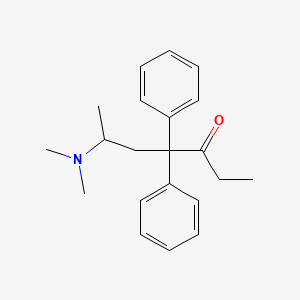
The drawing shows the neutral parent. The product salt formula is separately identified; neither determines release rate or dose.
How was this medicine developed?
England's 2024 DHSC update supplements earlier guidance; its changes must not be described as automatically replacing local pathways across all four UK nations.
Sources and References
- Methadone 1 mg/mL oral solution sugar-free: UK SmPC
Product information published on the electronic Medicines Compendium (emc); supplied by pharmaceutical companies.
Scope: United Kingdom.
- Methadone 1 mg/mL oral solution sugar-free: patient leaflet
Product information published on the electronic Medicines Compendium (emc); supplied by pharmaceutical companies.
Scope: United Kingdom.
- Oral methadone and buprenorphine: recommendations
Scope: England.
- Treating opioid dependence during breastfeeding
Scope: UK medicines advice; healthy full-term infants.
- About methadone
Scope: UK medicine information; service links chiefly England.
- Methadose 10 mg/1 mL oral concentrate: patient leaflet
Product information published on the electronic Medicines Compendium (emc); supplied by pharmaceutical companies.
Scope: United Kingdom.
- Drug misuse and dependence: UK guidelines on clinical management (2017)
Scope: United Kingdom clinical guidance; local service arrangements vary.
- Methadose 10 mg/1 mL oral concentrate: UK SmPC
Product information published on the electronic Medicines Compendium (emc); supplied by pharmaceutical companies.
Scope: United Kingdom.
- How and when to take methadone
Scope: UK patient information; service links principally England.
- Supplying take home naloxone without a prescription
Scope: United Kingdom; local supply arrangements vary.
- Methadone: current prescribing information — mechanism explanation
Scope: Mechanism explanation only. Source sections checked: 12.1 Mechanism of Action; 12.2 Pharmacodynamics; 12.3 Pharmacokinetics; 9.3 Dependence; 5.1 Life-Threatening Respiratory Depression..
- All Opioid Pain Medicines: Drug Safety Communication - FDA Updates Prescribing Information to Provide Additional Guidance for Safe Use | FDA
- New Safety Measures Announced for Opioid Analgesics, Prescription Opioid Cough Products, and Benzodiazepines | FDA
Shared scientific background. US product pharmacology and international chemical references do not establish UK licences, doses, formulations or NHS recommendations.
Article Information
- Edition
- United Kingdom
- Content updated
- 2026-10-24
- Source check dates
- Listed with each reference above; retained dates for shared scientific content.
- Scope
- UK educational opioid-dependence profile covering standard oral solution and concentrated oral product, induction/guideline distinctions, monitoring, pregnancy/feeding and overdose prevention.
Source and coverage limits
- Representative named products are verified; every manufacturer, stock position, local funding decision and specialist prescribing scenario is not claimed.
- UK clinical guidance, exact-product marketing authorisations and local NHS service protocols are kept distinct.
- Existing shared mechanism and molecular modules remain required and unchanged; no US prescribing fields were imported.
- Product/guideline pregnancy or breastfeeding differences are explicit and need specialist interpretation for individual care.