
About this medicine
Buprenorphine treatment aims to stabilise opioid dependence and reduce harm within ongoing care. Physical dependence on a prescribed opioid and uncontrolled use despite harm are not identical concepts.
Treatment is more than suppressing withdrawalWithdrawalSymptoms that may occur after reducing or stopping a medicine or substance to which the body has adapted.Read the full definition of Withdrawal: sustained engagement supports recovery and reduces harm. England's 2024 guidance recommends an informed choice between methadone and buprenorphine in most circumstances, with accessible prescribing and individualised support. It is an England-specific supplement to UK clinical guidance, not a promise of identical pathways elsewhere.
What is this medicine used for?
The selected G.L. Pharma single-ingredient tablet and Espranor licences cover opioid-dependence treatment from age 15 within medical, social and psychological care. The Milpharm tablet and Buvidal begin at 16. An age permitted for one product must not be transferred to another.
Combination tablets contain naloxone as well as buprenorphine. The checked G.L. Pharma 4 mg/1 mg tablet is licensed for substitution treatment; naloxone is intended to discourage injection or intranasal misuse. It is not the emergency naloxone rescue product and does not make overdose impossible.
BuTrans 15 microgram/hour is an adult pain patch, with a seven-day application interval, not the equivalent of a dependence-treatment tablet or depot injection. Pain and opioid dependence may coexist, but each needs its own assessment and prescribing plan.
Which warning signs need help?
Very slow breathing, unusual difficulty waking, collapse or accidental ingestion by a child is an emergency. Contact emergency services where you are. Keep tablets secured; prescribed doses can be fatal to opioid-naive people.
Ask the service about take-home naloxone and overdose-response training for you and people around you. In a suspected opioid overdose, call emergency services, give available naloxone following its instructions or the call handler's advice, and stay with the person. Improvement does not remove the need for emergency assessment.
The naloxone in a combination tablet is not a substitute for an emergency rescue kit. Do not try to overcome buprenorphine's receptorReceptorA protein that recognizes a signal and helps a cell respond. Different receptor types can produce different responses to the same messenger.Read the full definition of Receptor binding by taking extra opioids or sedatives.
How do I take it safely?
Induction requires assessment of recent opioid exposure, tolerance and objective withdrawal. Dose changes must be supervised; no home conversion from methadone or other opioids is provided here. Let the tablet dissolve fully before eating or drinking.
The G.L. Pharma reference describes 2–4 mg at induction, with subsequent supervised adjustment; its usual maintenance range is 12–16 mg/day and advised ceiling 24 mg/day. These are exact-product reference values, not a home induction, conversion or missed-dose restart schedule.
Espranor is a rapidly dispersing wafer placed on top of the tongue. Its bioavailability differs from sublingual products, so equal milligram numbers do not establish interchangeability. The instructions include avoiding swallowing for two minutes and food or drink for five minutes after administration.
Buvidal is a prolonged-release injection given only by a healthcare professional. Weekly and monthly products release medicine over different periods; the prescriber uses the product's initiation or conversion instructions and closer monitoring after switches. A daily tablet dose must not be multiplied by seven or thirty to select an injection.
The 2024 England guidance and individual tablet SmPCs do not give identical induction examples. The service selects an appropriate product-specific plan from recent opioid exposure, observed withdrawal, other sedatives and medical risks. This article is not a self-induction, micro-induction or methadone-conversion protocol.
What side effects should I know about?
Nausea, headache, sweating, constipation and disturbed sleep can occur. Symptoms early in treatment may reflect withdrawal as well as adverse effects, requiring assessment rather than guessing the cause.
Depot treatment can also produce injection-site reactions. New or persistent local problems should be assessed rather than managed by trying to remove or manipulate the depot.
Who needs extra care with this medicine?
Severe respiratory or liver failure, acute alcohol intoxication and concurrent naltrexone/nalmefene are important exclusions. Review respiratory disease, head injury, other sedatives and liver-virus history.
Can it affect my other medicines?
Alcohol and sedatives increase overdose risk. Enzyme inhibitors or inducers alter exposure; serotonergic antidepressants may contribute to serotoninSerotoninA chemical messenger involved in several functions, including sleep, mood and digestion. It acts through different receptors, with effects that depend on the cell.Read the full definition of Serotonin syndrome. Tell every prescriber about addiction-treatment medicines.
What check-ups will I need?
Follow benefit, sedation, other substance use and liver function. England's DHSC guidance bases supervision on individual risk; the historic universal three-month supervision rule should not be applied as current UK-wide practice.
Agree treatment goals and review regularly. Assess hepatitis/liver history and investigate signs of liver injury. The right level of supervised consumption depends on individual risks and support, not stigma about people receiving substitution treatment.
Care also addresses ongoing non-prescribed drug use, mental health and practical barriers to attendance. Pharmacy and treatment teams should communicate around hospital admission, discharge, prison release or moving home so that treatment is not accidentally interrupted.
What about pregnancy, breastfeeding and age?
Pregnancy needs coordinated addiction and maternity care, including plans for birth and neonatal observation. The UK clinical guidance supports maintaining stability rather than abrupt withdrawal; moving from methadone to buprenorphine during pregnancy can precipitate withdrawal.
Breastfeeding wording genuinely differs: G.L. Pharma single-ingredient and combination records discourage it, and Milpharm and Espranor list breastfeeding as a contraindicationA medical reason a medicine should not be usedA medical reason a medicine should not be used in a particular situation because it may be harmful.Read the full definition of Contraindication. Buvidal advises caution. NHS SPS supports cautious buprenorphine use, including with naloxone, with infant monitoring in healthy full-term babies. These sources must not be flattened into one product-wide rule.
Monitor a breastfed infant for excessive sleepiness, breathing problems, poor feeding or inadequate weight gain, and obtain specialist advice for a premature or unwell baby or multiple medicines. Treatment and feeding decisions should be agreed with the clinical team, not changed abruptly from this summary.
What if I miss a dose or want to stop?
Contact the treatment service about missed doses; do not double. Stopping and restarting without review risks withdrawal, relapse and overdose after tolerance has fallen.
A missed depot appointment needs prompt contact with the service. Prolonged release means effects and possible withdrawal can persist or emerge later; tablet restart timing cannot be inferred from the date of the last injection.
How does it work?
Buprenorphine can ease craving and withdrawal from opioids, a group of medicines and drugs that includes morphine and heroin. Withdrawal means the physical and emotional symptoms that occur when the body has adapted to an opioid and its effects are reduced. Buprenorphine partly activates opioid receptors, the receiving sites these drugs use, which is why it is called a partial agonist. This action can still cause dangerous slowing of breathing.
How Brain Cells Communicate
Opioid receptors are proteins that receive signals from the body’s own opioid messengers and from opioid drugs. They influence pain, reward, breathing and other functions. An agonist activates a receptor; a partial agonist can activate it but produces a smaller maximum response than a full agonist at that receptor. Mu and kappa are names for two different types of opioid receptor.
What is known: Partial activation is a description of receptor action, not a promise of mild effects.
What remains uncertain: A person’s response also depends on previous opioid exposure and other substances present.
Opioid agonist: Mu-opioid receptor
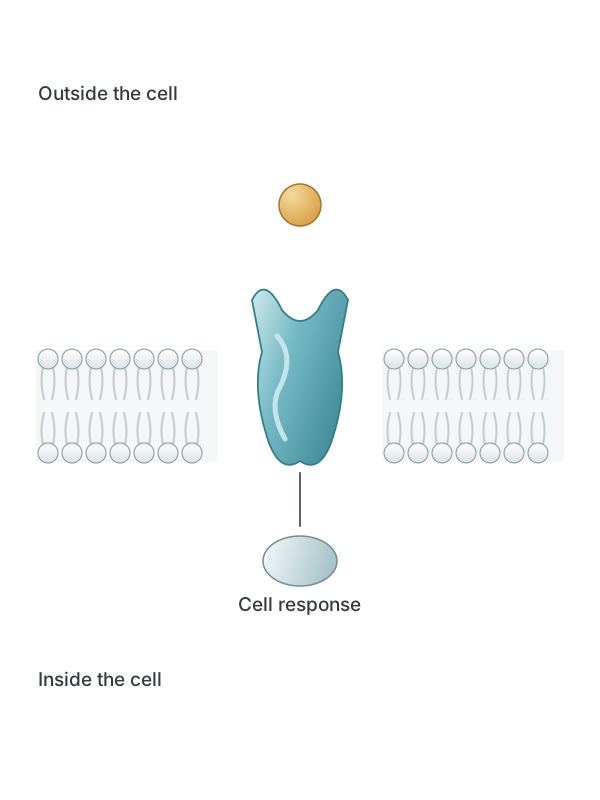
- Opioid agonist
A messenger can change signaling through its receptor.
- Mu-opioid receptor
This receptor symbol identifies a function, not a molecular structure.
- Cell response
The arrow represents a signaling response, not movement through a pore.
Simplified teaching model. Protein shapes, sizes, particle counts and arrows are illustrative, not measurements or experimental structures.
Opioid agonist can activate mu-opioid receptor and change signaling in the cell.
About this illustration
Biological process; Molecular action; Clinical effect. A person’s response also depends on previous opioid exposure and other substances present.
This is a simplified illustration. It does not show exactly how a medicine fits into a protein or predict a dose or response to treatment.
How the Medication Changes Signaling
Buprenorphine partially activates mu receptors and blocks kappa receptors. It attaches strongly to mu receptors and can displace another opioid already present, a property called high affinity. In someone whose body has adapted to a full opioid agonist, this can abruptly reduce the overall opioid signal and cause precipitated withdrawal: sudden withdrawal triggered by the change in receptor activity.
Naloxone is a different medicine that blocks opioid receptors. Some buprenorphine products combine the two medicines, but the single-ingredient buprenorphine tablet described here does not contain naloxone.
What is known: Strong receptor attachment and partial receptor activation are separate properties of buprenorphine.
What remains uncertain: Receptor action alone cannot determine a safe treatment transition.
Buprenorphine-containing treatments: Mu-opioid receptor
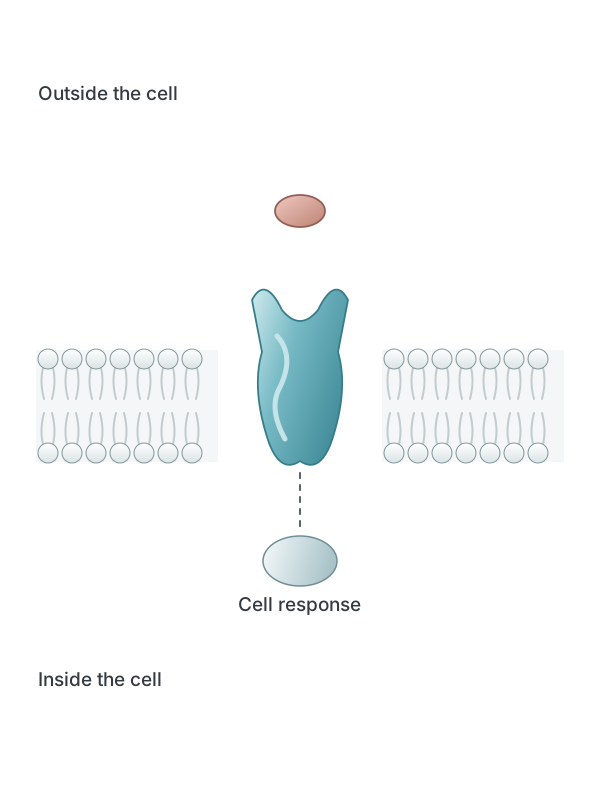
- Buprenorphine-containing treatments
The oval identifies the medicine acting at the Mu-opioid receptor. It is a concept symbol, not a molecular shape or binding pose.
- Mu-opioid receptor
This receptor symbol identifies a function, not a molecular structure.
- Buprenorphine-containing treatments: partial activation
A dashed arrow marks context-dependent partial activation; it is not a numerical effect scale.
Simplified teaching model. Protein shapes, sizes, particle counts and arrows are illustrative, not measurements or experimental structures.
Buprenorphine is a high-affinity partial agonist at mu-opioid receptors. This is one receptor action; the article separately explains kappa antagonism and product differences.
About this illustration
Medicine; Target or pathway; Intended effects. Receptor action alone cannot determine a safe treatment transition.
This is a simplified illustration. It does not show exactly how a medicine fits into a protein or predict a dose or response to treatment.
How does it affect my body?
Constipation and drowsiness can accompany treatment. Breathing suppression becomes more dangerous with alcohol, benzodiazepines and other sedatives; good tolerance in one person does not imply safety for another.
How does my body process it?
Swallowing the tablet is not equivalent to absorption under the tongue because of first-pass metabolism. CYP3A4 contributes to metabolism; severe liver disease is a contraindication.
How do treatment options differ?
Methadone and buprenorphine are alternative treatment options requiring shared decisions about risks and preferences. England's newer guidance gives circumstances favouring buprenorphine; it does not guarantee identical services across all four nations.
Different dosage forms may reduce daily attendance or diversion burdens, but do not remove the need for clinical follow-up. The Scottish Medicines Consortium records discontinuation of UK Suboxone sublingual film supply in July 2023; this film-specific notice is not proof that all buprenorphine/naloxone tablets are unavailable.
A closer look at the science
Buprenorphine binds mu and kappa opioid receptors, with partial agonist properties and prolonged receptor interaction. A ceiling on some effects does not eliminate overdose or breathing risk.
Buprenorphine is a structurally complex opioid partial agonist. The checked UK sublingual product contains its hydrochloride salt; the image shows the neutral parent.
Chemical formula: C29H41NO4
The verified formula and image show neutral buprenorphine only. They do not depict hydrochloride, naloxone, or the distinct depot delivery systems.
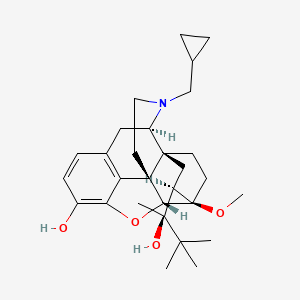
Parent connectivity only; this is not a full depiction of a combination product or depot.
How was this medicine developed?
Current guidance addresses individual circumstances rather than treating every person with opioid dependence as needing the same supervision plan.
Sources and References
- Buprenorphine 2 mg sublingual tablets: UK SmPC
Product information published on the electronic Medicines Compendium (emc); supplied by pharmaceutical companies.
Scope: United Kingdom.
- Buprenorphine sublingual tablets: patient leaflet
Product information published on the electronic Medicines Compendium (emc); supplied by pharmaceutical companies.
Scope: United Kingdom.
- Oral methadone and buprenorphine: recommendations
Scope: England.
- Treating opioid dependence during breastfeeding
Scope: UK medicines advice; healthy full-term infants.
- Buprenorphine Sublingual 2 mg Tablets: UK SmPC
Product information published on the electronic Medicines Compendium (emc); supplied by pharmaceutical companies.
Scope: United Kingdom.
- Espranor 2 mg oral lyophilisate: UK SmPC
Product information published on the electronic Medicines Compendium (emc); supplied by pharmaceutical companies.
Scope: United Kingdom.
- Buvidal 8 mg prolonged-release injection: UK SmPC
Product information published on the electronic Medicines Compendium (emc); supplied by pharmaceutical companies.
Scope: United Kingdom product information.
- Buprenorphine/Naloxone G.L. Pharma 4 mg/1 mg sublingual tablets: UK SmPC
Scope: United Kingdom, PL 21597/0036.
- BuTrans 15 microgram/hour patch: UK SmPC
Product information published on the electronic Medicines Compendium (emc); supplied by pharmaceutical companies.
Scope: United Kingdom.
- Supplying take home naloxone without a prescription
Scope: United Kingdom; local supply arrangements vary.
- Drug misuse and dependence: UK guidelines on clinical management (2017)
Scope: United Kingdom clinical guidance; local service arrangements vary.
- Buprenorphine/naloxone (Suboxone) sublingual film: supply discontinued
Scope: NHS Scotland appraisal; notice explicitly describes UK film supply.
- Espranor: current emc product records
Product information published on the electronic Medicines Compendium (emc); supplied by pharmaceutical companies.
Scope: United Kingdom.
- Buprenorphine-containing treatments: current prescribing information — mechanism explanation
Scope: Mechanism explanation only. Source sections checked: 12.1 Mechanism of Action; 12.2 Pharmacodynamics: Subjective Effects and Effect of Naloxone; 5.2 Risk of Life-Threatening Respiratory and Central Nervous System Depression; 5.10 Precipitation of Opioid Withdrawal Signs and Symptoms..
- SUBLOCADE — buprenorphine solution: prescribing information
Scope: Mechanism explanation only. Source sections checked: 9.2 Abuse: Depot formation and release; 12.3 Pharmacokinetics..
- Initiating Buprenorphine Treatment in the Emergency Department — mechanism explanation
Scope: Mechanism explanation only. Source sections checked: How does buprenorphine work?..
Shared scientific background. US product pharmacology and international chemical references do not establish UK licences, doses, formulations or NHS recommendations.
Article Information
- Edition
- United Kingdom
- Content updated
- 2026-10-24
- Source check dates
- Listed with each reference above; retained dates for shared scientific content.
- Scope
- UK educational opioid-dependence profile covering representative sublingual, oromucosal, depot and naloxone-combination products, with a separately labelled pain-product contrast.
Source and coverage limits
- Representative named products are verified; every manufacturer, stock position, local funding decision and specialist prescribing scenario is not claimed.
- UK clinical guidance, exact-product marketing authorisations and local NHS service protocols are kept distinct.
- Existing shared mechanism and molecular modules remain required and unchanged; no US prescribing fields were imported.
- Product/guideline pregnancy or breastfeeding differences are explicit and need specialist interpretation for individual care.