
About this medicine
Gabapentin may appear alongside psychiatric treatment because pain and epilepsy can coexist with mental-health conditions. Its product licence should not be confused with a general licence for anxiety or insomnia.
What is this medicine used for?
Neurontin covers adjunctive partial-seizure treatment from age 6, monotherapy from age 12, and peripheral neuropathic pain in adults. Neither anxiety nor bipolar disorder is listed in the checked indications.
UK alcohol-treatment guidance does not recommend routine gabapentin use for relapse prevention: evidence and national practice differ from some international use. An off-labelOff-labelUse of a licensed medicine outside the terms of its UK marketing authorisation.Read the full definition of Off-label discussion therefore needs its own evidence review, not an assumed psychiatric licence.
The liquid’s licence covers adjunctive partial-seizure treatment from six, monotherapy from twelve, and adult peripheral neuropathic pain. It does not add a psychiatric indication. Kidney-related dose adjustment and the dependence, withdrawalWithdrawalSymptoms that may occur after reducing or stopping a medicine or substance to which the body has adapted.Read the full definition of Withdrawal and breathing precautions still apply when gabapentin is taken as a liquid.
Which warning signs need help?
Severe breathing difficulty, unresponsiveness or a serious allergic reaction needs emergency help. Seek urgent assessment for a widespread rash with fever, jaundice, persistent severe abdominal pain or suicidal thoughts. Dependence and withdrawal are possible even during prescribed treatment.
How do I take it safely?
For adults and adolescents aged at least 12, the checked SmPC describes a gradual start of 300 mg on day one, 300 mg twice on day two and 300 mg three times on day three. Slower or renal-adjusted schedules may be needed. This is not a psychiatric dosing recommendation.
The adult licensed regimens can reach 3,600 mg/day in divided doses, but kidney impairment may require substantially less. This maximum is not a target. Childhood epilepsy dosing is weight-based; adult instructions must not be reused.
Gabapentin Thame is a 50 mg/ml liquid, supplied with an oral syringe. It can be taken with or without food; prescribed milligrams and measured millilitres are different quantities. The bottle is discarded 30 days after opening. Keep it below 25°C, without refrigeration or freezing.
What side effects should I know about?
Sleepiness, dizziness, nausea, diarrhoea, swelling, blurred vision and weight gain are recognised effects. Discuss persistent symptoms rather than increasing or stopping doses independently.
Who needs extra care with this medicine?
Older people and those with respiratory, neurological or kidney disease may be more vulnerable to respiratory depressionRespiratory depressionRespiratory depression means breathing becomes too slow, shallow or ineffective. It is a breathing problem, not depression of mood. Opioids and some sedating medicines can cause it, with greater risk when combined with other sedatives or alcohol.Very slow or difficult breathing, unusual severe sleepiness, or being unable to wake someone requires emergency medical help immediately.. Prior dependence or withdrawal problems should be discussed without stigma.
Can it affect my other medicines?
Opioids and other central-nervous-system depressants can add to sedation and breathing problems. Every new medicine, including non-prescription products, should be checked for interactions.
Aluminium- or magnesium-containing antacids reduce absorption: the product advises taking gabapentin at least two hours after these antacids. This spacing does not remove the breathing risk of combining sedating medicines.
What check-ups will I need?
Review the original indication, benefit, kidney function, sedation and signs of tolerance or dependence. The decision to continue should be revisited, with support for eventual withdrawal when appropriate.
Routine gabapentin blood-level testing is not required to optimise treatment. For neuropathic pain lasting beyond five months of treatment, the SmPC calls for reassessment because longer-term trial evidence is limited. Clinical benefit, kidney function and adverse effects remain central.
What about pregnancy, breastfeeding and age?
Pregnancy needs individual review because evidence remains limited. Do not abruptly stop epilepsy treatment. Breastfeeding can be compatible after assessment of a healthy baby, with attention to feeding and alertness.
The current SmPC reports reassuring major-malformation findings from a Nordic study of over 1,700 first-trimester exposures, but observational evidence cannot exclude every risk. Newborn withdrawal has been reported, particularly with opioid co-exposure, and infants may need monitoring.
What if I miss a dose or want to stop?
Withdrawal should follow an individual plan. Current product information gives longer minimum tapers for higher doses; some people need weeks or months. Abrupt stopping can also destabilise seizure control.
How does it work?
Gabapentin attaches to a supporting part of certain calcium channels in nerve cellsNeuronA nerve cell that receives and sends information. Neurons work in connected groups, rather than carrying a whole thought on their own.Read the full definition of Neuron. These channels help regulate the release of chemical messages, so changing their behavior can influence communication in the nervous system. Despite its name, gabapentin does not work by acting directly like GABA, a brain messenger that usually makes nerve cells less active.
How does it affect my body?
Dizziness and sleepiness can affect balance and driving. Some people notice swelling, weight gain or memory difficulties.
How does my body process it?
Gabapentin leaves the body unchanged through the kidneys. Reduced kidney function slows clearance and requires an adjusted regimen.
How do treatment options differ?
Pregabalin has a UK adult GAD licence; the checked gabapentin product does not. A related molecular target does not establish equal indications or equivalent doses.
A closer look at the science
It binds the alpha-2-delta subunit of voltage-gated calcium channels. Despite its name and structure, it does not bind GABA-A or GABA-B receptorsReceptorA protein that recognizes a signal and helps a cell respond. Different receptor types can produce different responses to the same messenger.Read the full definition of Receptor.
Gabapentin is a small molecule structurally related to GABA, with a cyclohexane ring. Similarity to GABA does not make it a GABA-receptor agonist.
Chemical formula: C9H17NO2
The formula represents nine carbon, seventeen hydrogen, one nitrogen, and two oxygen atoms in the gabapentin parent molecule. The drawing is not gabapentin enacarbil, a different prodrug.
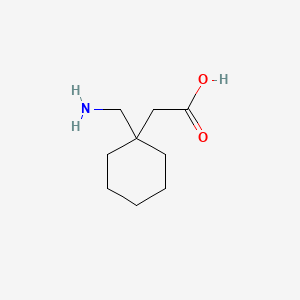
Parent molecule connectivity; no product release rate, clinical response or dose equivalence follows from this drawing.
How was this medicine developed?
MHRA warnings developed to include respiratory depressionRespiratory depressionRespiratory depression means breathing becomes too slow, shallow or ineffective. It is a breathing problem, not depression of mood. Opioids and some sedating medicines can cause it, with greater risk when combined with other sedatives or alcohol.Very slow or difficult breathing, unusual severe sleepiness, or being unable to wake someone requires emergency medical help immediately. and, in January 2026, clearer communication about dependence and withdrawal. These updates should inform current education.
Sources and References
- Neurontin 100 mg capsules: SmPC, sections 4–5
Product information published on the electronic Medicines Compendium (emc); supplied by pharmaceutical companies.
Scope: United Kingdom product information.
- Neurontin capsules and tablets: patient leaflet, sections 1–4
Product information published on the electronic Medicines Compendium (emc); supplied by pharmaceutical companies.
Scope: United Kingdom product information.
- Neurontin 600 mg tablets: SmPC, sections 2–4.2
Product information published on the electronic Medicines Compendium (emc); supplied by pharmaceutical companies.
Scope: United Kingdom product information.
- Side effects of gabapentin
Scope: NHS website medicines information (England); not a guarantee of identical services across UK nations.
- Gabapentin: pregnancy, breastfeeding and fertility
Scope: NHS website medicines information (England); not a guarantee of identical services across UK nations.
- Gabapentin: risk of severe respiratory depression
Scope: United Kingdom.
- Improving information supplied with gabapentinoids, benzodiazepines and z-drugs (8 January 2026)
Scope: United Kingdom.
- Lyrica 75 mg capsules: SmPC, section 4.1
Product information published on the electronic Medicines Compendium (emc); supplied by pharmaceutical companies.
Scope: United Kingdom product information.
- UK clinical guidelines for alcohol treatment — chapter 10, pharmacological interventions
Scope: United Kingdom: England, Scotland, Wales and Northern Ireland.
- Gabapentin Thame 50 mg/ml oral solution — SmPC
Product information published on the electronic Medicines Compendium (emc); supplied by pharmaceutical companies.
Scope: United Kingdom; named product information.
- Neurontin capsules, tablets and oral solution: current prescribing information
- All Opioid Pain Medicines: Drug Safety Communication - FDA Updates Prescribing Information to Provide Additional Guidance for Safe Use | FDA
- New Safety Measures Announced for Opioid Analgesics, Prescription Opioid Cough Products, and Benzodiazepines | FDA
Shared scientific background. Some references are US product pharmacology or international chemical records; UK product details and prescribing information are verified separately.
Article Information
- Edition
- United Kingdom
- Content updated
- 2026-10-24
- Source check dates
- Listed with each reference above; retained dates for shared scientific content.
- Scope
- exact products checked
Source and coverage limits
- The checked products do not supply an anxiety, insomnia or bipolar-disorder licence.
- No psychiatric dosing regimen or off-label efficacy recommendation is inferred.
- Representative capsules, tablets and liquid are checked; this is not an exhaustive manufacturer catalogue.