
About this medicine
Atenolol lowers cardiac workload. Symptoms such as a racing heart may have several causes, so this medicine is not a substitute for assessment of anxiety or a new physical symptom.
What is this medicine used for?
The product licence covers hypertension, angina, arrhythmias and early myocardial-infarction treatment. Anxiety is not listed. A US off-labelOff-labelUse of a licensed medicine outside the terms of its UK marketing authorisation.Read the full definition of Off-label description cannot establish an MHRA-authorised psychiatric use.
Rosemont's solution has the same named cardiovascular indication groups and is intended for people who cannot swallow tablets. Easier administration does not make it a different psychiatric treatment or remove beta-blocker precautions.
Which warning signs need help?
Severe breathlessness, collapse, a very slow pulse with symptoms or severe allergy requires urgent assessment. Taking too much can be dangerous; seek immediate professional advice rather than waiting for symptoms.
How do I take it safely?
The tablet leaflet covers 25, 50 and 100 mg tablets. Doses depend on the cardiovascular indication and kidney function; 50–100 mg daily appears in several adult schedules. These are not anxiety doses.
Rosemont solution contains 25 mg in 5 mL. The prescription should make the dose and measured volume clear. It can be taken with or without food. Use the pharmacy's appropriate measure; do not estimate with household cutlery.
After first opening, use the solution within 30 days. Keep it below 25°C in its original container and do not refrigerate or freeze. Changing formulation should preserve the clinician's intended dose, not simply the same number on a label.
What side effects should I know about?
Tiredness, nausea, diarrhoea and cold hands or feet are common. Sleep disturbance, nightmares or mood changes can also occur and should be discussed if troublesome.
Who needs extra care with this medicine?
Uncontrolled heart failure, significant heart block, marked bradycardia or hypotension and untreated phaeochromocytoma are important exclusions. Asthma, diabetes and kidney disease require careful assessment.
A beta-1 preference does not make atenolol automatically safe in asthma. Beta blockade can mask warning symptoms of low blood glucose, while kidney impairment can increase exposure. A usual-looking dose may therefore be inappropriate.
The solution is sugar-free but contains sorbitol: its SmPC says people with hereditary fructose intolerance should not take it. Propylene glycol requires attention with kidney or liver disease, pregnancy and breastfeeding; parabens may cause delayed allergic reactions. A liquid is not automatically suitable for every swallowing difficulty.
Can it affect my other medicines?
Verapamil, diltiazem, digoxin and other heart-rate medicines can compound cardiac effects. Clonidine withdrawalWithdrawalSymptoms that may occur after reducing or stopping a medicine or substance to which the body has adapted.Read the full definition of Withdrawal needs a prescriber-led plan. Diabetes medicines, NSAIDs and decongestants also need checking.
An interaction can arise from two medicines slowing the heart together, even without a change in either blood concentration. Prescription medicines, over-the-counter cold remedies and supplements all belong in the medication review.
What check-ups will I need?
Follow pulse, blood pressure, dizziness and cardiac symptoms. Kidney function influences dosing; diabetes monitoring matters because beta blockade can alter recognition of low blood sugar.
For liquid treatment, also check the concentration, accurate measurement and opening date. A dose review may be needed when kidney function changes; the formulation does not bypass renal dose adjustment.
What about pregnancy, breastfeeding and age?
Pregnancy and breastfeeding require individual specialist advice. Atenolol crosses the placenta and enters breast milk; fetal growth and infant slow pulse or low blood glucose are relevant concerns. The solution leaflet says not to use it in pregnancy or breastfeeding unless the doctor advises it.
The checked oral products do not recommend use in children. Older people may need a lower regimen, particularly with impaired kidney function. These are product considerations, not a paediatric or renal prescribing calculator.
What if I miss a dose or want to stop?
Do not stop suddenly without the prescriber's plan, particularly with heart disease. Take a forgotten dose only if the next is not nearly due; never double.
How does it work?
Atenolol reduces how strongly the heart responds to adrenaline and noradrenaline, chemical messengers involved in activity and stress. The heart then tends to beat more slowly and with less force. This can lower blood pressure and reduce the heart’s need for oxygen, which helps explain its use for angina, chest discomfort caused by too little blood reaching the heart muscle.
How Brain Cells Communicate
Nerves and chemical messengers help the heart adjust to what the body is doing. Receptors are proteins that receive those messages.
Adrenaline is also called epinephrine, and noradrenaline is also called norepinephrine. When they activate beta-1 receptors in the heart, it can beat faster and more strongly. Adrenergic signaling is the name for communication involving these messengers.
What is known: Beta-1 receptors are part of the heart’s response to activity and stress.
What remains uncertain: A racing heart can have many causes; it is not a test for anxiety.
Norepinephrine / epinephrine: Beta-1 adrenergic receptor
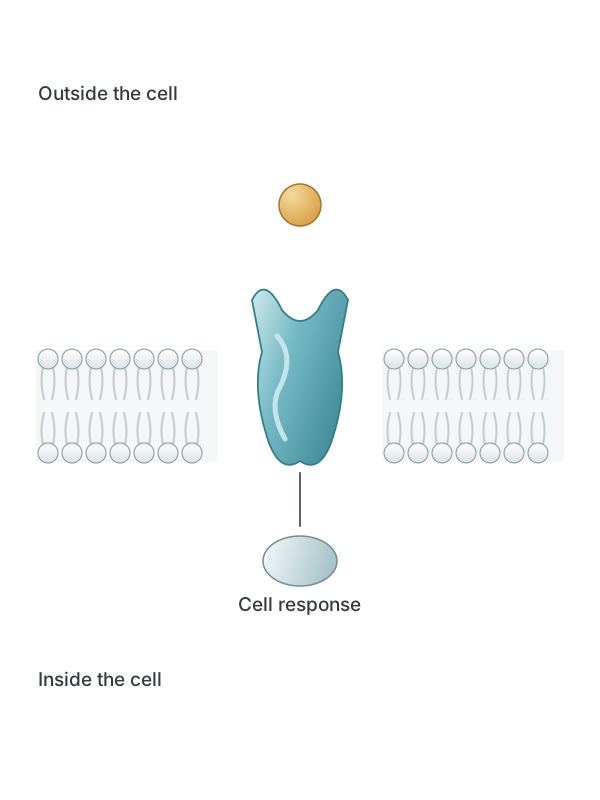
- Messenger
Norepinephrine / epinephrine
- Target
Beta-1 adrenergic receptor
- Cell context
heart-cell; simplified membrane, not a binding structure.
Simplified teaching model. Protein shapes, sizes, particle counts and arrows are illustrative, not measurements or experimental structures.
Norepinephrine / epinephrine can activate beta-1 adrenergic receptor and change signaling in the cell. This is a heart-cell example, not a complete nervous-system pathway.
About this illustration
Adrenergic signals; Heart beta-1 sites; Cardiac response. A racing heart can have many causes; it is not a test for anxiety.
This is a simplified illustration. It does not show exactly how a medicine fits into a protein or predict a dose or response to treatment.
How the Medication Changes Signaling
Atenolol blocks beta receptors, with a stronger preference for beta-1 receptors than beta-2 receptors. This is called beta-1 selectivity, or cardioselectivity: a relative preference for effects on the heart. The preference is not complete. At higher amounts in the body, atenolol can also block beta-2 receptors, including those involved in keeping the airways open.
What is known: Reducing beta-1 stimulation slows the heart and reduces the force of its contractions.
What remains uncertain: A preference for heart receptors does not mean other organs are unaffected.
Atenolol: Beta-1 adrenergic receptor
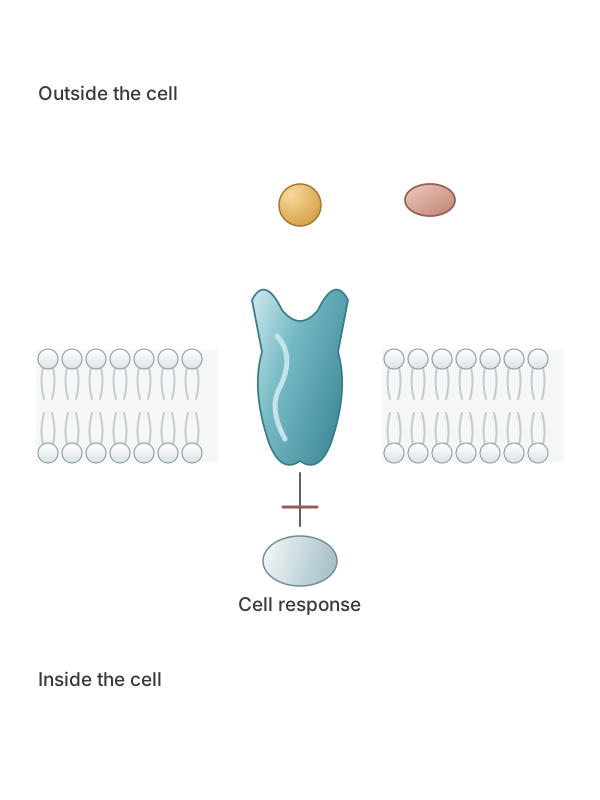
- Messenger
Norepinephrine / epinephrine
- Target
Beta-1 adrenergic receptor
- Atenolol: receptor activation opposed
The medicine symbol and crossbar indicate antagonist action in a heart-cell; receptor action does not predict an individual clinical response.
Simplified teaching model. Protein shapes, sizes, particle counts and arrows are illustrative, not measurements or experimental structures.
Atenolol preferentially blocks beta-1 receptors in the heart. Selectivity is relative, and beta-2 effects become more important at higher exposure.
About this illustration
Atenolol; Mostly beta-1; Reduced response. A preference for heart receptors does not mean other organs are unaffected.
This is a simplified illustration. It does not show exactly how a medicine fits into a protein or predict a dose or response to treatment.
How does it affect my body?
Pulse slowing can be expected, but excessive slowing with faintness needs review. Fatigue, cold extremities or exercise intolerance can affect everyday functioning.
How does my body process it?
Most absorbed atenolol reaches the circulation unchanged; the kidneys are important for elimination. Significant renal impairment prolongs exposure and may require a reduced regimen.
How do treatment options differ?
Atenolol differs from non-selective beta blockers in receptorReceptorA protein that recognizes a signal and helps a cell respond. Different receptor types can produce different responses to the same messenger.Read the full definition of Receptor preference, but that does not prove superior anxiety treatment. Clinical indication and safety matter more than an informal class comparison.
A closer look at the science
Its preference is for cardiac beta-1 receptors, but selectivity decreases as dose rises. 'Cardioselective' does not mean breathing problems or other beta-blocker risks are impossible.
Atenolol is supplied as the free base, with formula C14H22N2O3. The letters identify carbon, hydrogen, nitrogen and oxygen; the numbers count atoms. It is relatively water-friendly compared with propranolol. Its two-dimensional drawing describes molecular connectivity, not receptor occupancy, the amount reaching the brain or a clinical dose.
Chemical formula: C14H22N2O3
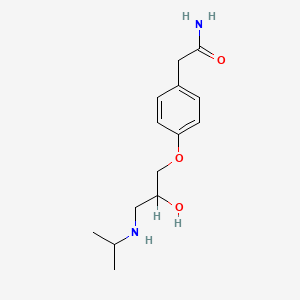
Two-dimensional connectivity does not show a receptor-bound conformation.
How was this medicine developed?
This UK profile preserves atenolol's cardiovascular identity while separating later psychiatric discussion from licensed indications. It does not infer current UK brands from historical or overseas names.
Sources and References
- Atenolol 25 mg tablets: UK SmPC
Product information published on the electronic Medicines Compendium (emc); supplied by pharmaceutical companies.
Scope: United Kingdom.
- Atenolol 25, 50 and 100 mg tablets: patient leaflet
Product information published on the electronic Medicines Compendium (emc); supplied by pharmaceutical companies.
Scope: United Kingdom.
- Atenolol
Scope: UK patient information.
- Atenolol oral solution 25 mg/5 mL: UK SmPC
Product information published on the electronic Medicines Compendium (emc); supplied by pharmaceutical companies.
Scope: United Kingdom.
- Atenolol 25 mg/5 mL sugar-free oral solution: patient leaflet
Product information published on the electronic Medicines Compendium (emc); supplied by pharmaceutical companies.
Scope: United Kingdom.
- Tenormin (atenolol): prescribing information — mechanism explanation
Scope: Mechanism explanation only. Source sections checked: Description; Clinical Pharmacology; Pharmacokinetics and Metabolism..
- Atenolol: patient information — mechanism explanation
Scope: Mechanism explanation only. Source sections checked: Why is this medication prescribed?..
Shared scientific background. US product pharmacology and international chemical references do not establish UK licences, doses, formulations or NHS recommendations.
Article Information
- Edition
- United Kingdom
- Content updated
- 2026-10-24
- Source check dates
- Listed with each reference above; retained dates for shared scientific content.
- Scope
- Representative atenolol tablet strengths and a fully reviewed licensed Rosemont 25 mg/5 mL oral solution.
Source and coverage limits
- No exhaustive manufacturer, stock or funding inventory.
- No verified UK anxiety recommendation or psychiatric dose is asserted; shared beta-blocker physiology does not create such an indication.
- The 2026 tablet document and 2023 liquid SmPC retain their actual revision dates; the current liquid PIL is January 2026.