
About this medicine
Hydroxyzine combines antihistamine and sedative effects. Its anxiety licence is for adults; an itching indication in children must not be interpreted as approval to treat childhood anxiety.
What is this medicine used for?
The product covers anxiety management and specified itchy skin conditions. A licence does not establish it as the preferred long-term treatment for an anxiety disorder.
Which warning signs need help?
Stop and obtain urgent medical assessment for palpitations with fainting, breathing difficulty or loss of consciousness. Hydroxyzine can prolong the QT interval and rarely cause a dangerous rhythm. Overdose or severe allergy needs urgent help.
Very rare severe skin reactions are also listed in the UK information, including Stevens–Johnson syndromeStevens–Johnson syndrome (SJS) and toxic epidermal necrolysis (TEN)SJS and TEN are rare, potentially life-threatening reactions that damage the skin and the moist linings of areas such as the mouth and eyes. They are often triggered by medicines. TEN involves more extensive skin loss than SJS.A painful rash with blistering or peeling, mouth sores, or eye involvement—especially with fever—needs emergency medical assessment. Do not wait for a rash to spread before seeking help. and acute generalised exanthematous pustulosis. A severe or rapidly spreading rash, especially with blistering or illness, needs urgent medical assessment.
How do I take it safely?
The adult anxiety reference is 50–100 mg daily divided across the day, with the lowest effective dose for the shortest duration. The adult maximum is 100 mg daily; this is not permission to increase an individual prescription.
For itching in children weighing up to 40 kg, the UK safety ceiling is 2 mg/kg daily. The prescriber must also verify age, tablet suitability and indication. This limit is not a childhood anxiety prescription.
These are oral hydrochloride tablets. Foreign pamoate capsules, liquid products or injections must not inherit their administration instructions. A child who cannot swallow a suitable prescribed dose needs the pharmacist and prescriber to select an appropriate formulation; the strength printed on a tablet is not an age-based prescription.
What side effects should I know about?
Sleepiness, dizziness and headache are recognised. Children and older people can sometimes become unusually agitated instead of sleepy. Do not drive when alertness or coordination is affected.
Who needs extra care with this medicine?
Do not use with known QT prolongation or its specified risk factors, including significant low potassium or magnesium, marked slow pulse, relevant heart disease or family history of sudden cardiac death.
The product also excludes porphyria and specified allergies, including cetirizine-related hypersensitivity. Previous serious antihistamine-related breathing reactions matter. Review glaucoma, bladder emptying and other anticholinergic medicines before treating sedation as harmless.
Can it affect my other medicines?
QT-prolonging medicines such as citalopram, escitalopram, haloperidol and methadone can make the combination unsuitable. Alcohol, opioids and other sedatives add impairment. A pharmacist should review the full medicine list.
What check-ups will I need?
Before treatment, assess cardiac history, other medicines and electrolyte-risk factors. Review duration and benefit; new cardiac symptoms need prompt assessment rather than waiting for a routine appointment.
What about pregnancy, breastfeeding and age?
The checked product contraindicates pregnancy and breastfeeding. MHRA advises avoiding use in older people; if unavoidable, the daily ceiling is 50 mg. Children's itching doses depend on weight, not the adult anxiety schedule.
What if I miss a dose or want to stop?
Do not double a forgotten dose. Ask the pharmacist about the next dose and discuss continued need with the prescriber; do not take leftover tablets for a different problem.
How does it work?
Hydroxyzine blocks H1 receptorsReceptorA protein that recognizes a signal and helps a cell respond. Different receptor types can produce different responses to the same messenger.Read the full definition of Receptor, proteins that respond to histamine, a chemical messenger involved in allergic reactions and wakefulness. This reduces itching and can also cause drowsiness. Hydroxyzine is chemically different from benzodiazepines, another group of medicines that can produce calming or sedating effects. Similar effects on alertness do not mean the medicines work in the same way.
How Brain Cells Communicate
Histamine carries messages in several parts of the body. In the skin it helps produce allergic symptoms, while in the brain it contributes to keeping us awake. Receptors are proteins that detect these chemical messages; H1 is one type of histamine receptor. Blocking the H1 response can therefore have different effects depending on where the receptor is located.
What is known: H1 receptors respond to histamine in the body and brain.
What remains uncertain: The allergy pathway alone does not explain hydroxyzine’s effect on anxiety.
Hydroxyzine and histamine H1
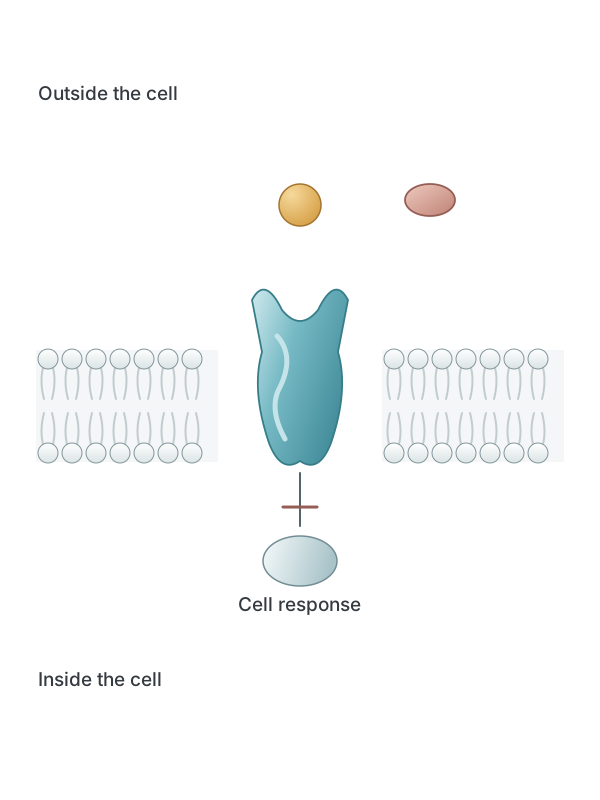
- Histamine
A messenger can change signaling through its receptor.
- H1 receptor
This receptor symbol identifies a function, not a molecular structure.
- Hydroxyzine: activation opposed
The crossbar marks opposition to receptor activation, not permanent closure.
Simplified teaching model. Protein shapes, sizes, particle counts and arrows are illustrative, not measurements or experimental structures.
Hydroxyzine has H1 antihistamine activity. This receptor action alone does not fully explain its sedation or anxiety effects.
About this illustration
Histamine activity; H1 blockade; Clinical effects. The allergy pathway alone does not explain hydroxyzine’s effect on anxiety.
This is a simplified illustration. It does not show exactly how a medicine fits into a protein or predict a dose or response to treatment.
How does it affect my body?
Sedation may reduce concentration and coordination. Dry mouth, blurred vision, constipation or difficulty passing urine can reflect antimuscarinic effects rather than improvement of anxiety.
How does my body process it?
The liver metabolises hydroxyzine, including conversion to the active antihistamine cetirizine. Kidney and liver impairment can change exposure and require dose adjustment.
How do treatment options differ?
Its sedative effect does not make hydroxyzine interchangeable with a benzodiazepine or an antidepressant. Short-term symptom relief and sustained treatment of an anxiety disorder are different goals.
A closer look at the science
This piperazine antihistamine crosses the blood–brain barrier and has antimuscarinic activity. Effects at more than one receptor help explain both calming and unwanted drying effects.
Hydroxyzine is a piperazine-derived antihistamine. This scientific drawing identifies the neutral parent, not a finished UK product.
Chemical formula: C21H27ClN2O2
The neutral parent formula is C21H27ClN2O2. Hydrochloride and pamoate describe different salts used in some jurisdictions; this drawing does not establish which products are UK-authorised.
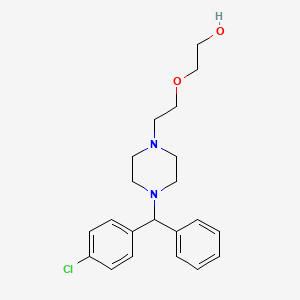
The drawing shows the neutral parent. The product salt formula is separately identified; neither determines release rate or dose.
How was this medicine developed?
A 2015 MHRA review introduced lower dose limits and stronger heart-rhythm precautions. These remain relevant to the current UK product, not an imported FDA boxed-warning category.
Sources and References
- Hydroxyzine hydrochloride 25 mg film-coated tablets: UK SmPC
Product information published on the electronic Medicines Compendium (emc); supplied by pharmaceutical companies.
Scope: United Kingdom.
- Hydroxyzine 10 mg and 25 mg tablets: patient leaflet
Product information published on the electronic Medicines Compendium (emc); supplied by pharmaceutical companies.
Scope: United Kingdom.
- Hydroxyzine: QT prolongation and torsade de pointes
Scope: United Kingdom.
- Hydroxyzine 10 mg film-coated tablets: UK SmPC
Product information published on the electronic Medicines Compendium (emc); supplied by pharmaceutical companies.
Scope: United Kingdom.
- Hydroxyzine hydrochloride — UK product-information inventory
Product information published on the electronic Medicines Compendium (emc); supplied by pharmaceutical companies.
Scope: United Kingdom.
- Generic hydroxyzine pamoate capsules: current prescribing information
Scope: Shared science only; original source jurisdiction retained in title/publisher.
- What Is a Neurotransmitter? — mechanism explanation
Scope: Mechanism explanation only. Source sections checked: How Neurotransmitters Work; Types of Neurotransmitters..
- Hydroxyzine hydrochloride tablets prescribing information — mechanism explanation
Scope: Mechanism explanation only. Source sections checked: Description; Clinical Pharmacology; Precautions..
- Hydroxyzine drug information — mechanism explanation
Scope: Mechanism explanation only. Source sections checked: Why is this medication prescribed?; What special precautions should I follow?..
- The relative antihistaminic and psychomotor effects of hydroxyzine and cetirizine — mechanism explanation
Scope: Mechanism explanation only. Source sections checked: Abstract: randomized four-way crossover study in 12 healthy subjects with atopy..
- Cetirizine: actions on neurotransmitter receptors — mechanism explanation
Scope: Mechanism explanation only. Source sections checked: Abstract: H1 receptor activity and access to the brain..
- Stevens-Johnson syndrome/toxic epidermal necrolysis
Shared scientific background. US product pharmacology and international chemical references do not establish UK licences, doses, formulations or NHS recommendations.
Article Information
- Edition
- United Kingdom
- Content updated
- 2026-10-24
- Source check dates
- Listed with each reference above; retained dates for shared scientific content.
- Scope
- Representative UK hydroxyzine hydrochloride 10 mg and 25 mg oral tablets, adult anxiety and clearly separated itching indications, with shared mechanism and molecular science
Source and coverage limits
- Important UK product safety information is retained without importing an FDA warning designation.
- The emc inventory and representative products support the two tablet strengths; the record is not a live stock feed, every-manufacturer catalogue or claim that other possible UK products cannot exist.
- Historic Atarax/Ucerax and foreign Vistaril names remain search aliases, not assertions of current UK brand marketing. Individual paediatric prescribing and non-tablet administration are not supplied.