
About this medicine
Esketamine, sold as Spravato, is a prescription nasal spray for defined adult depressive illnesses. It is a non-competitive NMDA receptorNMDA ReceptorA receptor-channel involved in signalling by the chemical messenger glutamate.Read the full definition of NMDA Receptor antagonist. Each device contains 28 mg of esketamine, supplied as esketamine hydrochloride. Administration and the subsequent observation take place in an appropriate clinical setting under healthcare-professional supervision.
Esketamine is the S-enantiomer of ketamine. Racemic ketamine contains both S-ketamine and R-ketamine (arketamine). Spravato has its own formulation, evidence and marketing authorisation; it is not interchangeable with IV ketamine or a compounded nasal preparation.
The UK treatment-resistant depressionTreatment-Resistant DepressionDepression that has not improved sufficiently after adequate treatment trials.Read the full definition of Treatment-Resistant Depression licence requires combination with an SSRI or SNRI. The separate acute short-term indication also requires oral antidepressant therapy. A UK marketing authorisation does not mean a medicine is routinely funded by the NHS.
What is this medicine used for?
Treatment-resistant depression: the UK licence covers adults with a current moderate-to-severe major depressive episode that has not responded to at least two different antidepressants, using Spravato with an SSRI or SNRI. The inspected UK SmPC does not authorise monotherapy.
Acute short-term use: with oral antidepressant therapy, Spravato is licensed for rapid reduction of depressive symptoms in adults with a moderate-to-severe episode of major depressive disorder whose symptoms constitute a psychiatric emergency. This is a separate indication with a different treatment course.
Spravato has not been shown to prevent suicide or reduce suicidal thoughts or behaviour. It does not replace hospitalisation when clinically indicated, even after improvement. Psychiatric assessmentPsychiatric assessmentAn evaluation of mental health, physical health and circumstances to understand a person’s needs and plan care.Read the full definition of Psychiatric assessment, treatment of the underlying illness, safety planning and follow-up remain essential. The decision to prescribe should be made by a psychiatrist.
Which warning signs need help?
Important risks include sedation or reduced consciousness, dissociationDissociationA change in the usual sense of connection with oneself, one’s body or the surroundings.Read the full definition of Dissociation, raised blood pressure, respiratory depressionRespiratory depressionRespiratory depression means breathing becomes too slow, shallow or ineffective. It is a breathing problem, not depression of mood. Opioids and some sedating medicines can cause it, with greater risk when combined with other sedatives or alcohol.Very slow or difficult breathing, unusual severe sleepiness, or being unable to wake someone requires emergency medical help immediately. and misuse. A patient may feel detached, dizzy or sleepy during the visit; staff must be able to assess deterioration rather than assume that every reaction is expected. Breathing difficulty, collapse, severe chest pain, seizure or new neurological symptoms need immediate medical attention.
Spravato must not be used if a rise in blood pressure or intracranial pressure poses a serious risk. Listed contraindicationsA medical reason a medicine should not be usedA medical reason a medicine should not be used in a particular situation because it may be harmful.Read the full definition of Contraindication include aneurysmal vascular disease, previous intracerebral haemorrhage, a cardiovascular event within the previous six weeks (including myocardial infarction), and hypersensitivity to esketamine, ketamine or the ingredients. Unstable heart or respiratory disease and other substantial medical risks require careful consideration and an appropriately equipped setting.
Both esketamine and ketamine are Class B, Schedule 2 controlled drugs. The UK Spravato Register and Alert System is an additional risk-minimisation measure. The MHRA-agreed communication requires enrolment before the first prescription; it permits enrolment within 24 hours after first administration in an emergency or when technical problems prevent registration. The treating service manages these requirements.
Assess abuse or dependence history before treatment and monitor throughout. Report persistent urinary pain, urgency, frequency or blood in the urine. Significant psychotic or manic symptoms require specialist assessment. Improvement after a visit does not remove the need for urgent mental-health care when risk remains.
How is my dose chosen and changed?
These UK labelled schedules are educational reference information, not a personal prescription. Doses and changes are selected by the specialist according to benefit and tolerability. All administrations are supervised; the spray is not supplied for unsupervised treatment at home.
Treatment-resistant depression, adults under 65: day 1 starts at 56 mg. During weeks 1–4, administer 56 or 84 mg twice weekly. During weeks 5–8, use 56 or 84 mg weekly. From week 9, use 56 or 84 mg weekly or fortnightly at the least frequent effective interval, continuing the SSRI or SNRI.
Treatment-resistant depression, age 65 or older: day 1 starts at 28 mg. Subsequent doses may be 28, 56 or 84 mg, adjusted in 28 mg steps according to response and tolerability, using the same induction and maintenance frequency phases.
For adults receiving treatment for TRD, assess benefit after induction. Once symptoms improve, the SmPC recommends treatment for at least six months, with ongoing individual review.
Acute psychiatric-emergency indication, adults under 65: 84 mg twice weekly for four weeks with oral antidepressant therapy; reduce to 56 mg if tolerability requires. The acute indication has not been studied in people aged 65 or older. Continue the oral antidepressant after the short Spravato course as clinically appropriate; do not automatically extend this indication into the TRD maintenance schedule.
Contact the service after a missed visit or symptom recurrence. Do not compensate with extra medicine or substitute a compounded spray.
What side effects should I know about?
Dissociation, dizziness, nausea, vomiting, headache, sleepiness, altered taste, vertigo, reduced sensation and temporary increases in blood pressure are recognised effects. The patient may notice changes in time, perception or connection with the body and surroundings.
Discuss concerns before treatment and tell staff about distressing effects during the visit. A stronger dissociative experience does not prove greater therapeutic benefit. Observation continues until the person is clinically stable; persistent or unusual symptoms need assessment.
Can it affect my other medicines?
Central nervous system depressants, including alcohol, opioids and benzodiazepines, can increase sedation. Stimulants and other medicines that raise blood pressure, including monoamine oxidase inhibitors, need review and closer monitoring where appropriate.
The treating service should know about every prescribed or non-prescription medicine and substance used. When nasal corticosteroids or decongestants are required on a treatment day, the SmPC advises administering them at least one hour beforehand. Do not independently stop or adjust antidepressants to prepare for a visit.
What check-ups will I need?
Before treatment: the service reviews mental state, suicide risk, medicines, substance use and physical health, measures blood pressure, and checks arrangements for going home. To reduce nausea and vomiting, patients are advised not to eat for at least two hours or drink for at least 30 minutes before administration.
During and after treatment: observe for sedation, dissociation, respiratory problems and other adverse effects. Recheck blood pressure at approximately 40 minutes and subsequently as indicated. People with significant cardiovascular or respiratory illness require suitable staff and resuscitation equipment. Continue observation until clinically stable and judged ready to leave; the UK SmPC does not specify a universal two-hour minimum for every patient.
After discharge: do not drive or operate machinery until the following day after a restful sleep. Arrange transport. Longer-term reviews should assess symptoms, daily functioning, suicidality, urinary symptoms and misuse risk, and confirm that ongoing benefit justifies the treatment burden.
What if my health or circumstances change?
Pregnancy and breastfeeding require specialist discussion. Spravato is not recommended during pregnancy; pregnancy prevention and planning should be discussed. If breastfeeding, the clinician and patient must weigh the benefit of breastfeeding against the need for treatment when deciding whether to stop breastfeeding or withhold treatment.
Moderate liver impairment can increase esketamine exposure. The UK SmPC advises caution with the maximum 84 mg dose; use is not recommended in severe liver impairment. Safety and efficacy below age 18 are not established. Older adults have a distinct TRD starting schedule, and evidence for the acute psychiatric-emergency indication in that age group is absent.
Licence and funding are different decisions. In England, NICE TA854 does not recommend esketamine for treatment-resistant depression in the NHS. NICE TA899, concerning major depressive disorder at imminent risk of suicide, was terminated without a recommendation after the manufacturer did not provide an evidence submission; that is different from a completed negative clinical appraisal.
In Scotland, SMC2258 accepted the TRD indication for NHS use subject to the approved Patient Access Scheme or equivalent/lower pricing. The acute psychiatric-emergency indication was not recommended in SMC2539 after non-submission. Acceptance still does not guarantee an available local service or individual eligibility.
In Wales, AWTTC records that separate AWMSG appraisal was excluded because of NICE TA854. Do not infer routine Welsh funding from the Scottish decision. In Northern Ireland, SPPG lists TA854 as not recommended following Department of Health issue in April 2023; exceptional individual funding routes may be considered. The specialist and local commissioning body can explain the applicable pathway.
Inadequately treated hyperthyroidism, brain injury or conditions associated with raised intracranial pressure require particular specialist assessment. Older adults may have an increased risk of falls after treatment; supervision and safe mobility arrangements matter.
How does it work?
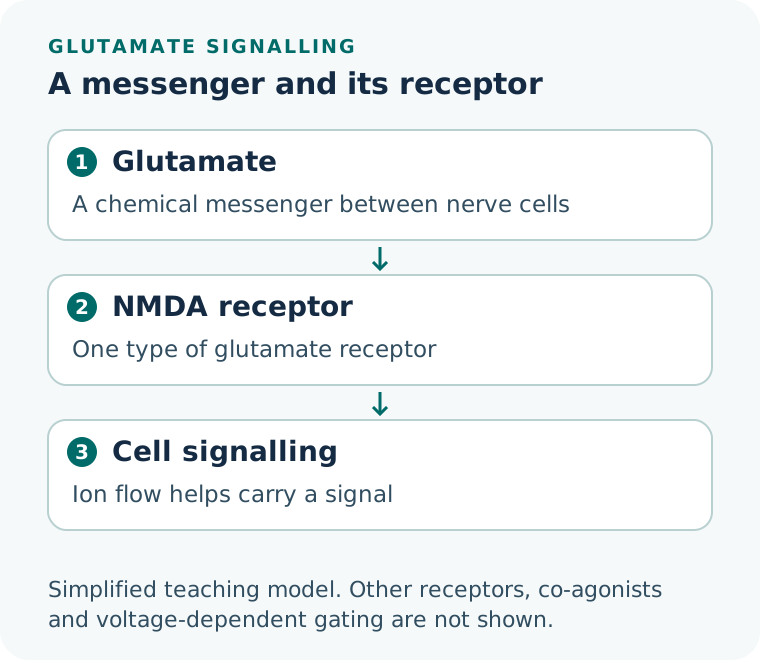
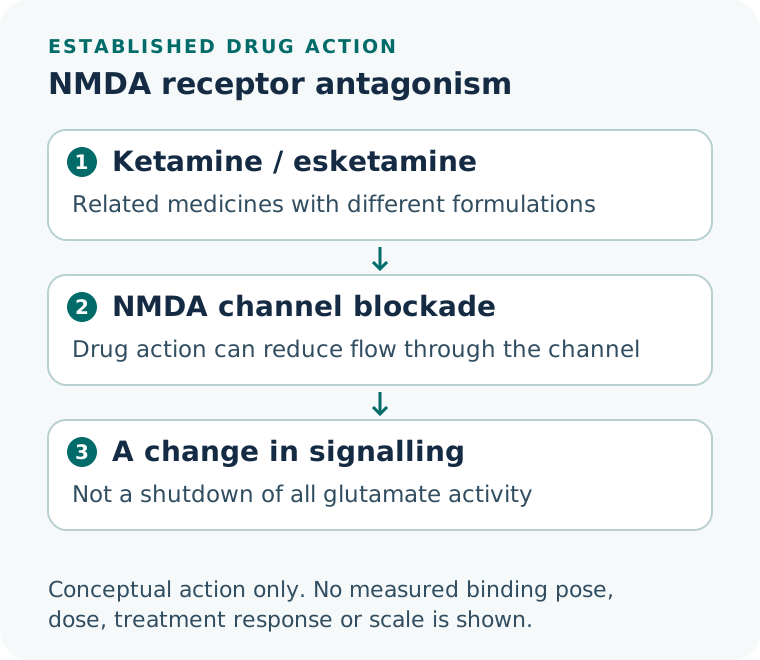
Esketamine affects glutamateGlutamateAn important excitatory chemical messenger used by nerve cells.Read the full definition of Glutamate, a chemical messenger nerve cellsNeuronA nerve cell that receives and sends information. Neurons work in connected groups, rather than carrying a whole thought on their own.Read the full definition of Neuron use to communicate. It can block NMDA receptors, proteins containing channels that let electrically charged particles, or ionsIonAn atom or group of atoms with an electrical charge. Movement of ions such as sodium and potassium helps produce nerve-cell electrical signals.Read the full definition of Ion, move through a cell’s outer membraneCell membraneThe thin boundary of a cell. It separates the inside from the surroundings and contains proteins that control transport and signaling.Read the full definition of Cell membrane. This blocking action, called antagonism, reduces one part of glutamate signalling without switching off the whole system. These channels normally depend on helper chemicals called co-agonists and on the cell’s electrical state, a feature known as voltage-dependent gating.
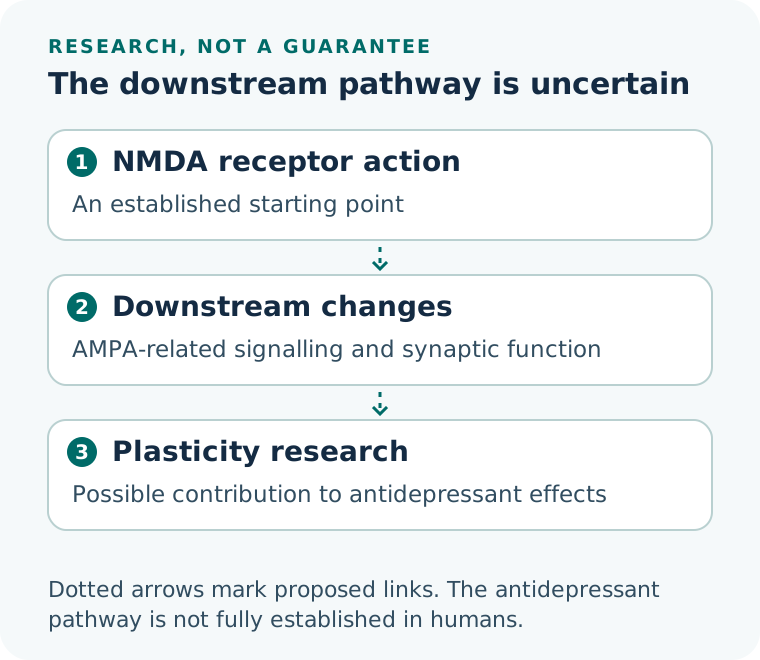
Researchers are investigating later changes involving AMPA receptorsReceptorA protein that recognizes a signal and helps a cell respond. Different receptor types can produce different responses to the same messenger.Read the full definition of Receptor, another type of glutamate receptor, and signals that help connections between nerve cells change. This ability to change their strength or structure is called synaptic plasticityNeuroplasticityThe nervous system’s ability to change its activity and connections over time.Read the full definition of Neuroplasticity. Studies in animals have found such changes after ketamine, but this does not prove that treatment repairs a person’s brain. The complete pathway producing antidepressant benefit in people remains uncertain.
Esketamine nasal spray enters the bloodstream through the lining of the nose. The liver processes it mainly using CYP2B6 and CYP3A4, enzymes that help carry out chemical reactions. Effects on awareness and blood pressure can appear during the treatment visit. The strength of those immediate sensations does not reliably measure longer-term benefit.
How do treatment options differ?
Conventional oral antidepressants and psychological treatments remain important parts of depression care. Spravato may produce faster symptom improvement for some people, but brings supervised visits, monitoring, transport needs and restricted access. Other specialist options include augmentation, repetitive transcranial magnetic stimulation and ECT. These treatments are not interchangeable, and there is no universal best choice.
A trial comparing IV racemic ketamine with ECT cannot establish the comparative effectiveness of Spravato. Evidence about one ketamine route or formulation should not be applied automatically to another.
Ketamine vs Esketamine
Composition: racemic ketamine contains equal proportions of R-ketamine (arketamine) and S-ketamine (esketamine). Spravato contains only esketamine. They are related medicines, not interchangeable products.
Routes and evidence: psychiatric ketamine research is strongest for supervised intravenous infusions. Ketalar injection also has intramuscular anaesthetic uses. Spravato is a standardised nasal spray with its own depression trials. Results from one route or product cannot simply be transferred to oral lozenges or compounded nasal sprays.
Licensed psychiatric use: Ketalar has an anaesthetic licence; depression treatment is off-labelOff-labelUse of a licensed medicine outside the terms of its UK marketing authorisation.Read the full definition of Off-label. Spravato is licensed with an SSRI or SNRI for adult treatment-resistant depression and with an oral antidepressant for its separate acute psychiatric-emergency indication.
Setting and monitoring: both require clinical assessment and professional oversight. Spravato is given in an appropriate clinical setting with observation until stable, including blood-pressure checks; UK Register and Alert System requirements apply. Specialist ketamine services need suitable physiological monitoring and emergency facilities.
Frequency: Spravato has labelled induction and maintenance phases for treatment-resistant depression. Off-label ketamine services use varying initial courses and individually reviewed continuation plans; there is no universally approved depression schedule.
Regulation and access: both are Class B, Schedule 2 controlled drugs. A marketing authorisation does not guarantee NHS funding. Access depends on indication, nation, local service capacity and commissioning.
How was this medicine developed?
Spravato's development followed research into the rapid antidepressant effects of ketamine and the role of glutamate signalling. Its first authorisation was granted in December 2019, creating a separate licensed nasal product rather than converting all ketamine formulations into depression medicines.
UK policy then distinguished the product licence from decisions about NHS use. Scotland accepted the treatment-resistant depression indication with funding conditions in 2020. NICE did not recommend that indication in TA854 in 2022, and the separate imminent-suicide-risk appraisal ended without a recommendation in 2023.
The UK Register and Alert System was introduced in 2022 to help reduce abuse and diversion. The current UK SmPC retains combination-treatment requirements and supervised administration, with safety information and national access arrangements needing ongoing review.
Sources and References
- Spravato 28 mg nasal spray: UK Summary of Product Characteristics
Product covered: Spravato 28 mg nasal spray, solution. Marketing authorisation holder: Janssen-Cilag Limited. Label text revised 2025-07-18; source record updated 2025-07-24. Product identity and links checked 2026-10-19; this does not change the article’s clinical check date.
Company-supplied UK Patient Information Leaflet hosted by emc — patient text revised 2025-06. Do not conflate authorisation with NHS funding or four-nation access.
Product information published on the electronic Medicines Compendium (emc); supplied by pharmaceutical companies.
- Spravato 28 mg nasal spray, solution — Company-supplied UK Patient Information Leaflet hosted by emc
- MHRA-agreed Spravato Register and Alert System requirements
- Ketamine and neural changes: animal research and its limits
- Spravato: UK patient risk-minimisation guide (September 2025)
Product information published on the electronic Medicines Compendium (emc); supplied by pharmaceutical companies.
- Ketamine: updated government review of use, harms and controlled-drug status
- NICE TA854: esketamine for treatment-resistant depression
- NICE TA899: imminent suicide risk appraisal, terminated without a recommendation
- SMC2258: esketamine for treatment-resistant depression in NHS Scotland
- SMC2539: acute psychiatric-emergency indication, not recommended after non-submission
- Esketamine: Welsh appraisal status and NICE TA854
- Northern Ireland: not-recommended technology appraisals, including TA854
- Ketalar 50 mg/ml: UK Summary of Product Characteristics (text revised October 2024)
Product information published on the electronic Medicines Compendium (emc); supplied by pharmaceutical companies.
- Ketamine versus ECT for nonpsychotic treatment-resistant major depression (randomised trial, 2023)
- Spravato prescribing information — mechanism explanation
Scope: Mechanism explanation only. Source sections checked: 12.1 Mechanism of Action; 12.2 Pharmacodynamics; 12.3 Pharmacokinetics. This does not establish UK product authorisation or prescribing..
- What Is a Neurotransmitter? — mechanism explanation
Scope: Mechanism explanation only. Source sections checked: How Neurotransmitters Work; Types of Neurotransmitters. This does not establish UK product authorisation or prescribing..
- Ketamine Lifts Depression via a Byproduct of its Metabolism — mechanism explanation
Scope: Mechanism explanation only. Source sections checked: Mouse experiments involving hydroxynorketamine and AMPA receptors; confirmation in humans explicitly pending. This does not establish UK product authorisation or prescribing..
- Multiple mechanisms of ketamine blockade of N-methyl-D-aspartate receptors — mechanism explanation
Scope: Mechanism explanation only. Source sections checked: Abstract: channel-opening experiments and conclusions. This does not establish UK product authorisation or prescribing..
- Structural basis for channel gating and blockade in tri-heteromeric GluN1-2B-2D NMDA receptor — mechanism explanation
Scope: Mechanism explanation only. Source sections checked: Summary; Introduction; S-(+)-ketamine closes the GluN1a-2B-2D NMDAR channel gate and blocks the pore. This does not establish UK product authorisation or prescribing..
- All Opioid Pain Medicines: Drug Safety Communication - FDA Updates Prescribing Information to Provide Additional Guidance for Safe Use | FDA
- New Safety Measures Announced for Opioid Analgesics, Prescription Opioid Cough Products, and Benzodiazepines | FDA
Article Information
- Edition
- United Kingdom
- Content updated
- 2026-10-24
- Source check dates
- Listed with each reference above; retained dates for shared scientific content.
- Scope
- Country-specific educational article covering the named UK product and the stated psychiatric evidence.
Source and coverage limits
- Product authorisation does not establish stock, local service provision or NHS funding.
- NICE direct automated retrieval was blocked; official indexed guidance and national NHS implementation records corroborated its conclusions.