
What should I know first?
Methylphenidate is a stimulant medicine. This view focuses on its inhibition of dopamine and norepinephrine reuptake, using Ritalin immediate-release tablets as the product example.
U.S. Ritalin labeling includes ADHD and narcolepsy. Stimulants carry serious misuse and addiction risks; this lesson does not provide instructions for using, changing or comparing doses.
This is a mechanism lesson, not a complete medicine guide. A diagram cannot choose treatment, predict your response, or tell you how to change a prescription.
How Brain Cells Communicate
Dopamine and norepinephrine can be released by nerve cells. Their transporters help return them into cells. Measuring the amount outside a cell is not the same as measuring how much a medicine directly releases.
Dopamine · DAT
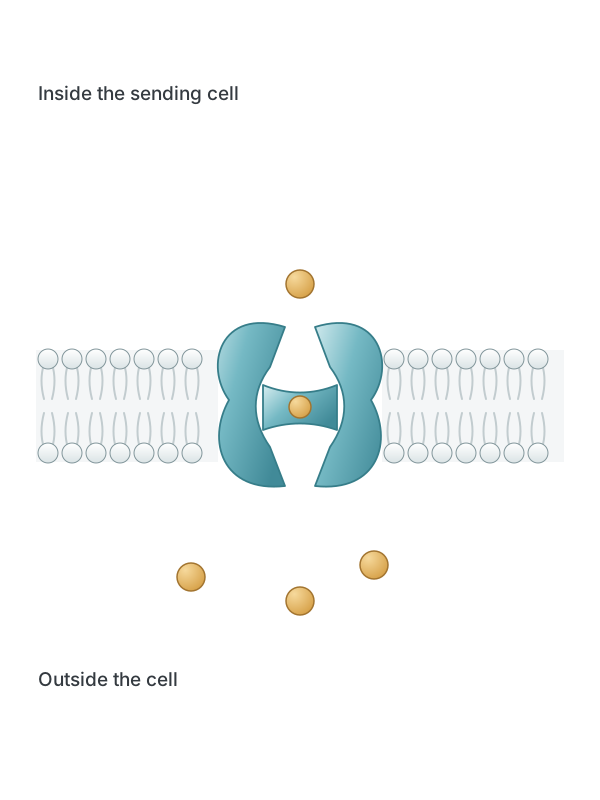
- Dopamine
The messenger is shown outside the sending cell.
- DAT
The DAT transporter returns dopamine into the cell.
- Return into the cell
The arrow shows transport direction, without a measured rate.
Simplified teaching model. Protein shapes, sizes, particle counts and arrows are illustrative, not measurements or experimental structures.
Norepinephrine · NET
- Norepinephrine
The messenger is shown outside the sending cell.
- NET
The NET transporter returns norepinephrine into the cell.
- Return into the cell
The arrow shows transport direction, without a measured rate.
Simplified teaching model. Protein shapes, sizes, particle counts and arrows are illustrative, not measurements or experimental structures.
About this illustration
Dopamine and norepinephrine transporters return their respective messengers into nerve cells. The shared icon represents the task, not one universal protein.
How the Medication Changes Signaling
Methylphenidate blocks reuptake through dopamine and norepinephrine transport systems. This can increase the availability of messengers outside cells.
The product label also describes increased release. Experimental comparisons show that effects on vesicles—the small storage packets inside cells—and on release differ from amphetamine. This diagram therefore emphasizes reuptake inhibition without claiming that methylphenidate can never affect release.
Explore the mechanism
How does blocking return differ from promoting release?
Dopamine · DAT
- Dopamine
The messenger is shown outside the sending cell.
- DAT
The DAT transporter returns dopamine into the cell.
- Return into the cell
The arrow shows transport direction, without a measured rate.
Simplified teaching model. Protein shapes, sizes, particle counts and arrows are illustrative, not measurements or experimental structures.
Norepinephrine · NET
- Norepinephrine
The messenger is shown outside the sending cell.
- NET
The NET transporter returns norepinephrine into the cell.
- Return into the cell
The arrow shows transport direction, without a measured rate.
Simplified teaching model. Protein shapes, sizes, particle counts and arrows are illustrative, not measurements or experimental structures.
Dopamine · DAT
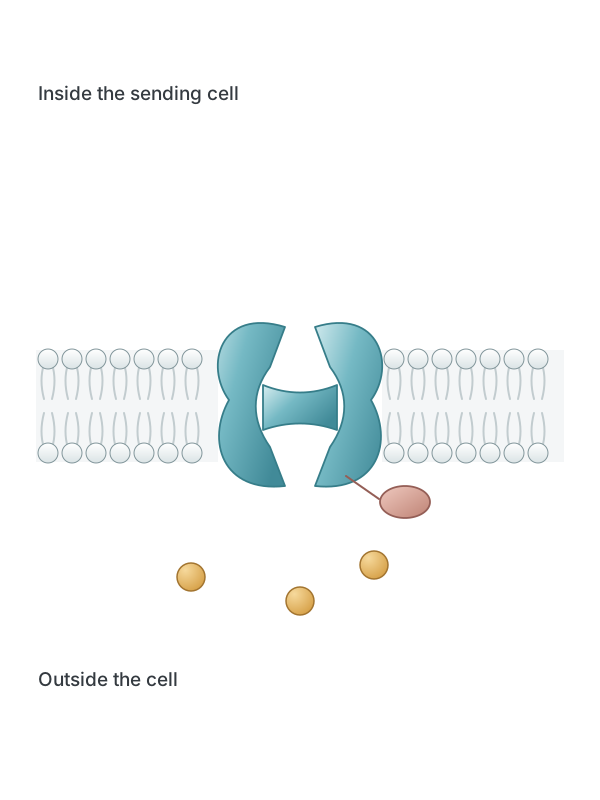
- Dopamine
The messenger is shown outside the sending cell.
- DAT
The DAT transporter returns dopamine into the cell.
- Methylphenidate: uptake inhibited
The interrupted arrow names the action; the symbol is not a molecular shape or binding position.
Simplified teaching model. Protein shapes, sizes, particle counts and arrows are illustrative, not measurements or experimental structures.
Norepinephrine · NET
- Norepinephrine
The messenger is shown outside the sending cell.
- NET
The NET transporter returns norepinephrine into the cell.
- Methylphenidate: uptake inhibited
The interrupted arrow names the action; the symbol is not a molecular shape or binding position.
Simplified teaching model. Protein shapes, sizes, particle counts and arrows are illustrative, not measurements or experimental structures.
From experiment to understanding
Not identical to amphetamine
- Not identical to amphetamine The observation belongs to the stated experimental system.
- Limits of inference An experimental result does not by itself predict one person’s treatment response.
What this model cannot tell us
Response is not predicted
- Response is not predicted The clinical explanation remains uncertain.
- Limits of inference An experimental result does not by itself predict one person’s treatment response.
Static overview. Start the steps when you are ready.
Reduced motion is on. Use the step buttons or read the complete sequence.
Guide to the illustration: Outlines identify a cell membrane or target; arrows mark the direction explained in each caption. Medicine symbols are labels, not measured shapes or binding poses. No quantity, size or rate is to scale.
Read the complete sequence
- Before medicine: return. Dopamine and norepinephrine transporters return their respective messengers into nerve cells. The shared icon represents the task, not one universal protein.
- With methylphenidate. Reuptake inhibition reduces return through the affected transporter. More messenger outside the cell does not by itself identify the mechanism of release.
- A distinct experimental profile. Comparative rat studies found different vesicle and release effects from amphetamine. This is why the two medicines have separate lessons.
- Clinical limits. Neither the diagram nor a rat preparation predicts a person’s benefit or provides a diagnosis of ADHD.
Evidence and model limits
Methylphenidate versus amphetamine isomers in rat prefrontal cortex and striatum preparations; no direct human synaptic timing claim.
Reuptake is the focus of this view. Effects on release are not declared absent, and the separate amphetamine view must not be treated as identical.
A Closer Look at the Molecular Level
Known action: reuptake inhibition is supported by product pharmacology. Comparative rat-brain experiments found strong effects at nerve-ending preparations but weaker effects on vesicular accumulation.
Clinical uncertainty: the therapeutic mechanism in ADHD and narcolepsy is not fully established. A diagram of a transporter cannot predict attention, a diagnosis or the best treatment. Findings from rat preparations are not a measured human clinical response.
Sources and References
The sources below support the specific medicine and experimental context described here. Drawings are original qualitative teaching models; positions, arrows and timing do not give atomic geometry, occupancy or rates.
Article Information
- Content updated
- 2026-10-16
- Sources checked
- 2026-10-16
- Publication status
- Published
Illustration information
- How does blocking return differ from promoting release?
Checked 2026-10-16 · Created for Psychiatry Atlas · Original project artwork