
What should I know first?
Serotonin–norepinephrine reuptake inhibitors are called SNRIs. Venlafaxine is one example. Norepinephrine is also known as noradrenaline.
This example uses U.S. Effexor XR extended-release capsules, whose label covers adult depression, generalized anxiety, social anxiety and panic disorder. Other products and age groups need their own information.
This is a mechanism lesson, not a complete medicine guide. A diagram cannot choose treatment, predict your response, or tell you how to change a prescription.
How Brain Cells Communicate
Serotonin and norepinephrine are different messengers. Their transporters return them into nerve cells after release. These are distinct transport systems, even when drawn using the same teaching symbol.
Serotonin · SERT
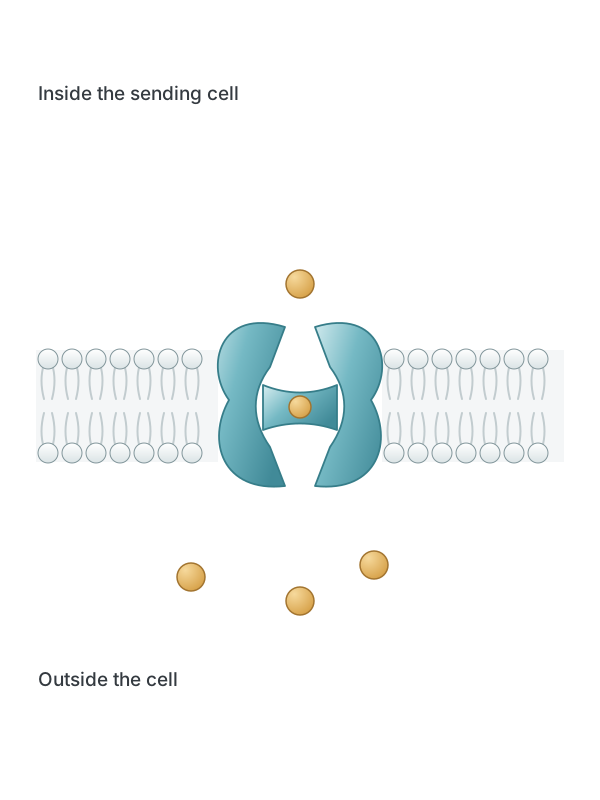
- Serotonin
The messenger is shown outside the sending cell.
- SERT
The SERT transporter returns serotonin into the cell.
- Return into the cell
The arrow shows transport direction, without a measured rate.
Simplified teaching model. Protein shapes, sizes, particle counts and arrows are illustrative, not measurements or experimental structures.
Norepinephrine · NET
- Norepinephrine
The messenger is shown outside the sending cell.
- NET
The NET transporter returns norepinephrine into the cell.
- Return into the cell
The arrow shows transport direction, without a measured rate.
Simplified teaching model. Protein shapes, sizes, particle counts and arrows are illustrative, not measurements or experimental structures.
About this illustration
Serotonin and norepinephrine have separate transporters that return messengers into cells. This single symbol introduces the shared task; it does not merge the proteins.
How the Medication Changes Signaling
Venlafaxine and its active breakdown product, O-desmethylvenlafaxine, inhibit serotonin and norepinephrine reuptake in laboratory studies. Inhibiting return changes messenger signaling.
Two targets do not mean exactly equal effects, a fixed ratio, or a universal advantage over an SSRI. This lesson gives no dose threshold for switching mechanisms.
Explore the mechanism
How can one medicine affect two transport systems?
Serotonin · SERT
- Serotonin
The messenger is shown outside the sending cell.
- SERT
The SERT transporter returns serotonin into the cell.
- Return into the cell
The arrow shows transport direction, without a measured rate.
Simplified teaching model. Protein shapes, sizes, particle counts and arrows are illustrative, not measurements or experimental structures.
Norepinephrine · NET
- Norepinephrine
The messenger is shown outside the sending cell.
- NET
The NET transporter returns norepinephrine into the cell.
- Return into the cell
The arrow shows transport direction, without a measured rate.
Simplified teaching model. Protein shapes, sizes, particle counts and arrows are illustrative, not measurements or experimental structures.
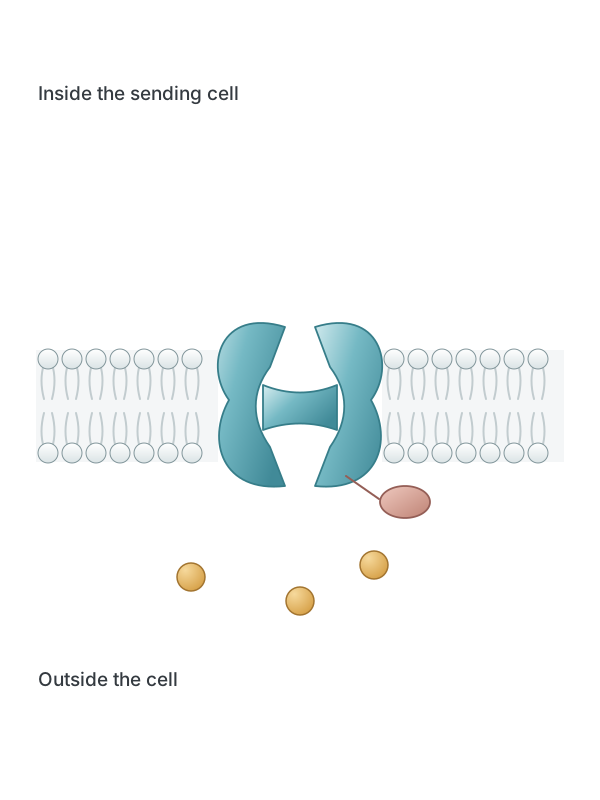
- Serotonin
The messenger is shown outside the sending cell.
- SERT
The serotonin transporter returns serotonin into the cell.
- Venlafaxine: uptake inhibited
The interrupted arrow names the action; the symbol is not a molecular shape or binding position.
Simplified teaching model. Protein shapes, sizes, particle counts and arrows are illustrative, not measurements or experimental structures.
- Norepinephrine
The messenger is shown outside the sending cell.
- NET
The norepinephrine transporter returns its own messenger into the cell.
- Venlafaxine: uptake inhibited
The interrupted arrow names the action; the symbol is not a molecular shape or binding position.
Simplified teaching model. Protein shapes, sizes, particle counts and arrows are illustrative, not measurements or experimental structures.
What this model cannot tell us
Clinical mechanism uncertain
- Clinical mechanism uncertain The clinical explanation remains uncertain.
- Limits of inference An experimental result does not by itself predict one person’s treatment response.
Static overview. Start the steps when you are ready.
Reduced motion is on. Use the step buttons or read the complete sequence.
Guide to the illustration: Outlines identify a cell membrane or target; arrows mark the direction explained in each caption. Medicine symbols are labels, not measured shapes or binding poses. No quantity, size or rate is to scale.
Read the complete sequence
- Before medicine: two systems. Serotonin and norepinephrine have separate transporters that return messengers into cells. This single symbol introduces the shared task; it does not merge the proteins.
- Serotonin transport. Venlafaxine and its active metabolite inhibit serotonin reuptake. The medicine symbol identifies an effect, not an experimentally determined pose.
- Norepinephrine transport. They also inhibit norepinephrine reuptake. This is a second transport system; the diagram gives no relative strength or dose comparison.
- Limits of the lesson. Changing two transport systems does not predict the best medicine for a person. The connection to therapeutic benefit is not fully established.
Evidence and model limits
Venlafaxine and O-desmethylvenlafaxine studied in vitro. FDA NDA020699 latest linked label verified2026-10-16: August2023.
Separate transporter systems are shown qualitatively. Their relative effects and clinical consequences are not measured by this drawing.
A Closer Look at the Molecular Level
Known action: serotonin and norepinephrine reuptake inhibition is supported by product-specific pharmacology. The active metabolite contributes to this account.
Clinical uncertainty: the label describes the therapeutic mechanism as unclear. The drawing does not explain every benefit or adverse effect, and it does not diagnose a shortage of either messenger.
Sources and References
The sources below support the specific medicine and experimental context described here. Drawings are original qualitative teaching models; positions, arrows and timing do not give atomic geometry, occupancy or rates.
Article Information
- Content updated
- 2026-10-16
- Sources checked
- 2026-10-16
- Publication status
- Published
Illustration information
- How can one medicine affect two transport systems?
Checked 2026-10-16 · Created for Psychiatry Atlas · Original project artwork