
What should I know first?
Escitalopram is a selective serotonin reuptake inhibitor, or SSRI. This lesson uses the US Lexapro tablet labeling. It explains a transporter action without suggesting that anxiety or depression is simply a shortage of serotonin.
Lexapro tablets have age-specific approvals for major depression and generalized anxiety disorder. The branded oral solution is described in the label as not currently marketed. This lesson does not transfer those uses to every escitalopram product.
This is a mechanism lesson, not a complete medicine guide. A diagram cannot choose treatment, predict your response, or tell you how to change a prescription.
How Brain Cells Communicate
Nerve cells release serotonin, a chemical messenger. A transporter called SERT moves some serotonin back into the releasing cell. A transporter carries a substance across a cell membrane; it is different from a receptor that responds to a message.
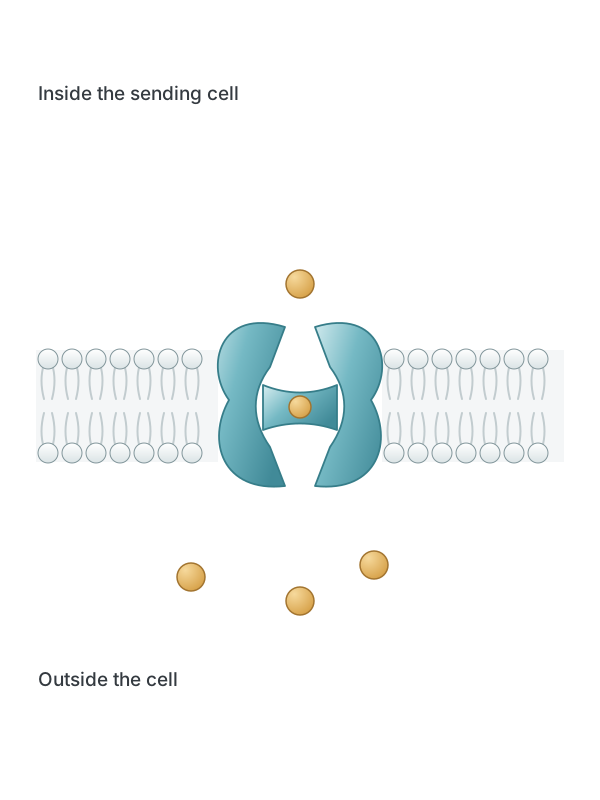
- Serotonin
The messenger is shown outside the sending cell.
- SERT
The serotonin transporter returns serotonin into the cell.
- Return into the cell
The arrow shows transport direction, without a measured rate.
Simplified teaching model. Protein shapes, sizes, particle counts and arrows are illustrative, not measurements or experimental structures.
About this illustration
The serotonin transporter returns serotonin into a nerve cell.
How the Medication Changes Signaling
Escitalopram inhibits serotonin reuptake. The product label links its presumed antidepressant action to increased serotonin signaling after this inhibition. The drawing shows the direction of the transport change, not how much serotonin is present or how quickly someone will improve.
Explore the mechanism
What changes when escitalopram inhibits reuptake?
- Serotonin
The messenger is shown outside the sending cell.
- SERT
The serotonin transporter returns serotonin into the cell.
- Return into the cell
The arrow shows transport direction, without a measured rate.
Simplified teaching model. Protein shapes, sizes, particle counts and arrows are illustrative, not measurements or experimental structures.
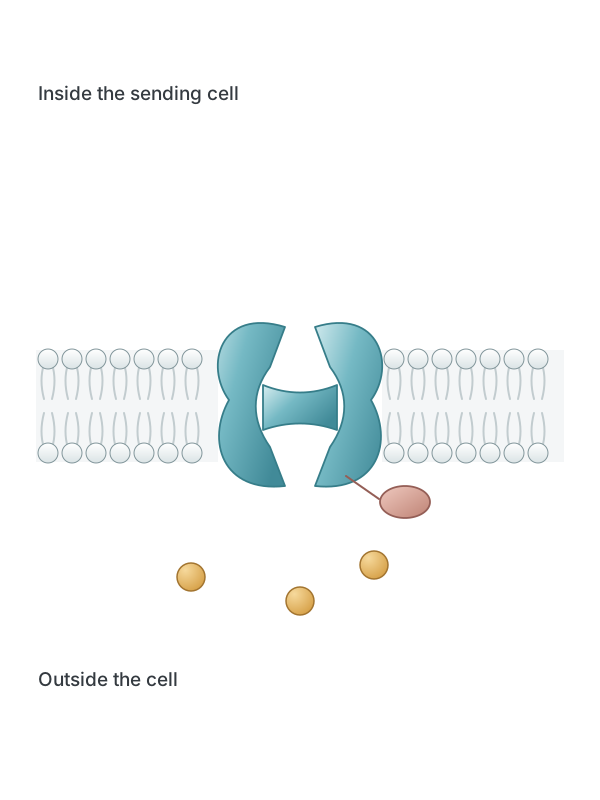
- Serotonin
The messenger is shown outside the sending cell.
- SERT
The serotonin transporter returns serotonin into the cell.
- Escitalopram: uptake inhibited
The interrupted arrow names the action; the symbol is not a molecular shape or binding position.
Simplified teaching model. Protein shapes, sizes, particle counts and arrows are illustrative, not measurements or experimental structures.
What this model cannot tell us
Response is not predicted
- Response is not predicted The clinical explanation remains uncertain.
- Limits of inference An experimental result does not by itself predict one person’s treatment response.
Static overview. Start the steps when you are ready.
Reduced motion is on. Use the step buttons or read the complete sequence.
Guide to the illustration: Outlines identify a cell membrane or target; arrows mark the direction explained in each caption. Medicine symbols are labels, not measured shapes or binding poses. No quantity, size or rate is to scale.
Read the complete sequence
- Before medicine: reuptake. The serotonin transporter returns serotonin into a nerve cell.
- With escitalopram. Escitalopram inhibits serotonin reuptake. The medicine symbol is not its molecular shape.
- Limits of this model. This transporter action cannot predict who benefits, the time to improvement or which medicine is best.
Evidence and model limits
Qualitative serotonin reuptake model. No molecular binding pose, transporter occupancy or comparison of potency is inferred.
The drawing explains transport direction, not the cause of a disorder, a dose or an individual treatment response.
A Closer Look at the Molecular Level
Escitalopram is the S form of citalopram: one of two mirror-related molecular forms. This identity matters when describing the compound, but it does not provide a dose conversion or a clinical ranking. Laboratory selectivity is different from predicting someone’s benefit or unwanted effects.
The label’s proposed link between reuptake inhibition and benefit does not establish one complete explanation for depression or anxiety. Brain networks, time and individual biology are not represented by a single transporter symbol.
Sources and References
The sources below support the specific medicine and experimental context described here. Drawings are original qualitative teaching models; positions, arrows and timing do not give atomic geometry, occupancy or rates.
Article Information
- Content updated
- 2026-10-16
- Sources checked
- 2026-10-16
- Publication status
- Published
Illustration information
- What changes when escitalopram inhibits reuptake?
Checked 2026-10-16 · Created for Psychiatry Atlas · Original project artwork